Electric drivetrains represent a significant transformation in the automotive industry, rendering many components of internal combustion engine (ICE) vehicles irrelevant. While some parts serve similar functions, others are fundamentally different. This article explores the key distinctions between electric vehicles (EVs) and ICE cars.
What’s New?
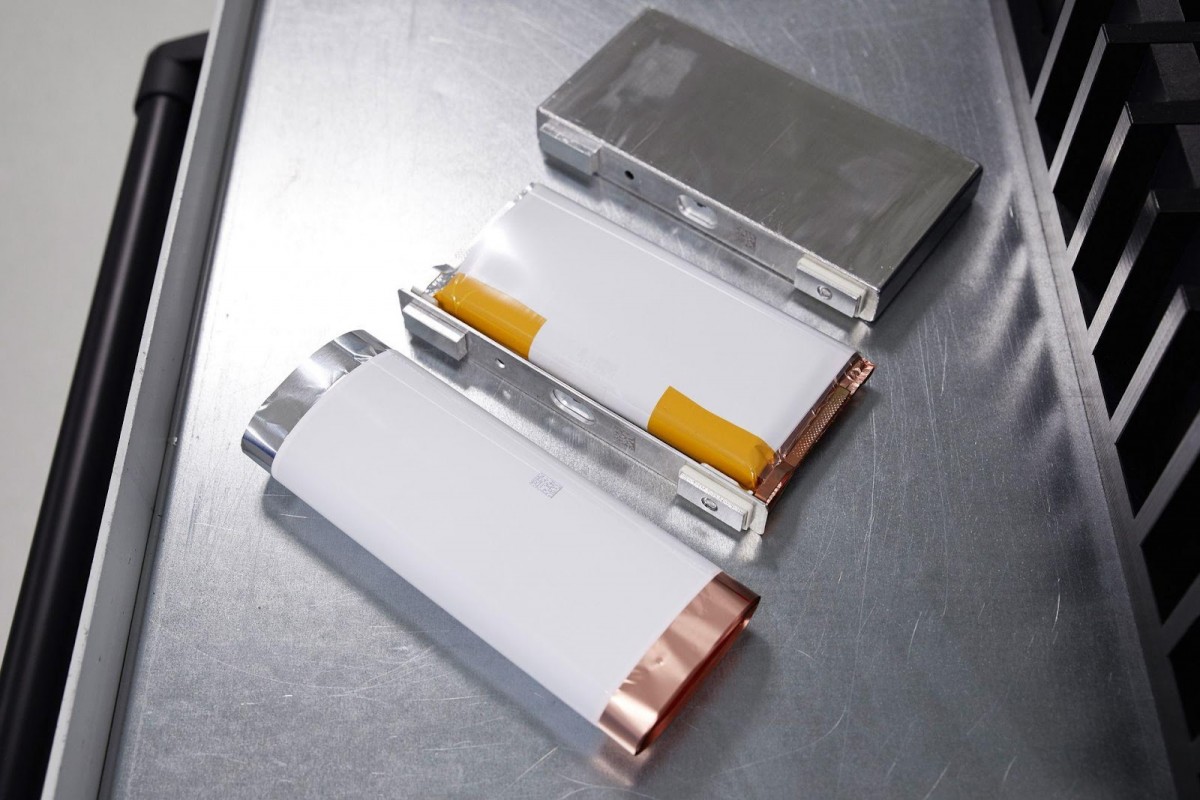
We'll begin with a crucial component unique to electric vehicles: the high voltage battery. This battery functions like a fuel tank in an ICE vehicle, providing essential electrical energy to the electric motor.
The electric motor itself is another new feature found in electric cars. It converts electrical energy into mechanical energy to propel the vehicle. However, this process isn't straightforward; the electric motor operates on alternating current (AC) while the high voltage battery supplies direct current (DC).

To facilitate communication between these elements, power electronics, specifically an inverter, play a crucial role. The inverter converts DC from the high voltage battery to 3-phase AC for propulsion, and it reverses this conversion during regenerative braking, converting AC back to DC to recharge the battery.
The efficiency of the inverter significantly impacts the overall efficiency of electric vehicles. Additionally, there is an onboard charger, which converts AC (single or three-phase) from the grid to DC for battery charging; high-power DC charging bypasses this charger.
Heating the cabin in electric vehicles differs greatly from ICE vehicles. Electric cars utilize Positive Temperature Coefficient (PTC) heaters and heat pumps because their high efficiency results in minimal thermal energy for cabin heating. In contrast, ICE vehicles can harness wasted heat from their engines.
The DC/DC converter is another novel component, converting high voltage DC from the battery to 12V for low voltage systems like lights and infotainment.
Finally, the charging socket represents another unique feature of electric vehicles.
What’s Different?
Both ICE and electric cars employ air conditioning systems, yet the powering mechanism diverges significantly. In electric vehicles, the air conditioning compressor operates on high voltage and is powered by the battery. Conversely, in ICE vehicles, it is mechanically driven by the engine's crankshaft; this mechanical reliance can lead to a slight power loss when the air conditioning is engaged.
Although both types of cars utilize gearboxes, electric vehicles generally feature simpler configurations, often limited to a single speed. In contrast, modern ICE passenger vehicles frequently employ complex multi-speed automatic transmissions, with 9-speed options becoming increasingly common.
The braking systems also contrast sharply. In most electric vehicles, pressing the brake pedal engages the electric motor as a generator, initiating regenerative braking while recharging the battery. Conventional hydraulic brakes only activate when greater stopping power is necessary, extending the lifespan of brake pads and discs. ICE vehicles consistently rely on hydraulic braking every time the driver engages the brakes.
Additionally, the structural differences between the motors are notable. Electric motors typically require little maintenance and consist of only two moving parts, while an average ICE engine comprises at least 40 moving parts, necessitating routine maintenance and various fluid changes.
 High voltage A/C compressor from Rheinmetall Automotive
What’s the Same?
Despite the differences, several components remain similar between ICE and electric cars, particularly concerning suspension, wheels, and tires. Most electric vehicles derived from ICE platforms share similar suspension architectures.
Electric vehicles designed from the ground up often feature fully independent suspension systems, including multi-link, double wishbone, and McPherson strut designs. Adaptations are made to accommodate the additional weight of electric vehicles.
Tires designed to promote low rolling resistance are available for both types of vehicles. While earlier differences existed in wheel designs due to aerodynamic considerations, recent ICE vehicles frequently adopt aerodynamic wheel designs to reduce drag.
Lastly, the steering systems in both vehicle types are akin, using electromechanical systems that support advanced driver assistance features, such as lane assist and autonomous parking.
 Tesla Model 3 and Skoda Fabia aero wheels design
Conclusions
In conclusion, the primary differences between ICE and electric vehicles stem from their distinct propulsion methods, which necessitate different components. However, both types of vehicles share common aspects, ensuring that electric cars remain cost-effective and accelerates their widespread adoption.