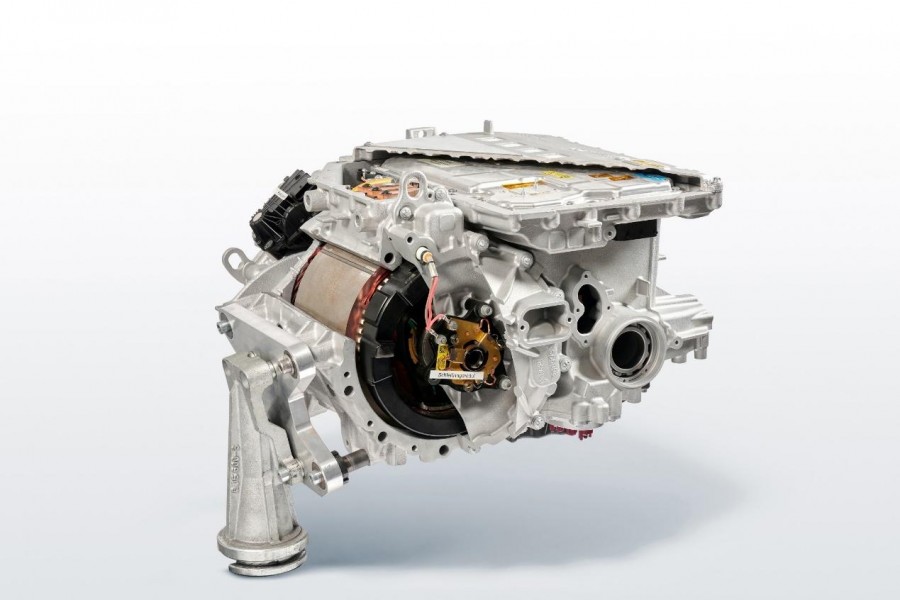
Purchasing an electric car can be challenging. With various brands and models available, determining which option provides the best value can be overwhelming. Additionally, considerations regarding charging options—such as the availability of public chargers and the feasibility of home charging—add to the complexity. If you find yourself in a situation where charging options are limited, you might wonder if an Extended Range Electric Vehicle (EREV) is the solution.
The EREV concept differs from the traditional Plug-in Hybrid (PH). While both vehicles utilize electric motors and batteries, an EREV employs a combustion engine solely as a generator, eliminating any connection between the engine and the drivetrain. Typically powered by gasoline, this generator’s sole function is to recharge the batteries when they become depleted.

Since EREVs often feature built-in charging capabilities, they do not require a large battery. Most models come equipped with battery packs of around 45 kWh, which still provide a respectable electric-only driving range compared to PHs. Some EREVs can travel up to 200 kilometers exclusively on battery power. When battery levels are low, drivers have the option to activate the generator or stop at a DC charger for a quick recharge.
This flexibility allows the EREV to function similarly to a conventional vehicle while still having the ability to recharge itself in the absence of charging stations. For many drivers, a range of 200 kilometers is sufficient, and having a generator onboard provides reassurance for longer journeys or unforeseen circumstances.
While both vehicle types have combustion engines, EREVs diverge from PHs in significant ways. The EREV can be viewed as an advancement in hybrid technology. By disengaging the gasoline engine from the drivetrain, EREVs eliminate the need for complex gear systems, allowing the engine to operate consistently at optimal efficiency, thereby maximizing fuel savings.

Typically, EREVs are more powerful than PHs, with some models boasting up to 300 kW of electric power. Their electric-only powertrains provide an enjoyable driving experience, characterized by instant torque. Furthermore, EREVs surpass PHs in terms of electric-only driving range and can effectively utilize DC fast chargers.
However, there are drawbacks. Currently, EREVs are primarily available as larger SUVs and crossovers, as manufacturers are focusing on this vehicle segment. Whether this trend will change depends on the growing popularity of EREVs. Additionally, some early EREV models may be less fuel-efficient than newer PHs, and charging the battery via an onboard generator can be more expensive than using a DC or AC charger.
EREVs are engineered to mitigate the typical limitations of electric vehicles regarding battery charging. The primary barrier to widespread electric vehicle adoption remains the insufficient charging infrastructure. EREVs address this issue and provide a practical alternative with a potential driving range of up to 1,200 kilometers.
 Li Auto offers only EREVs with an electric-only range of 180 km WLTC
While the charging infrastructure continues to improve, accessibility remains inconsistent. This inconsistency can cause issues for electric emergency vehicles that require quick service without lengthy recharge times. EREVs cater well to this niche, primarily relying on battery power with the combustion engine serving as a backup without compromising performance.
In terms of cost, EREVs tend to be more affordable than comparable electric vehicles simply because they contain smaller batteries. A smaller battery not only reduces vehicle costs but also facilitates increased availability. With lithium supplies dwindling and sodium-ion batteries just beginning to enter the market, it may be some time before more affordable battery options become widely available.
Nonetheless, EREVs have their drawbacks; for instance, when the combustion engine is not in use, it becomes unnecessary weight. In many cases, the onboard generators are utilized only a small fraction of the vehicle's lifespan—meaning a substantial amount of mechanical components may not contribute to efficiency.
Although electric cars are associated with lower maintenance costs, EREVs necessitate regular maintenance for their engines, akin to traditional vehicles. The complexity of these engines also increases the potential for breakdowns.
While creating a small city-focused electric vehicle is relatively straightforward, developing a small EREV is considerably more complex and can prove costlier than a purely electric vehicle. EREVs are more logical for larger vehicles that require larger batteries.
Ultimately, the combustion engine demands space, which can negatively impact trunk or frunk size. There are also additional safety concerns, including accident ratings, and reliability issues when compared to electric-only vehicles.
Which one to buy?
For those considering an EREV, such vehicles are particularly popular in China, where this segment is among the fastest-growing. Unfortunately, choices are limited in other parts of the world. The Mazda MX-30 R-EV, set to include a rotary engine, is a forthcoming option that may appeal to enthusiasts; however, it could also present challenges for broader adoption.

Alternatively, the LEVC TX, a London taxi available in passenger and van versions, has multiple advantages. It is crafted by Geely, utilizing many Volvo components, ensuring competent performance and quality. If one is comfortable with passengers entering the vehicle at stops, it can prove to be an engaging experience. The taxi's spacious interior accommodates up to eight passengers comfortably or two in the back with ample legroom.
 AITO M5
The AITO M5 is one of the earliest EREVs in the Chinese market, reviewed comprehensively here. In its EREV specification, it is equipped with a turbocharged 1.5-liter four-cylinder engine producing 123 hp—not contributing to the vehicle's total output since it does not connect to the wheels. Its battery, with a capacity of 40 kWh, provides an electric-only range of 140 km. Afterwards, the extender activates, offering a total range exceeding 1,000 km (NEDC). The EREV is available in both 2WD and AWD configurations, the latter boasting dual electric motors generating a combined power output of 315 kW and 720 Nm of torque, achieving 0 to 100 km/h in just 4.4 seconds.
Claimed efficiency suggests a consumption of 56 liters of fuel to cover 860 km, resulting in a theoretical consumption rate of 6.5 l/100 km.
 Li L9
Li L9Li Auto's vehicle lineup exclusively comprises EREVs, with the Li ONE now succeeded by the Li L9. Additional models include the Li L8 and Li L7, featuring a 42 kWh battery paired with a 1.5-liter gasoline generator. The company states a total range of 1,315 km for the L8, with 210 km achievable on electric power alone.
 Range extender in the Li L9
The larger Li L9 employs a similar range extender but has a slightly larger battery of 44.5 kWh. Due to its size, the electric range is lower, at 180 km, yet the total range remains identical for both models at 1,315 km. Details on the upcoming Li L7 are not yet available, but it will likely use the same generator and feature a battery around 40 kWh.
The Li L9 includes a 65-liter fuel tank, enabling travel of 1,135 km on fuel (180 km electric). This translates to an average fuel consumption of 5.7 l/100 km—a commendable figure for a vehicle larger than the Mercedes EQS SUV.

The Voyah Free is another Chinese EREV that is also available as a battery-only option. In its EREV variant, it is fitted with a familiar 1.5-liter turbocharged four-cylinder engine combined with a 33 kWh battery pack. Power comes from two electric motors, peaking at 500 kW (671 hp) with torque reaching 1,000 Nm. The total claimed range is 860 km (530 miles), and it accelerates from 0 to 100 km/h in 4.6 seconds.
The Voyah Free utilizes a 56-liter fuel tank, and while the electric-only range has not been confirmed, estimates suggest it will likely be around 160 km. This results in a potential driving range of 700 km on the extender, yielding a fuel consumption of 8 l/100 km.

BYD provides an extensive lineup of EREVs, with popular models including the Song Plus, Tang, and Han. These vehicles are designated as DM-i trim (Dual Mode) and feature a 1.5-liter engine powering either a 10 or 21.5 kWh battery. According to the manufacturer, all three models are capable of over 1,000 km of total combined range.
The BYD Han DM-i, equipped with the larger battery, can achieve an electric-only range of up to 242 km, followed by an additional 1,158 km using the range extender. With a 50-liter fuel tank, this results in an average consumption of 4.3 l/100 km.
What’s the verdict?
It’s essential to note that the EREV concept is not a novel innovation. In the early 1900s, electric vehicles originally employed gasoline generators for power due to unreliable battery technology. More recently, the Chevrolet Volt and BMW i3 REx functioned as EREVs, though they were not produced in significant quantities and are no longer manufactured. The Volt could drive the wheels thanks to its innovative clutch, while the i3 REx served as an emergency measure.
Will the trend of EREVs gain traction? This largely hinges on how rapidly the charging infrastructure for electric vehicles expands and how quickly affordable batteries are developed—factors that are currently limiting progress. As long as these challenges persist, EREVs may continue to serve as a viable interim solution. With global governments pursuing ambitious goals, these vehicles offer a bridge between past and future technologies.