The Norwegian media outlet Motor.no, in collaboration with the Norwegian Automobile Federation, conducted its annual winter test featuring a variety of vehicles, including some exotic Chinese models available for purchase in the country. Each year, they perform both winter and summer tests to assess the real-world performance of popular vehicles. Given that WLTP ranges are often optimistic, it’s crucial to understand the actual mileage difference.
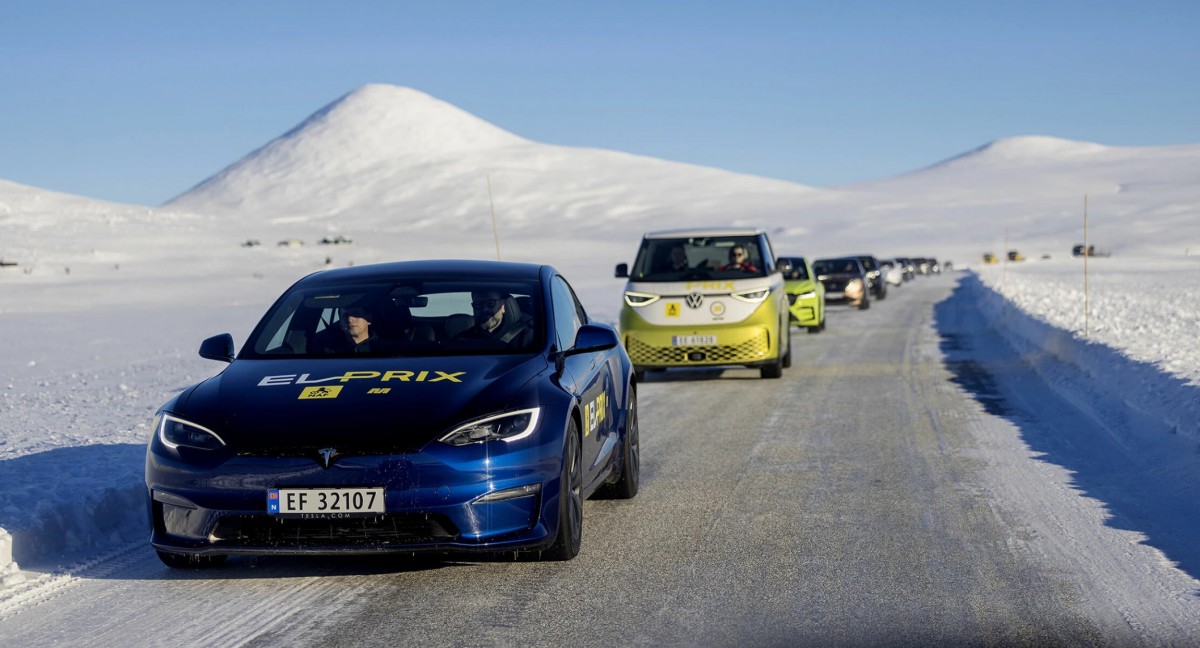
This year, the Long Range (LR) trim of the Model S outperformed the Model 3 LR Dual Motor's previous record set in 2021, achieving 530 km compared to the Model 3’s 521 km. It's worth noting that the Model S had a slight disadvantage, as it could not charge beyond 98%.
As expected, testing in Norway presents challenges, with average temperatures ranging from -5°C to -10°C, and some parts of the route experiencing temperatures as low as -19°C. Here’s the route that the testing team follows each year.
Route: From Oslo, around Rondane National Park and back
Typically, vehicles lose between 20% and 30% of their WLTP range under these harsh conditions, with notable exceptions. The Tesla Model S exhibited only a 16.40% deviation, while the Maxus Euniq6 only lost 10.45%. The MG Marvel R and the MG 5 also performed relatively close to their WLTP figures, with deviations of 16% and 17%, respectively.
| Model | Advertised Range (WLTP) | Actual Range | Deviation from WLTP |
|---|---|---|---|
| Tesla Model S LR | 614 km (382 mi) | 530 km (329 mi) | -16.40% |
| Mercedes EQE 300 | 614 km (382 mi) | 409 km (254 mi) | -33.39% |
| BMW i7 xDrive60 | 595 km (370 mi) | 424 km (263 mi) | -28.74% |
| Nio ET7 100 kWh | 580 km (360 mi) | 434 km (270 mi) | -25.17% |
| BMW i4 eDrive40 | 565 km (351 mi) | 434 km (263 mi) | -23.19% |
| Tesla Model X Plaid | 543 km (337 mi) | 444 km (276 mi) | -18.23% |
| Nissan Airya 2WD | 533 km (331 mi) | 400 km (249 mi) | -24.95% |
| Volkswagen ID.5 Pro | 526 km (327 mi) | 378 km (235 mi) | -28.14% |
| BYD Han | 521 km (324 mi) | 406 km (252 mi) | -22.07% |
| Hongqi E-HS9 Prototype (120 kWh) | 515 km (320 mi) | 389 km (242 mi) | -24.47% |
| Skoda Enyaq Coupe RS | 510 km (317 mi) | 338 km (210 mi) | -33.73% |
| Toyota bZ4X 2WD | 503 km (313 mi) | 323 km (201 mi) | -35.79% |
| Voyah Free | 501 km (311 mi) | 391 km (243 mi) | -21.96% |
| Hongqi E-HS9 99 kWh | 465 km (289 mi) | 303 km (188 mi) | -34.84% |
| 460 km (285 mi) | 343 km (213 mi) | -25.43% | |
| Tesla Model Y SR+ RWD | 455 km (283 mi) | 337 km (209 mi) | -25.93% |
| Hyundai Ioniq 5 LR 4WD | 454 km (282 mi) | 345 km (214 mi) | -24.01% |
| Mercedes EQB 250 | 452 km (281 mi) | 334 km (208 mi) | -26.11% |
| MG ZS LR | 440 km (273 mi) | 352 km (219 mi) | -20.00% |
| JAC e--JS4 | 433 km (269 mi) | 323 km (201 mi) | -25.40% |
| BMW iX1 xDrive30 | 428 km (266 mi) | 337 km (209 mi) | -21.26% |
| Renault Megane E-Tech | 428 km (266 mi) | 318 km (198 mi) | -25.70% |
| 425 km (264 mi) | 338 km (210 mi) | -20.47% | |
| 424 km (263 mi) | 349 km (217 mi) | -17.69% | |
| BYD Atto 3 | 420 km (261 mi) | 311 km (193 mi) | -25.95% |
| Volkswagen ID. Buzz Pro | 408 km (254 mi) | 310 km (193 mi) | -24.02% |
| MG5 LR | 380 km (236 mi) | 313 km (194 mi) | -17.63% |
| MG Marvel R AWD | 370 km (230 mi) | 308 km (191 mi) | -16.76% |
| Maxus Euniq6 | 354 km (220 mi) | 317 km (197 mi) | -10.45% |
At the other end of the spectrum, the Mercedes EQE 300 experienced a significant decline, losing 33.39% of its advertised range. Despite this, it managed to surpass 400 km of actual range. Similarly, the Chinese Hongqi E-HS9 saw a decrease of over 34%.
Unfortunately, the Toyota bZ4X in its two-wheel-drive variant was the weakest performer, suffering a 35.79% reduction in range. Notably, Toyota has withheld the four-wheel-drive model due to its poor performance in previous range and consumption tests. Updates are expected before it undergoes further evaluation, similar to the Subaru Solterra, which shares the same platform.
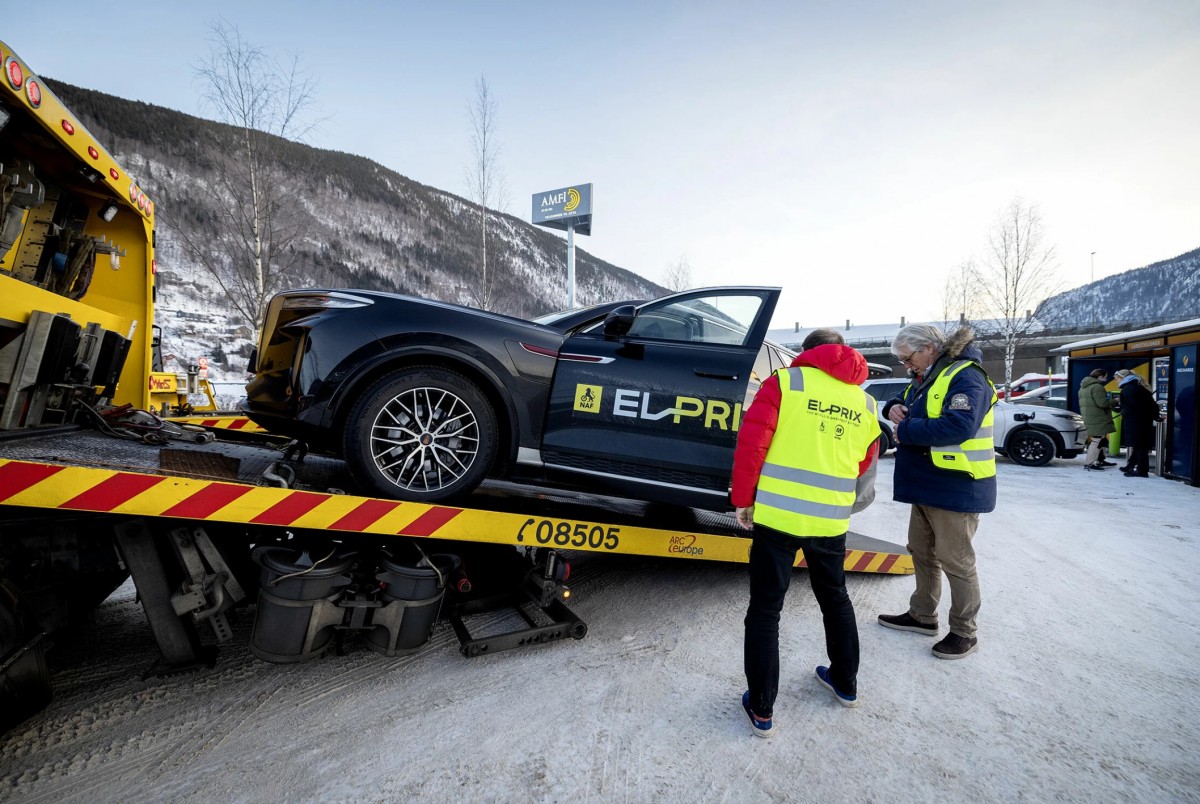
Recent findings from the Chinese winter tests showed similar disappointing results for the bZ4X.
This year's list also featured 12 Chinese-made vehicles, including those soon to hit the European market: JAC e-JS4, Voyah Free, BYD Atto, BYD Han, and Nio ET7.
Source