Introduction
As Samsung gears up for the launch of its Galaxy S27 series, the company is reportedly making significant changes to the design of its next-gen processor, the Exynos 2700. This strategic move could have vital implications for the performance and efficiency of future flagship smartphones.
Samsung’s upcoming flagship chipset, the Exynos 2700, is expected to feature a new packaging design, as per a recent industry report. Notably, the company is planning to abandon the Fan-Out Wafer-Level Packaging (FOWLP) technology previously utilized since the Exynos 2400.
FOWLP has been credited with enhancing thermal performance, but sources indicate that the technology has proven to be less profitable for Samsung due to its intricate and expensive manufacturing processes.
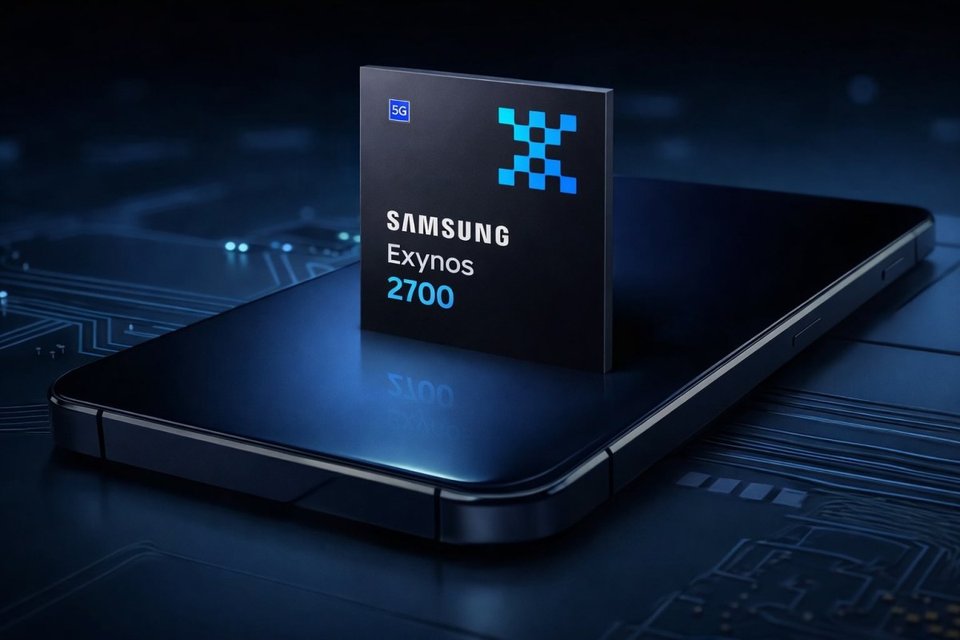
According to industry officials, Samsung will implement a new packaging architecture for the Exynos 2700, referred to as Side-by-Side (SbS) packaging. In this setup, the application processor (AP) and DRAM are positioned adjacent to one another on the substrate instead of being stacked on top of each other.
Additionally, the Exynos 2700 is expected to integrate Samsung’s innovative Heat Pass Block (HPB) technology, which aims to bolster heat dissipation and overall thermal efficiency.
The Exynos 2700 will power the Galaxy S27 and Galaxy S27+, which are anticipated to launch in early 2027. Observers are keen to see how the new packaging design influences both thermal performance and overall efficiency in these flagship devices.