In the evolving landscape of electric vehicles (EVs), the introduction of 800V architectures by manufacturers such as Hyundai and Kia has sparked significant interest. These innovations are designed to enhance charging speeds and improve battery longevity. However, amidst the excitement, there are some misconceptions regarding the actual charging capabilities of these vehicles that must be addressed. This article aims to clarify the distinctions between claimed charging speeds and the reality of these robust vehicles.
Understanding Charging Speed
Before diving into specifics, it's essential to grasp that no electric vehicle consistently charges at its maximum specified speed. Most vehicles achieve peak charging speeds only when their battery levels are low, typically within the initial 20% of charging, and only under optimal environmental conditions. Therefore, when a manufacturer touts a 200kW DC charging capability, one should not expect to fully charge a 100kWh battery from empty in just half an hour. In many instances, the effective average charging speed ends up being roughly half of the advertised figure, resulting in charging times extending beyond an hour.
Are Other Brands Doing the Same?
While it is common for manufacturers to present idealized charging speeds, many vehicles can reach those peak rates at low state-of-charge levels. This gives drivers a crucial advantage during quick charging moments. However, Hyundai and Kia's EVs diverge from this norm, as they do not achieve the claimed 350kW - their maximum charging speed peaks at just under 250kW, substantially lower than the company’s insinuations.
The Marketing Tactic Explained
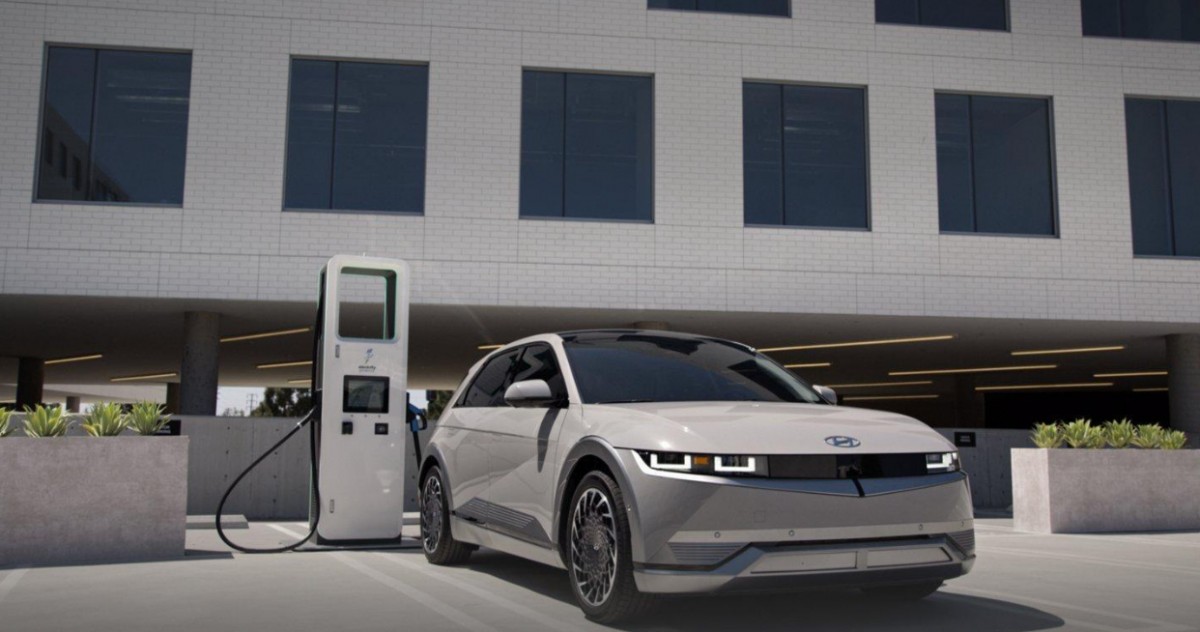
Hyundai and Kia are not outright deceiving consumers, as they are careful with their wording. They refer to the specifications of the chargers rather than the vehicles themselves. For instance, on their websites, they provide charging times for both “DC Fast Charge 50kW” and “DC Fast Charge 350kW.” While this is technically accurate, it tends to imply that the EVs can utilize the entire capacity of a 350kW charger, whereas the reality is that the charging speed remains unchanged, even when connected to a more powerful charger.
This marketing strategy stands out in contrast to most other brands, suggesting a calculated approach to imply higher performance without making directly false claims. Essentially, Hyundai is presenting a number that is disconnected from the real-world charging performance, allowing media and potential consumers to misinterpret these specs.

An array of reviewers has been misled by these claims, primarily because verifying peak charging speeds can be a complex process. Furthermore, owner forums often echo sentiments that challenges with charging networks prevent these vehicles from achieving the promised 350kW speeds.
Is 800V Technology Worth It?
Despite the confusion surrounding charging capabilities, the 800V architecture does offer advantages over traditional 400V systems. As mentioned earlier, the ability to maintain near-peak charging rates for longer durations—often beyond 50% state-of-charge—substantiates the overall charging efficiency. This translates into significantly shorter charging times for common scenarios of charging from 10% to 80%, even if the peak speeds are not drastically different between 400V and 800V systems.
For practical insights into charging times across various vehicles, consider utilizing our battery charging tool, which provides precise charging duration estimates for multiple cars, chargers, and charging levels. This resource is invaluable for planning your electrifying journeys.