Introduction
In the ever-evolving landscape of communication technology, SpaceX is making waves with its Starlink satellite internet service. While the company initially appeared to be a niche player focused on providing broadband access in rural areas, its recent advancements suggest a shift in strategy. Now, major telecom giants like AT&T and Verizon are bracing for competition, with T-Mobile potentially being next in line. This article explores the implications of SpaceX’s expanded ambitions in the broadband market.
Starlink's Rapid Growth
Once seen primarily as a solution for underserved rural communities, Starlink is gaining traction as a serious contender in the broadband space. According to industry analysts, SpaceX's continuous improvements in satellite technology and its ramped-up launch capacity have led to significant growth in serviceability and marketing efforts.
Peter Supino, an analyst from Wolfe Research, noted in June 2026 that "Starlink’s advances in satellite technology and launch capacity have accelerated capacity growth and marketing investments," indicating a robust future for the service.
Expanding Beyond Rural Markets
Starlink is shedding its "rural-only" image, aiming to reach urban customers and beyond. As the service improves, it could easily disrupt traditional broadband providers by offering more reliable and faster internet access.
Technological Improvements on the Horizon
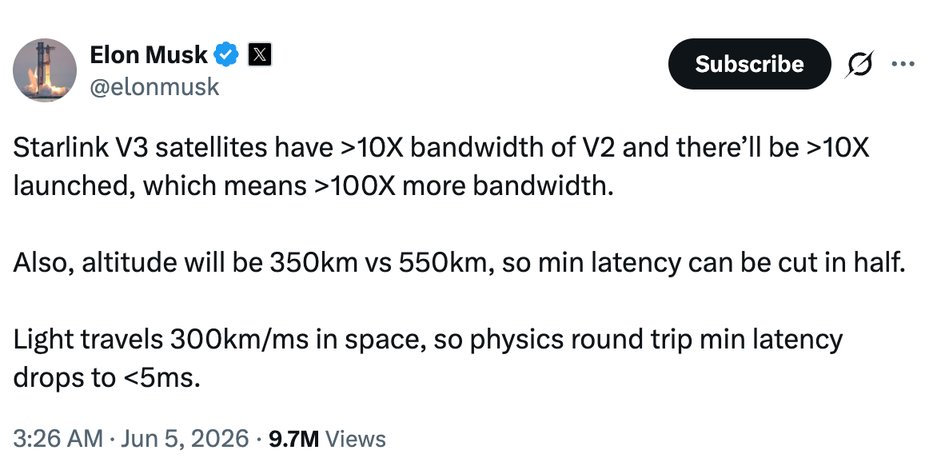
The Impact on Major Carriers
As Starlink continues to scale, major carriers like AT&T and Verizon will likely feel the competitive pressure in the coming years. While T-Mobile has found some stability for now, its ongoing acquisitions signal that it may not remain insulated from Starlink’s threat for long. The landscape of the telecommunications market is set to undergo significant changes as SpaceX asserts its influence.