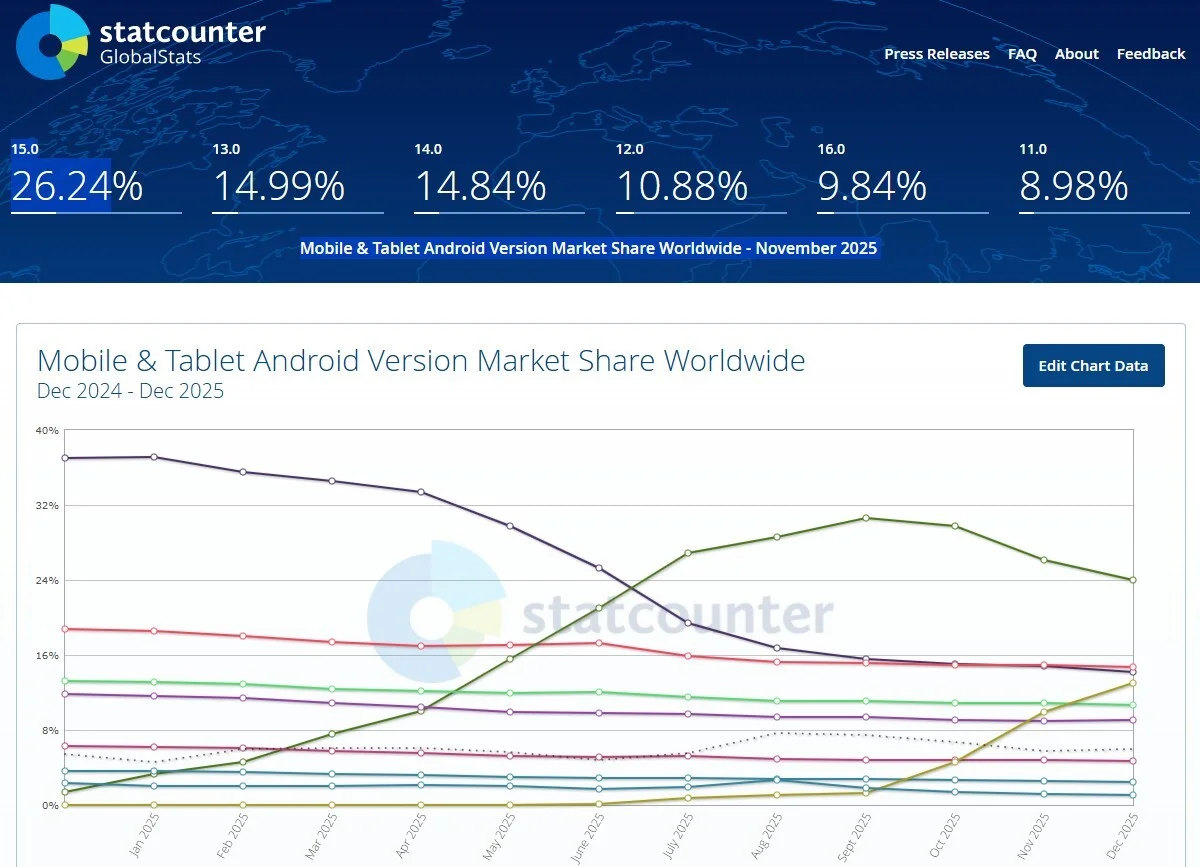
Millions of Android users worldwide continue to operate devices running Android 13 or older versions. Since Android 13 was first launched in 2022, a significant portion of these devices no longer receive official support or security patches from Google. This leaves approximately one billion Android phones exposed to potentially dangerous cyber vulnerabilities, putting users’ passwords and personal information at risk.
The Persistent Problem of Android Fragmentation
Cybersecurity firm Zimperium highlights that "over 50% of mobile devices are running outdated OS versions at any point in the year," many of which are susceptible to infections or compromise. This problem is particularly critical for users with older Android phones that no longer receive crucial monthly security updates. For context, the December Android security update recently patched 107 critical vulnerabilities. Unfortunately, devices without support cannot benefit from such essential fixes, leaving users at risk.
How Concerned Are You About Losing Software Support on Your Phone?
In contrast, Apple’s ecosystem experiences far less fragmentation. According to StatCounter, around 90% of active iPhones worldwide still receive software updates. This means only 10% of iPhone users are on unsupported devices. The vast number of phone manufacturers using Android — compared to Apple’s single controlled system — results in a fragmented landscape where timely updates are challenging to implement.
Recommended For You

The issue of Android fragmentation is not new but remains critical. Security Boulevard notes, "When combined with staggered rollouts, this results in a persistent issue where vulnerabilities are publicly known yet still exploitable on a significant number of devices due to delayed updates."
The Serious Consequences of Losing Phone Software Support
Unlike Android manufacturers, Apple can update all iPhones simultaneously with a single press of a button. Android updates must be customized for different chips and user interfaces used by numerous brands. Therefore, receiving consistent security updates on an Android phone is essential to protect personal data and app credentials from cybercriminals. Losing this protection means your sensitive information, like passwords for banking apps, could be stolen by hackers.
Even if you believe your device is unlikely to be targeted, consider the warning from BeyondTrust’s James Maude, quoted by Forbes’ Zak Doffman: "Although currently linked to a small number of attacks, this exploit is expected to become a widespread tool for various threat actors." In essence, attackers know exactly which devices are vulnerable and will focus their efforts accordingly. If your phone no longer receives security updates, upgrading to a newer model is likely a wise investment to keep your data safe.