Verizon has begun enforcing stricter measures on its 5G Home Internet service by reducing speeds for customers using the service at locations other than their registered addresses. This development comes after users reported receiving emails notifying them of the speed reductions and the company’s requirement to update their service address to regain full speeds.
Service Limited to Registered Locations
According to Verizon's Terms of Service, the 5G Home Internet service is intended to be used only at the address registered during sign-up. Verizon is increasingly cracking down on users who move their service equipment to different locations without prior notification. Customers affected by this enforcement have had their speeds capped and are prompted to submit a formal request to relocate their service to a new address if they wish to restore previous performance levels.
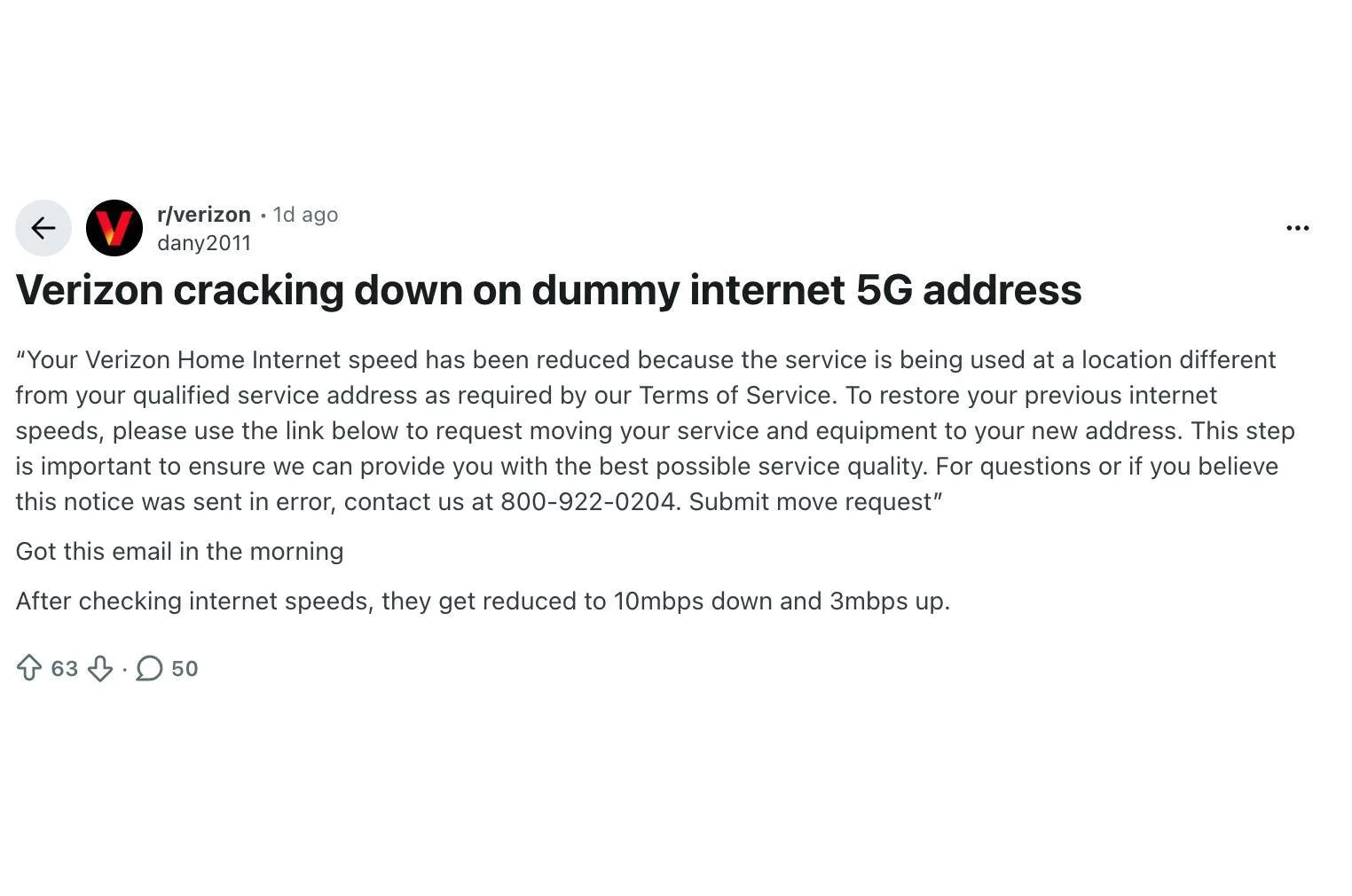
Verizon is limiting Home Internet speeds for customers using the service outside their designated service address.
Stricter Enforcement and Reasoning Behind the Move
Verizon’s website clearly states that relocating internet equipment to a new address without notifying the company may lead to service interruptions or termination. The Home Internet service leverages Verizon’s 5G network — the same network used by smartphones — and is designed to provide service only in areas with sufficient network capacity to maintain reliable speeds.
Reports suggest that some sales representatives may have bypassed these restrictions during the early phases of the service rollout to meet enrollment targets. Now, Verizon is correcting these lapses by requiring customers to accurately register their service locations to prevent network overcapacity and ensure consistent service quality.
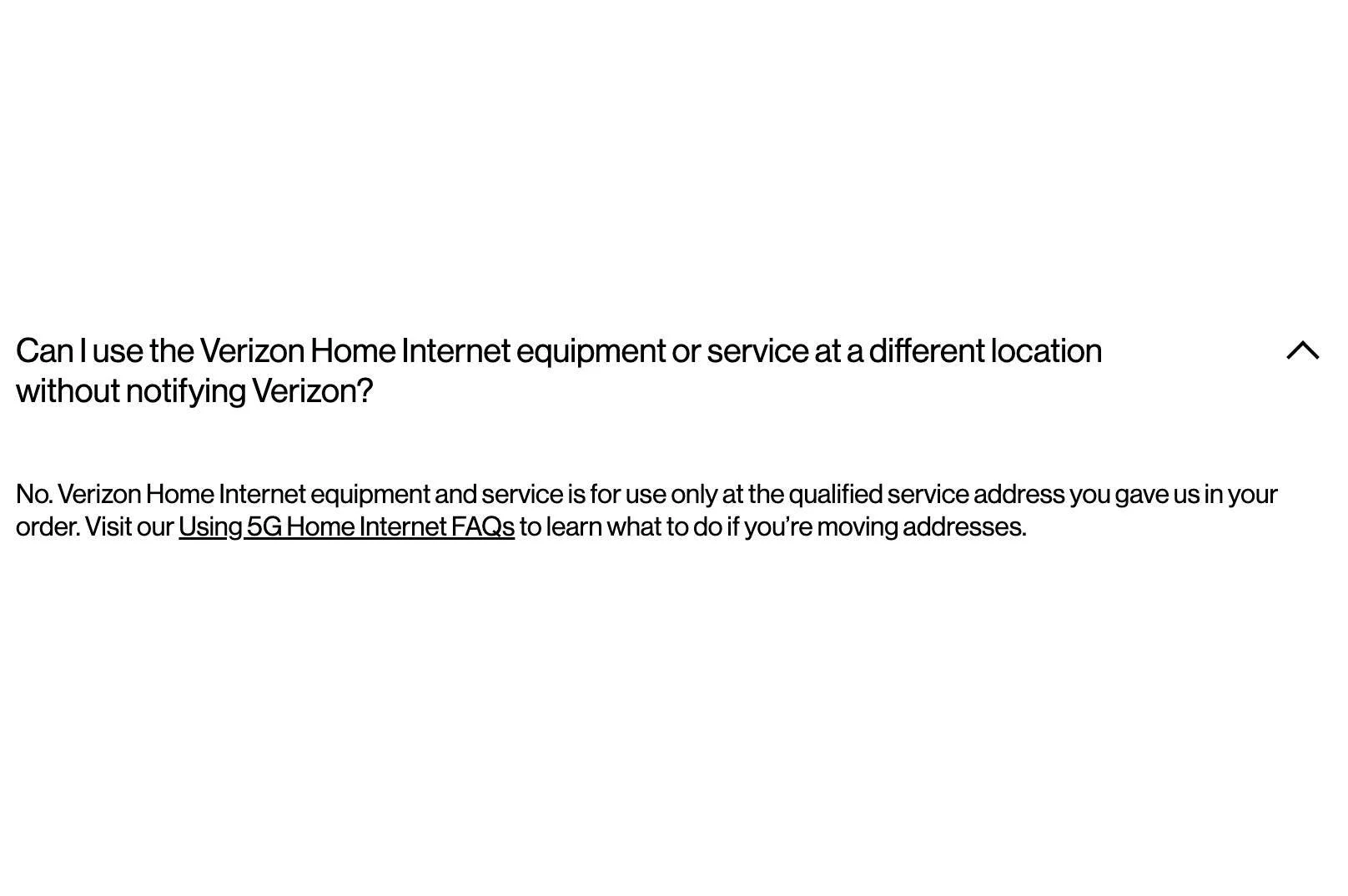
Verizon’s 5G Home Internet service is tied to the registered address. | Image Credit - Verizon
Initially, Verizon appeared more lenient, likely aiming to build a user base. However, as 5G Home Internet adoption grows, tighter controls are necessary to prevent bandwidth strain and maintain quality for all users.
Industry-Wide Impact on Fixed Wireless Access Speeds
Declining speeds are not unique to Verizon; customers of AT&T and T-Mobile also report slower Fixed Wireless Access (FWA) speeds. These trends indicate increasing network congestion across major carriers as demand for 5G broadband services rises.
Customer Feedback
Readers were invited to share their experience regarding Verizon Home Internet speeds with the following results from 311 votes:
- Yes, speeds have declined: 44.37%
- No, speeds are stable: 32.48%
- Can't tell: 23.15%


