Understanding the Economics of Electric Vehicle Battery Costs
As the world shifts towards more sustainable transportation solutions, electric vehicles (EVs) have become increasingly popular. A critical aspect of EV technology is the battery that powers these vehicles, which significantly contributes to their overall cost. In this article, we will explore the composition and cost structure of an average EV battery, shedding light on what makes these components so valuable and how prices have transformed over the years.
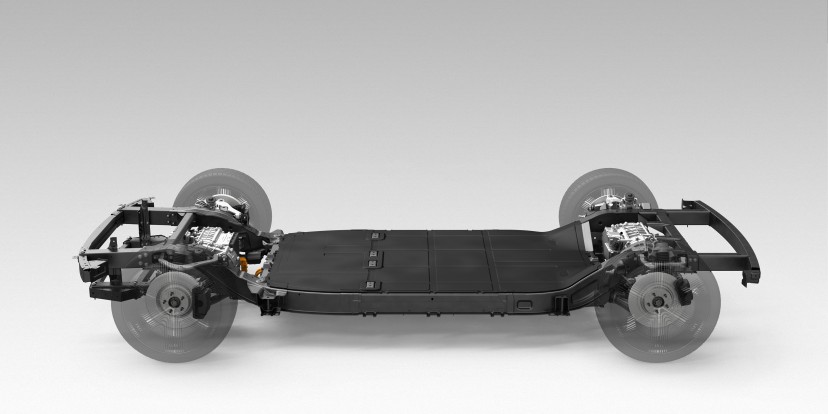
Recently, data from Elements by Visual Capitalist provides insightful revelations about EV battery costs. To begin with, the average cost of battery cells was $101 per kWh last year. When considering a full battery package, that figure jumps to $132 per kWh. This means potential EV buyers can estimate the battery's cost by multiplying the vehicle's gross battery capacity (in kWh) by 132. While $132/kWh is notable, it pales compared to the whopping $1,200 per kWh back in 2010!
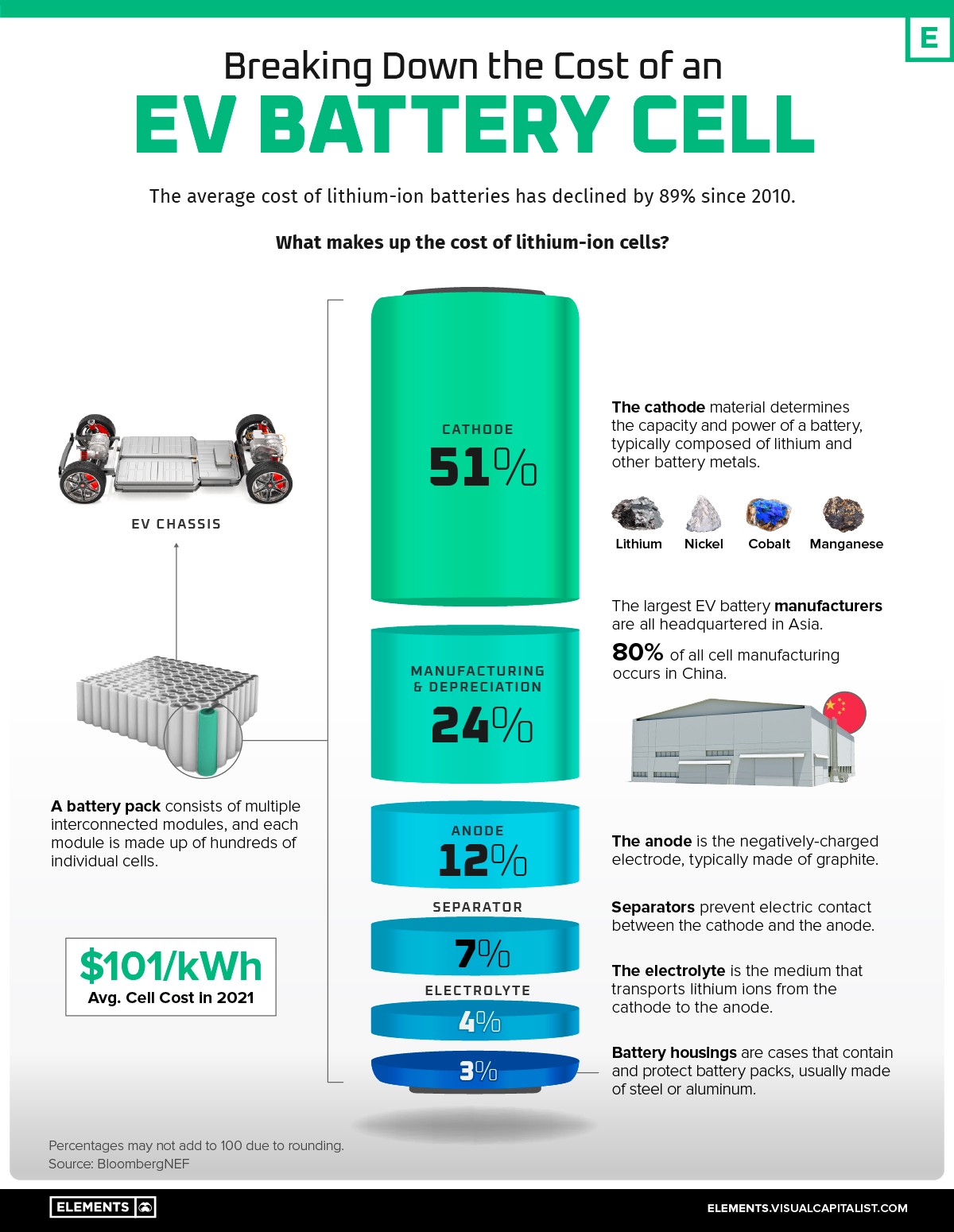
A significant portion of an EV battery's expense comes from the cathode, which is the positively charged electrode. During discharge, electrons and charged molecules travel from the anode to the cathode, storing energy until recharged. The cathode's high cost—responsible for approximately 40% of the total cell cost—is attributed to its critical role in determining a battery's performance, range, and thermal safety. Various refined metals are used in its composition, including lithium iron phosphate, lithium nickel manganese cobalt, and lithium nickel cobalt aluminum oxide.
The remaining components of the battery add up to 49% of the total cell cost, with manufacturing processes accounting for a substantial 24%. The anode, typically made from natural or synthetic graphite, constitutes around 12% of the overall cost, making it less expensive than the cathode's materials.
Source