The Norwegian media outlet Motor.no, in collaboration with the Norwegian Automobile Federation, conducted its annual winter range test featuring a range of vehicles, including some exotic Chinese models available for purchase in Norway. Each year, they perform winter and summer tests to assess the real-world performance of popular vehicles, as the WLTP ratings often prove to be overly optimistic. The key focus is determining how much actual mileage deviates from these advertised figures.
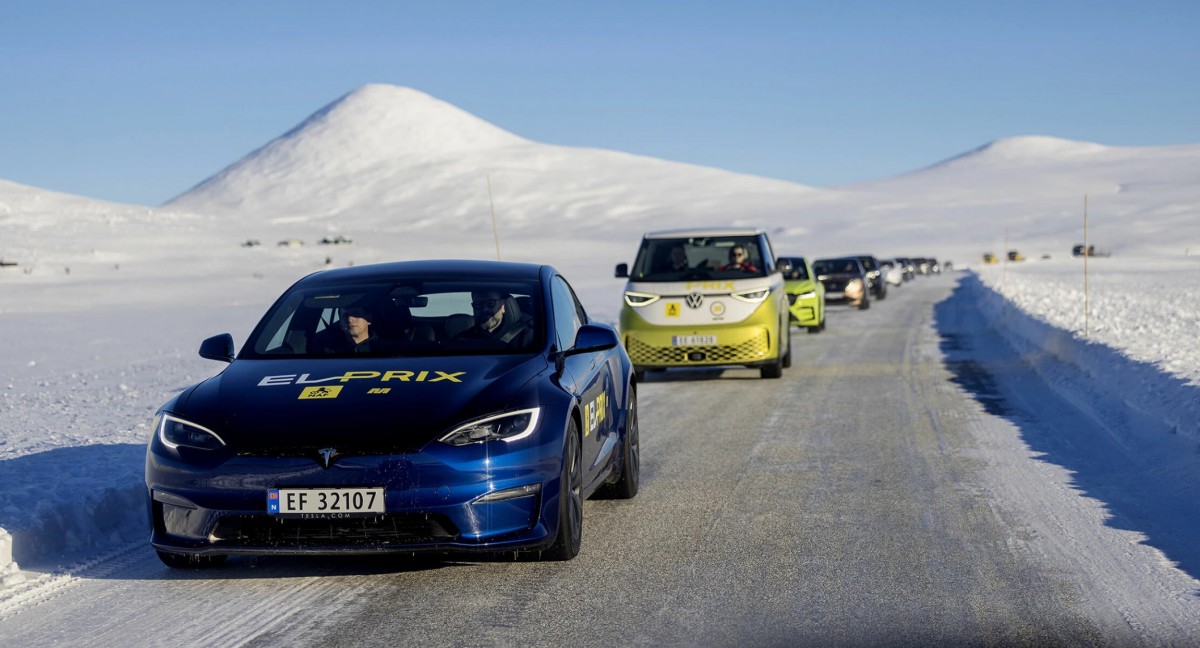
This year, the Model S Long Range (LR) trim shattered the previous record held by the Model 3 LR Dual Motor from 2021, covering an impressive 530 km. In comparison, the Model 3 achieved 521 km. Notably, the Model S faced a slight disadvantage, as it was unable to charge beyond 98%.
Given Norway's challenging winter conditions, testing vehicles here makes perfect sense. Motor.no reported average temperatures during the test ranged between -5°C and -10°C, with some parts of the route even dipping to -19°C. The route typically taken for these winter assessments is:
From Oslo, around Rondane National Park and back
On average, cars lose about 20% to 30% of their WLTP range in such conditions, with few exceptions. The Tesla Model S was one of the standout performers, exhibiting only a 16.40% deviation, while the Maxus Euniq6 lost just 10.45%. Other competitors like the MG Marvel R and MG 5 also performed commendably, with deviations of 16% and 17%, respectively.
| Model | Advertised Range (WLTP) | Actual Range | Deviation from WLTP |
|---|---|---|---|
| Tesla Model S LR | 614 km | 530 km | -16.40% |
| Mercedes EQE 300 | 614 km | 409 km | -33.39% |
| BMW i7 xDrive60 | 595 km | 424 km | -28.74% |
| Nio ET7 100kWh | 580 km | 434 km | -25.17% |
| BMW i4 eDrive40 | 565 km | 434 km | -23.19% |
| Tesla Model X Plaid | 543 km | 444 km | -18.23% |
| Nissan Ariya 2WD | 533 km | 400 km | -24.95% |
| Volkswagen ID.5 Pro | 526 km | 378 km | -28.14% |
| BYD Han | 521 km | 406 km | -22.07% |
| Hongqi E-HS9 prototype (120 kWh) | 515 km | 389 km | -24.47% |
| Skoda Enyaq Coupe RS | 510 km | 338 km | -33.73% |
| Toyota bZ4X 2WD | 503 km | 323 km | -35.79% |
| Voyah Free | 501 km | 391 km | -21.96% |
| Hongqi E-HS9 99 kWh | 465 km | 303 km | -34.84% |
| Tesla Model Y SR+ RWD | 455 km | 337 km | -25.93% |
| Hyundai Ioniq 5 LR 4WD | 454 km | 345 km | -24.01% |
| Mercedes EQB 250 | 452 km | 334 km | -26.11% |
| MG ZS LR | 440 km | 352 km | -20.00% |
| JAC e--JS4 | 433 km | 323 km | -25.40% |
| BMW iX1 xDrive30 | 428 km | 337 km | -21.26% |
| Renault Megane E-Tech | 428 km | 318 km | -25.70% |
| BYD Atto 3 | 420 km | 311 km | -25.95% |
| Volkswagen ID. Buzz Pro | 408 km | 310 km | -24.02% |
| MG5 LR | 380 km | 313 km | -17.63% |
| MG Marvel R AWD | 370 km | 308 km | -16.76% |
| Maxus Euniq6 | 354 km | 317 km | -10.45% |
On the other end of the spectrum, the Mercedes EQE 300 struggled significantly, experiencing a 33.39% drop from its advertised range. Nevertheless, it achieved over 400 km, which is still commendable. The Chinese Hongqi E-HS9 also reported a reduction exceeding 34%.
The least favorable results were observed with the Toyota bZ4X in its two-wheel-drive variant, which lost 35.79% of its range. Notably, Toyota refrained from providing the all-wheel-drive version due to its underperformance in previous tests, opting to implement vital updates before further evaluations. The Subaru Solterra, sharing the same base, is also set for similar revisions.
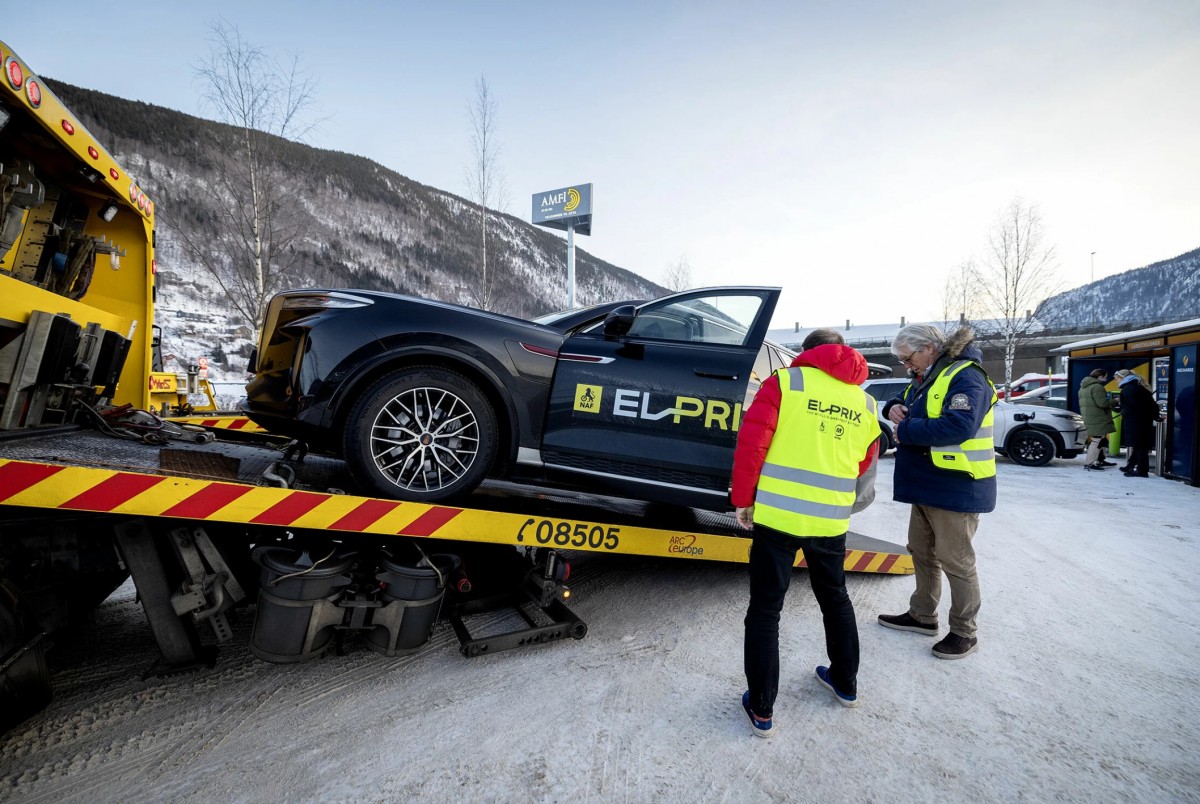
Recent testing in China revealed comparable results, where the bZ4X again fell short of expectations.
The list includes 12 Chinese-manufactured cars, with several set to debut in Europe, including the JAC e-JS4, Voyah Free, BYD Atto, BYD Han, and Nio ET7.
Source