The competition among major US carriers—T-Mobile, Verizon, and AT&T—has recently taken a backseat as a new report highlights their inadequacy in addressing the evolving demands of network connectivity, particularly in relation to AI workloads. While each provider touts their pricing and value, the report suggests that the metrics by which we gauge connectivity health are shifting towards the ability to accommodate advanced technologies. This raises serious concerns about whether any of the US carriers are truly prepared for the future.
The US Fails in the Global 5G Race
Recent analysis from Ookla examined the 5G capabilities of 86 telecom operators across 22 international markets. The report reveals that AT&T, T-Mobile, and Verizon are significantly lagging behind their global counterparts in readiness for AI-driven operations.
Latency Issues Plague US Carriers
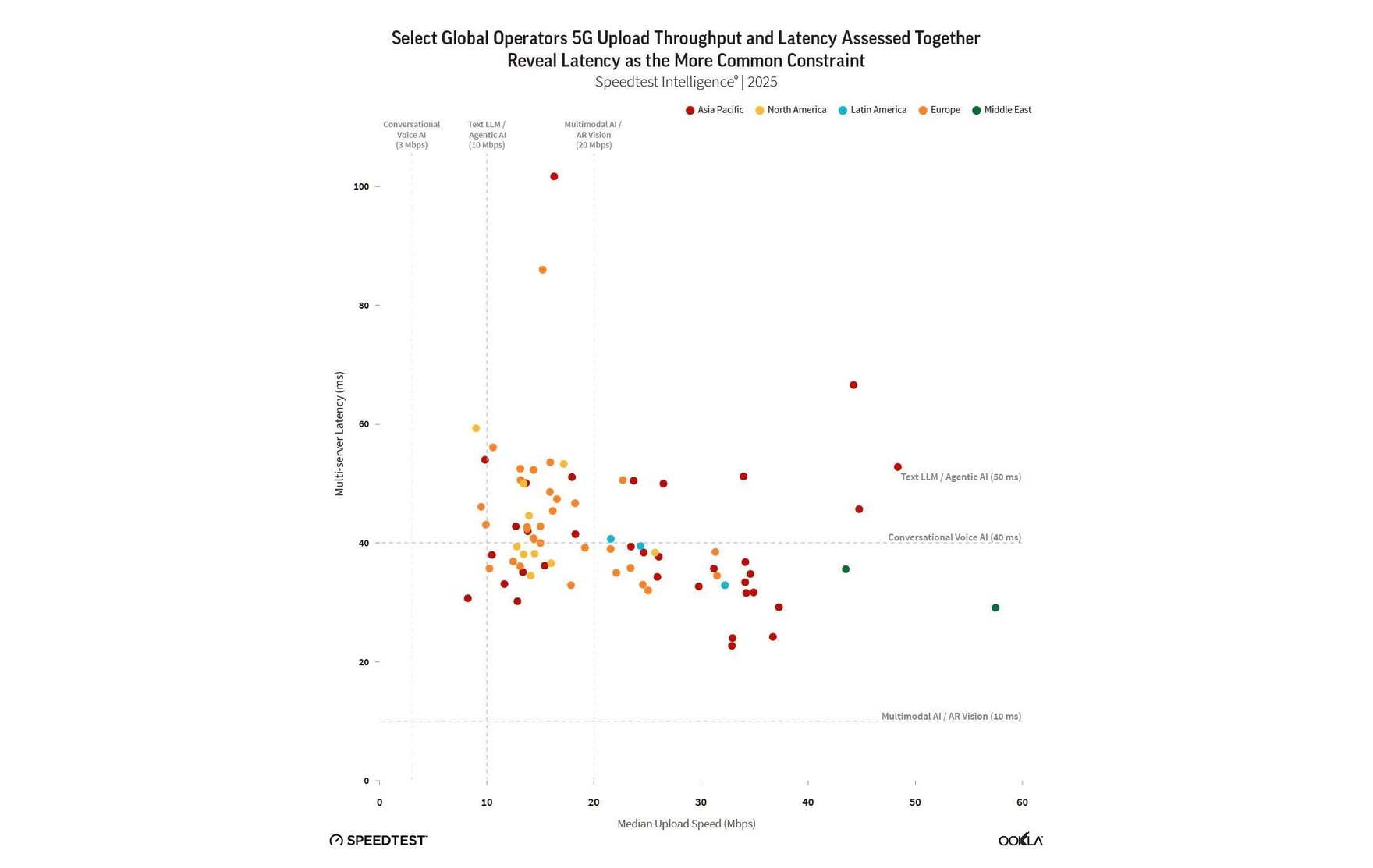
US networks are struggling to improve their responsiveness, which is crucial for supporting the needs of modern technology.
Upload Speed Discrepancies
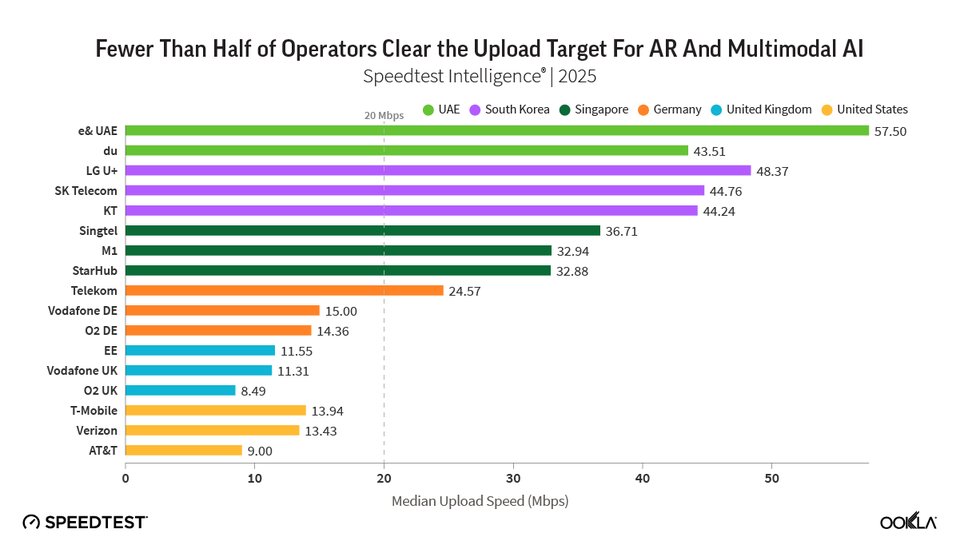
The report indicates that the US has the lowest upload speeds, with a mere 5.1% performance metric. T-Mobile tops the chart for median upload speed at 13.94 Mbps, followed closely by Verizon at 13.43 Mbps, while AT&T trails behind at 9.0 Mbps, making it the lowest-performing carrier among those tested.
What Sets T-Mobile Apart?
T-Mobile stands out in the US market primarily due to its introduction of 5G-Advanced uplink Tx switching, which enhances dynamic uplink path switching for devices. It is also the only carrier meeting latency standards for text-based AI applications, with latency times recorded at 653.6 ms for T-Mobile, 682.6 ms for AT&T, and 715.5 ms for Verizon.
Path to Improvement
The implementation of Frequency Division Duplex (FDD) technology could prove beneficial, as it allows for unimpeded two-way transmission by utilizing separate lanes for uploading and downloading. This risk reduction can enhance performance significantly.
For users who rely on cable or fiber for their internet service, experiencing any adverse effects from their carriers may be minimal. However, the limitations of current 5G offerings could be more problematic for those who depend on these services for their home internet.