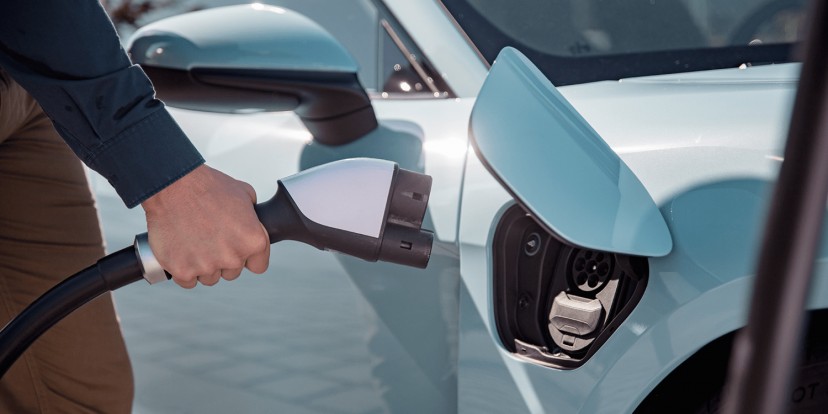
With peak DC charging powers reaching 150 kW, 200 kW, and even 250 kW, the race for faster charging in electric vehicles (EVs) is intensifying. However, is the significance of maximum charging power overstated? Considering that 95% of European drivers typically travel only 50 km per day, the urgency of restoring minimal power quickly may not be as critical as it seems.
The emphasis on DC charging stems from manufacturers' desire to showcase advancements in battery technology. Many still compare the "charging power" and refill times of electric vehicles with those of internal combustion engine (ICE) vehicles.

DC charging becomes particularly important during long-distance travel. However, do vehicles that boast 200 kW, 250 kW, or even 300 kW charging capabilities genuinely deliver on their promises? Let's delve deeper into the details.
Peak Charging Power
Peak charging power is one facet of electric vehicle performance. To push the limits of DC charging, manufacturers are introducing 800V architecture vehicles, such as the Lucid Air (300 kW) and the Porsche Taycan and Audi E-tron GT duo (270 kW).
In the 400V range, Tesla stands out with its V3 superchargers offering 250 kW peak charging power. In contrast, models with lower charging rates include the air-cooled Nissan Leaf (50 kW) and the Skoda Citigo and VW e-up! (40 kW each).
The table below lists the peak charging rates and the corresponding expected range for each vehicle based on a minute of charging, calculated using expected energy consumption at a speed of 130 km/h on the highway, the typical scenario for DC charging.
| Model | Peak Charging Power (kW) | Estimated Consumption at 130 km/h (kWh/100km) | Range/Minute of Charging at Peak Power (km) |
|---|---|---|---|
| Lucid Air | 300 | 21 | 23.8 |
| Porsche Taycan | 270 | 24 | 18.8 |
| Tesla Model S | 250 | 21 | 19.8 |
| 233 | 26 | 14.9 | |
| Mercedes EQS | 200 | 23 | 14.5 |
| Peugeot e-208 | 100 | 26 | 6.4 |
| Nissan Leaf e+ | 50 | 26 | 3.2 |
| VW e-up! | 40 | 23 | 2.9 |
The Charging Curve
While peak DC charging power serves as an indicator of the vehicle's technological prowess, the average DC charging power between 10% and 80% capacity is more relevant for everyday users.
Ideally, peak DC charging power would correspond with charging durations; however, that is often not the case. High-voltage batteries can sustain maximum charging only for a brief window and at specific charge levels.

Charging curves vary across models and depend largely on battery specifications and the charging management from the Battery Management System (BMS). The reduction in charging power acts as a safety measure to prevent excessive heating within the battery. At elevated charge levels, cell balancing occurs, further limiting charging power.
The table below examines real-world data regarding expected range per minute of charging at the mean charging power from 10% to 80% capacity. It appears that high-performance vehicles achieve an average DC charging power around 175-180 kW, even though their peak capacities exceed those figures. Mean charging power was derived from data by Fastned.
| Model | Mean Charging Power 0-80% (kW) | Estimated Consumption at 130 km/h (kWh / 100km) | Range/Minute of Charging with Mean Power (km) |
|---|---|---|---|
| Lucid Air | 175 | 21 | 13.89 |
| Porsche Taycan | 147 | 24 | 10.21 |
| Tesla Model S | 180 | 21 | 14.29 |
| 175 | 26 | 11.22 | |
| Mercedes EQS | 180 | 23 | 13.04 |
| Peugeot e-208 | 65 | 26 | 4.17 |
| Nissan Leaf e+ | 43 | 26 | 2.76 |
| VW e-up! | 27 | 23 | 1.96 |
Conclusions
Regardless of a vehicle's maximum charging power, a plateau emerges around 180 kW for the average charging power during a typical DC session up to 80%. This finding aligns with technological realities.
Most contemporary electric vehicles utilize Li-Ion NMC chemistry batteries, which exhibit minor variations. The mean charging power of 180 kW appears to be a shared limit of current chemistries, independent of system voltage (whether 400V or 800V). Future breakthroughs, possibly through Li-Air or solid-state batteries, may transcend this boundary. Time will tell.
 DC charging stations are a glimpse into the future.