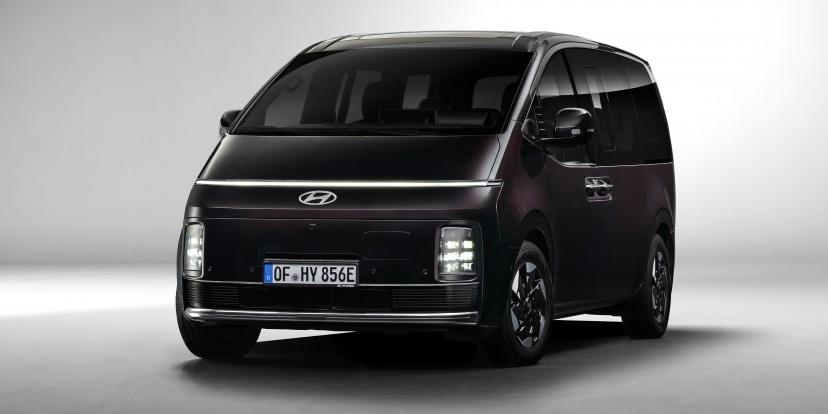
The automotive world is buzzing with excitement as Hyundai unveils the fully electric version of its most futuristic vehicle, the Hyundai Staria Electric. Making its debut at the Brussels Motor Show, this electric van introduces the brand's space-age design to the realm of battery-powered transportation. Families and shuttle drivers in search of distinctive electric vehicles will find the Staria Electric hard to overlook.
The first striking feature of the Staria is its unconventional appearance, shunning the traditional van design. It retains the iconic "one-curve" silhouette of its gas-powered counterpart, boasting a sleek front end. A single, elongated light bar spans the width of the hood, and without the need for large grilles to cool an engine, the front is smooth and aerodynamic, enhancing fuel efficiency.
 2026 Staria Electric - Source: Hyundai
Hyundai describes its design theme as "Inside-Out." Although the terminology may be unclear, it signifies that the interior space was prioritized during the design process. The low beltline, where the metal meets the glass on the doors, allows for expansive windows. This results in excellent visibility for the driver and a bright, airy atmosphere for passengers—though it may challenge the air conditioning system on sunny days.
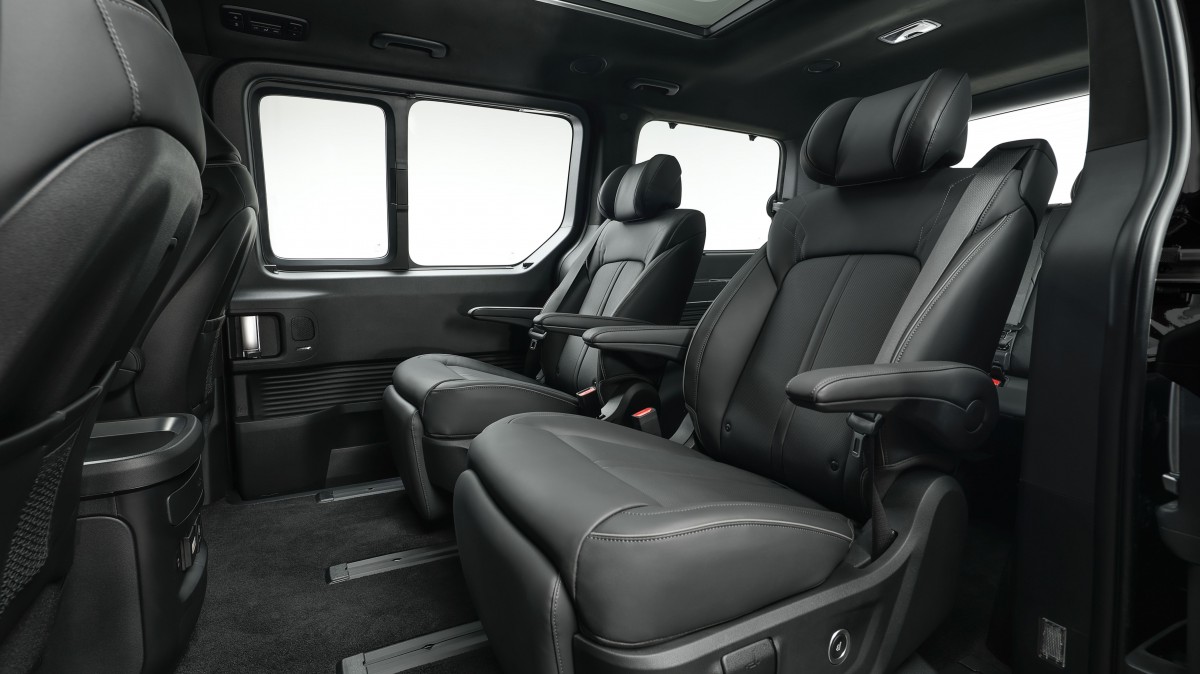
Space is paramount in a van, and the Staria Electric's flat floor maximizes room for passengers. It will be available in two main configurations: a Luxury model with seven seats, designed for families seeking comfort, featuring heated and cooled seats in the second row—a first for Hyundai.
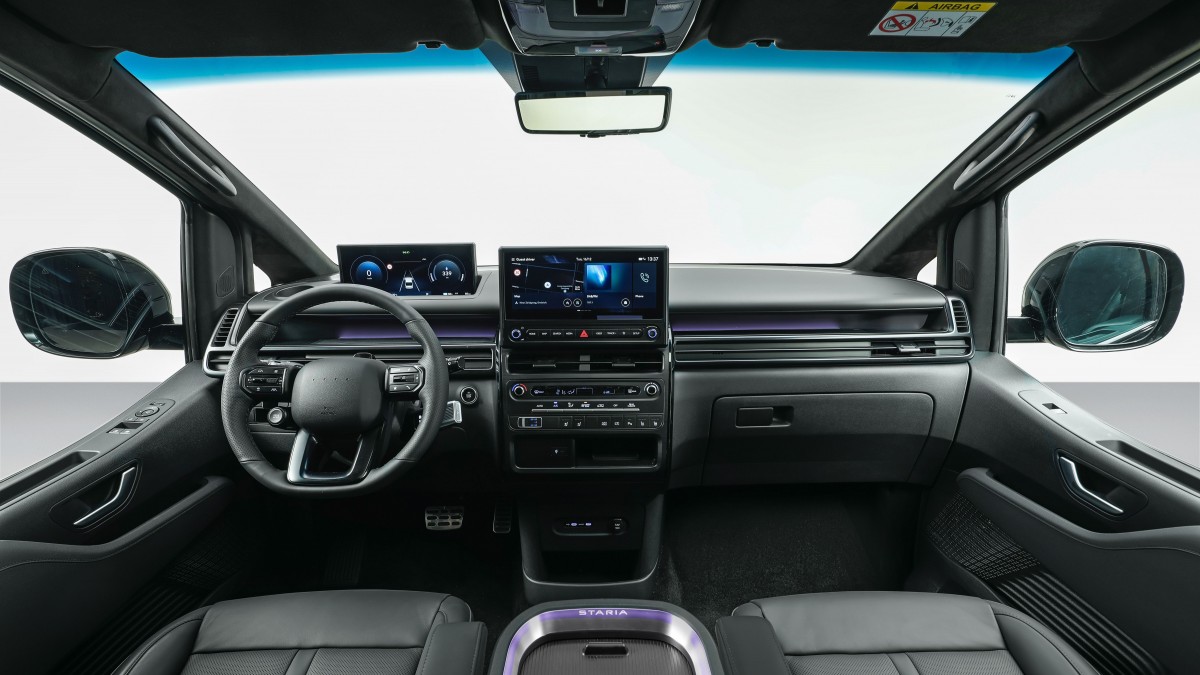 2026 Staria Electric - Source: Hyundai
The second configuration is the Wagon version, which accommodates nine passengers. This model is tailored for larger families or shuttle services, offering seats that can slide and fold to create space for luggage. Even with all seats in use, it provides ample storage space, boasting up to 46 ft³ behind the third row with proper seat adjustments.
Interestingly, the new Staria Electric is equipped with an 84 kWh battery—an underwhelming choice for a vehicle of its size. According to Hyundai, it has a potential range of up to 249 miles on a full charge based on WLTP testing. However, at highway speeds, this figure is expected to decline to just over 186 miles, which can be disappointing for a vehicle intended for carrying multiple occupants.
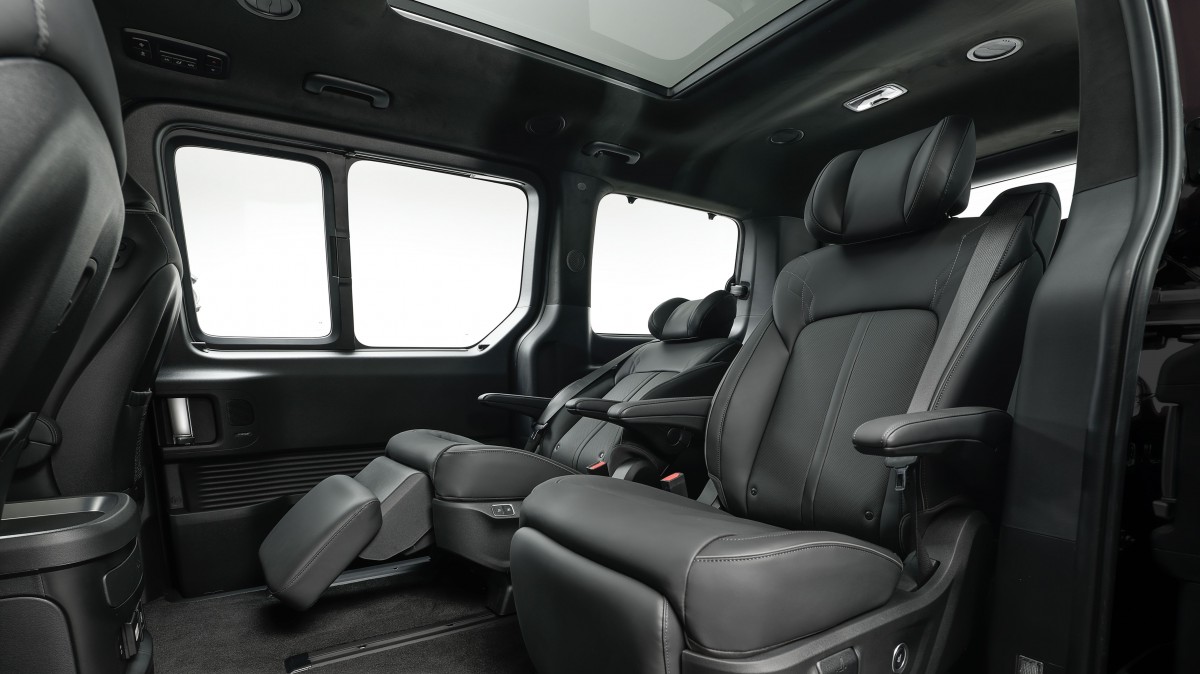 2026 Staria Electric - Source: Hyundai
A silver lining is the charging capabilities. The van utilizes the advanced 800V charging system, similar to that of the Hyundai IONIQ 5 and IONIQ 6. With access to a fast DC charger, the battery can be charged from 10% to 80% in approximately 20 minutes, facilitating long-distance travel. For home charging, the Staria is equipped with an 11 kW onboard charger.
However, concerns arise in terms of performance. The Staria Electric is powered by a single electric motor that drives the front wheels, producing 160 kW, equivalent to around 218 horsepower. For a heavy van capable of transporting up to nine individuals and their luggage, this power level is relatively modest. While the Staria is not sluggish, it cannot be described as rapid. Hyundai claims the electric motor provides smooth power delivery without the noise and vibrations typical of gas engines, aiming for a quiet, comfortable ride.
The interior is equipped with two large 12.3-inch displays—one for the driver's information and the other for navigation and media. Wireless Apple CarPlay and Android Auto support enhance connectivity. Additionally, a feature called Vehicle-to-Load (V2L) allows users to power devices like laptops or camping lights directly from the vehicle battery—an excellent option for outdoor adventures, provided the camping site remains within a 124 miles radius of a charger.
The Staria Electric also offers towing capabilities with a braked towing capacity of 4,410 lb. This theoretically allows it to pull a sizable trailer or boat; however, towing a heavy trailer along with passengers and luggage will significantly challenge its performance. Users can expect the practical range to drop significantly—potentially reducing the 400 km range to around 124 miles when fully loaded.
On the safety front, the Staria is equipped with Hyundai SmartSense, a system that utilizes cameras and radar to help maintain lane discipline, avoid collisions, and facilitate parking in tight spaces. The Staria Electric is expected to launch in Korea and Europe in the first half of 2026, with other markets to follow. While its lower horsepower may be seen as a drawback for enthusiasts, its rapid charging capabilities and futuristic aesthetics may appeal to a variety of buyers.
Source


