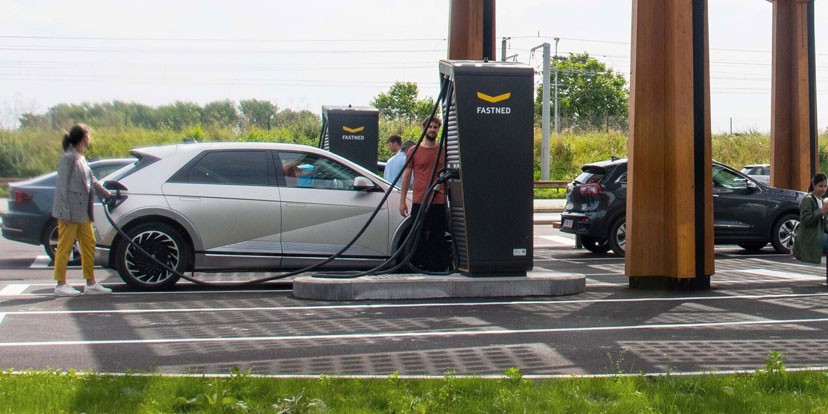
When Hyundai and Kia market their 800V electric vehicles, one of the most prominent figures is “up to 350kW DC charging.” On the surface, that sounds like a major advantage, but the wording can be misleading. The vehicles in question do not actually draw 350kW from a charger. In most cases, the car’s own charging limit is lower, while the 350kW number refers to the class of charger it can be plugged into. The result is a gap between the advertised headline and the charging speed a driver will realistically see.
Peak power is not the same as average power
No electric vehicle charges at its maximum speed for the entire session. The highest charging rate is usually available only under the right conditions, often when the battery is at a lower state of charge and the battery, charger, and temperature are all within an optimal range. As the battery fills, the car slows the charge to protect the battery and maintain efficiency. Because of this, a car advertised with a high peak DC charging speed will usually spend most of the charge below that number.
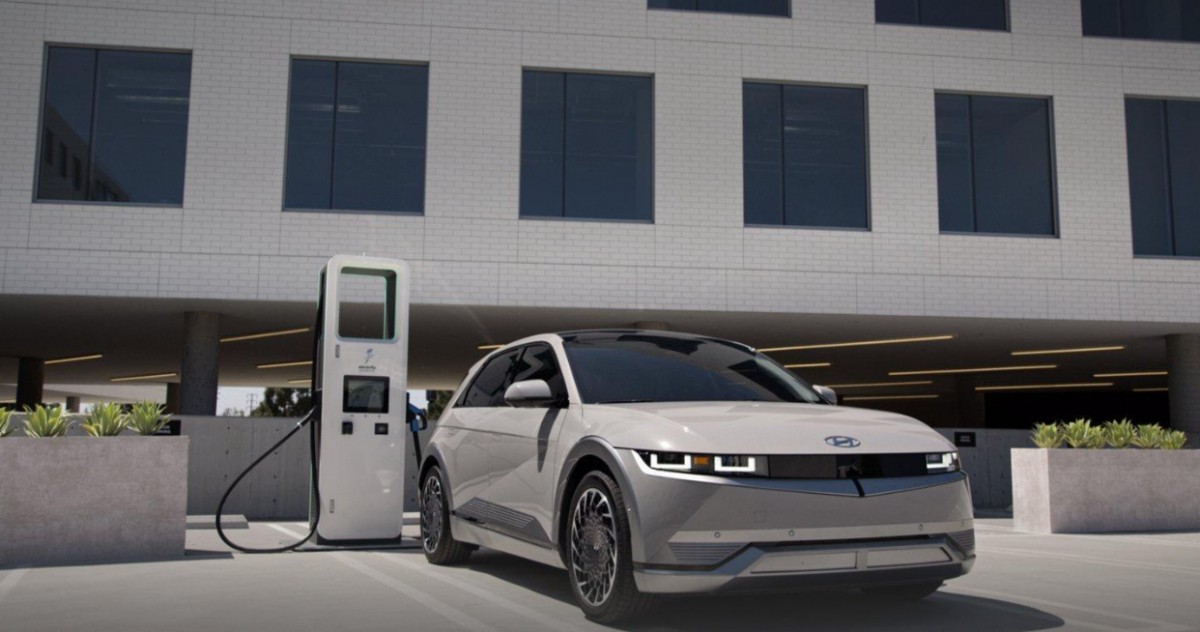
That is normal across the EV industry. A peak rating tells you the highest power the car can accept under ideal circumstances, not the power it will use for the whole charge. If a car can peak at 200kW, you still cannot assume it will take a 100kWh battery from 0% to 100% in 30 minutes. In practice, the average charging speed is often much lower, especially once the battery reaches a higher state of charge.
Why the 350kW figure is confusing for Hyundai and Kia
The issue with Hyundai and Kia is that they appear to be using charger-side numbers rather than vehicle-side numbers. Their charging information can be presented in a way that suggests the car itself charges at “DC Fast Charge 50kW” or “DC Fast Charge 350kW.” In reality, many of the company’s 800V models peak below 250kW. A 350kW charger can be used, but the vehicle will not draw the full 350kW because its own limit is lower.

This distinction matters because it changes what owners should expect. If a car peaks just under 250kW, plugging it into a 350kW charger does not guarantee a dramatically faster top-up than a 250kW charger would provide. The charger may have extra capacity, but the car is the limiting factor. For buyers comparing EVs, the most useful number is not the charger class the manufacturer lists, but the actual peak charging rate the car can deliver and how long it can sustain that rate.
Does 800V architecture still make these EVs faster to charge?
Yes, but not for the reason the 350kW headline suggests. The real benefit of 800V architecture is not simply a bigger maximum number. It is the ability to deliver usable power at higher voltages, which can help the car maintain a strong charging rate for a longer portion of the charge. That can reduce the time needed for the most common charging stop, such as a 10% to 80% top-up, compared with some 400V rivals.
So the 800V systems used by Hyundai and Kia are genuinely useful. They can make public charging quicker, especially when the battery is in the range where fast charging is most practical. The problem is not that 800V is unhelpful; the problem is that the 350kW figure can make the advantage sound larger than it is. For owners and potential buyers, the safer takeaway is this: the cars are fast chargers, but they are not 350kW cars.