Exploring Electric Motors in Electric Vehicles: Types and Technologies
Electric vehicles (EVs) are revolutionizing the automotive industry, representing a significant shift towards sustainable transportation. At the heart of every EV are electric motors, which play a critical role in determining performance, efficiency, and the overall driving experience. Just as internal combustion engines have a variety of designs aimed at enhancing performance, electric motors too possess distinct types that cater to specific needs and applications. In this article, we will explore the three primary types of electric motors used in EVs: asynchronous induction motors, synchronous permanent magnet motors, and electrically excited synchronous motors, along with their advantages and disadvantages.
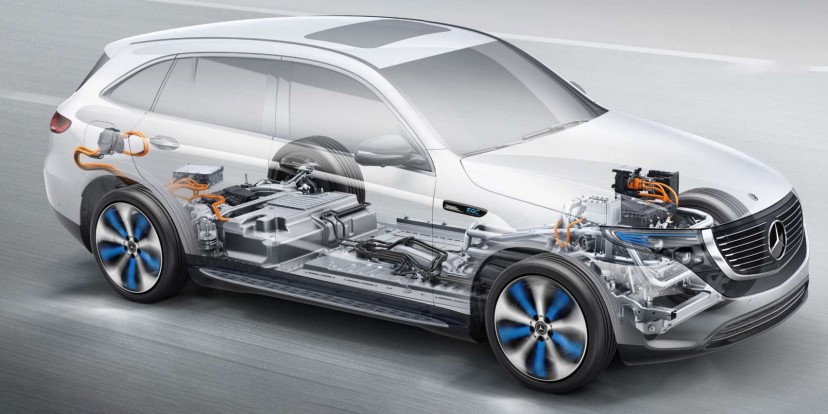
Asynchronous Induction Motor: A Historical Overview
The asynchronous induction motor, a pioneering invention, was independently created by Nikola Tesla and Galileo Ferraris in the late 19th century. While Ferraris developed it in 1885, Tesla secured the patent for it in 1888. This motor's invention marked a significant milestone, leading to widespread use in both domestic and industrial settings.
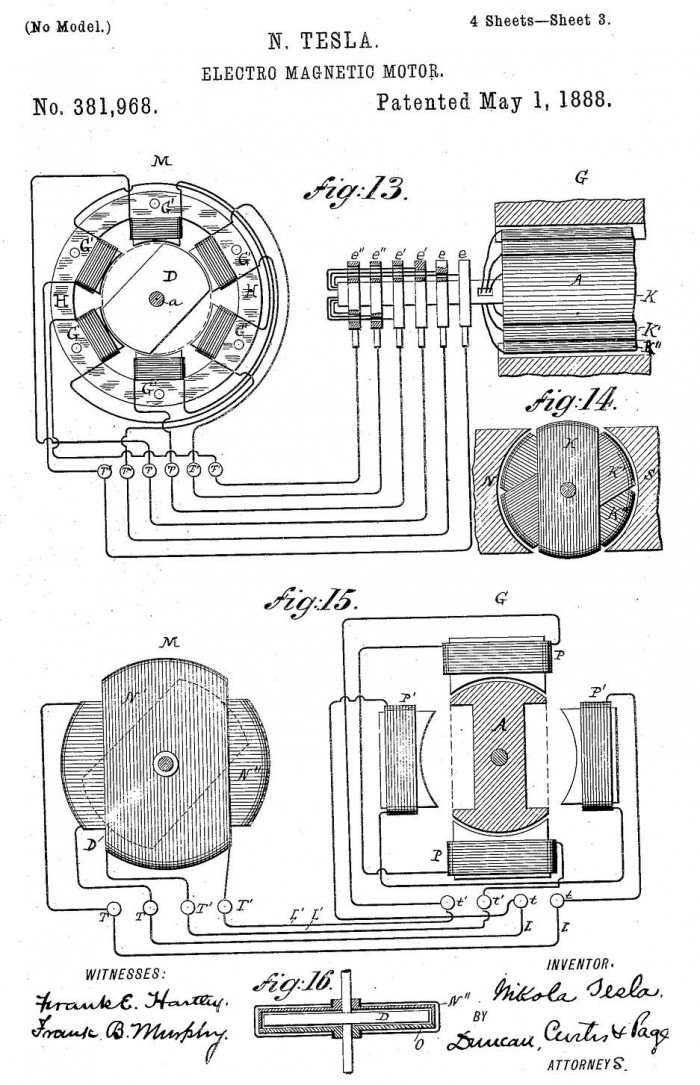 Nikola Tesla’s historic patent of the induction motor
Functioning of Asynchronous Induction Motors
This type of motor operates using two main components: the stator (static part) and the rotor (rotating part). The stator is constructed from steel and contains copper coils supplied with three-phase AC current derived from the vehicle's battery. This current generates a rotating magnetic field that induces magnetic fields in the rotor, resulting in motion through the Lorentz Force. The asynchronous term indicates that the rotor's magnetic field does not perfectly synchronize with that of the stator, allowing for "slip." Asynchronous induction motors offer around 90% efficiency, making them a popular choice for various electric vehicles.
Pros of Asynchronous Induction Motors
- Good efficiency
- Cost-effective manufacturing
- No reliance on rare earth materials
- Exceptional reliability
Cons of Asynchronous Induction Motors
- Higher cooling demands
- Lower power density
- Relative efficiency disparity compared to other motors
Examples of vehicles utilizing asynchronous induction motors include the Audi e-Tron SUV, Mercedes-Benz EQC, and various Tesla models.
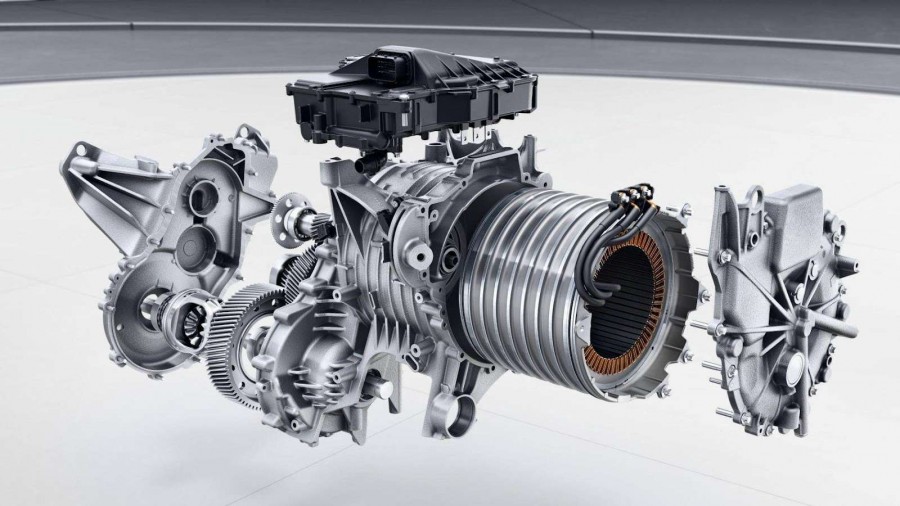 Induction motor used in Mercedes-Benz EQC
Synchronous Permanent Magnet Motors
Synchronous permanent magnet motors distinguish themselves from induction motors by employing permanent magnets in the rotor to create a locked magnetic field with the stator, which eliminates slip. This technology enhances power density and efficiency, making these motors prevalent in Plug-in Hybrid Electric Vehicles (PHEVs) where space constraints are a consideration.
Pros of Synchronous Permanent Magnet Motors
- Very high efficiency (up to 94-95%)
- Reduced cooling requirements
- Compact power density
Cons of Synchronous Permanent Magnet Motors
- Higher production costs
- Dependence on rare earth materials
- Risk of demagnetization
Notable applications include the Hyundai Ioniq 5, Kia EV6, and Porsche Taycan among others.
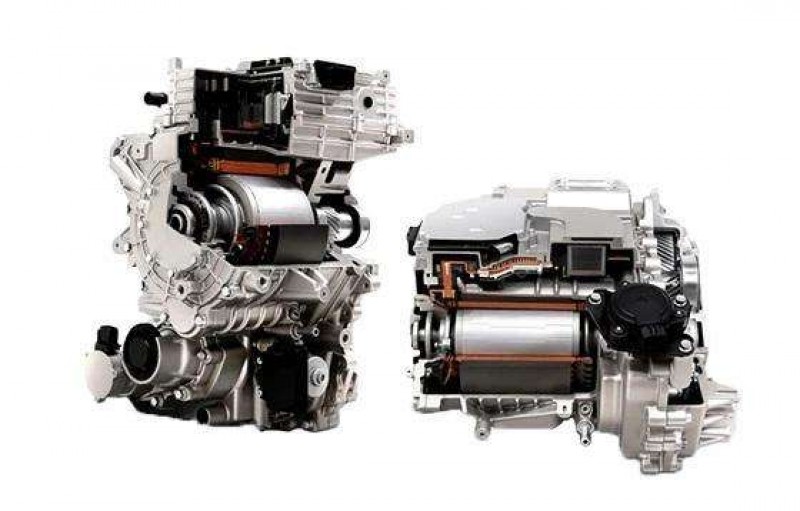 Hyundai Ioniq 5 permanent magnet motors
Electrically Excited Synchronous Motors
Addressing the challenges associated with permanent magnet motors, electrically excited synchronous motors utilize brushes and slip rings to generate the required magnetic field, avoiding the use of rare earth materials. This innovative design achieves efficiency levels close to those of permanent magnet motors, at about 93%.
Pros of Electrically Excited Synchronous Motors
- Very high efficiency
- Lower production costs compared to permanent magnet motors
- No risk of demagnetization
- Eliminates reliance on rare earth materials
Cons of Electrically Excited Synchronous Motors
- Brushes may have long-term reliability concerns
These motors are featured in models such as the BMW iX3 and Renault Megane E-TECH.
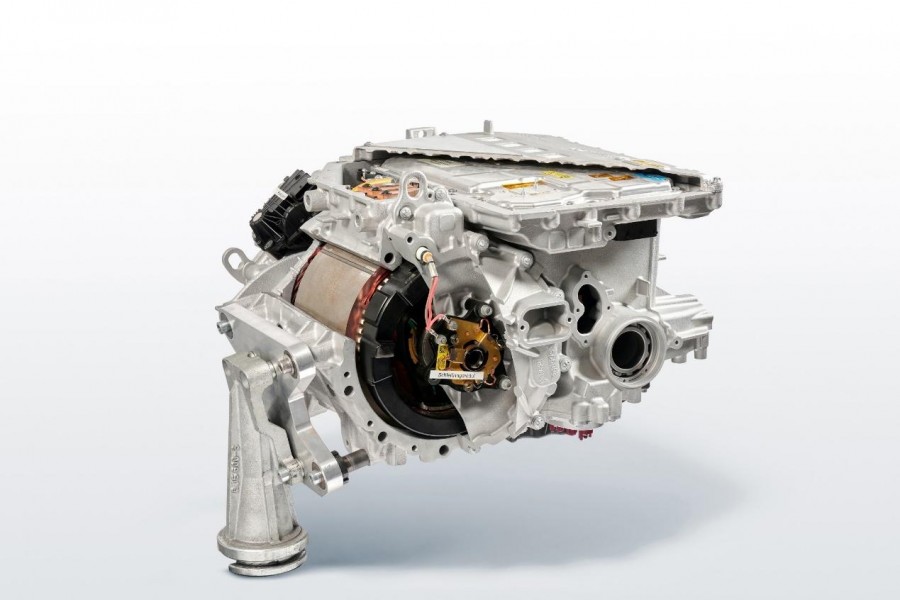 BMW electrically excited synchronous motor