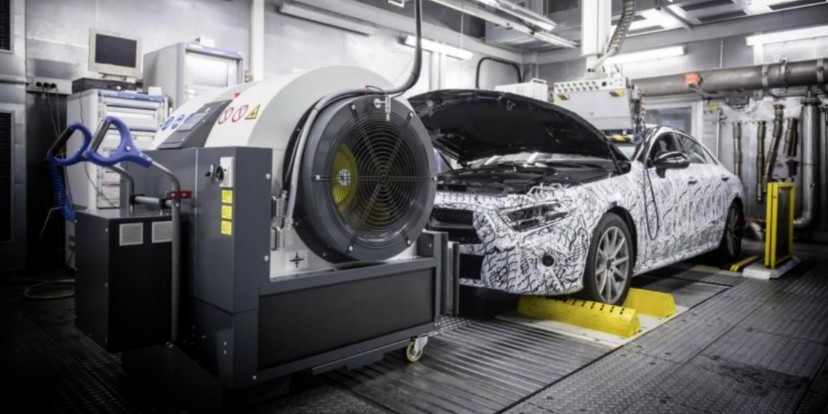
Estimating the range of electric vehicles (EVs) poses considerable challenges due to the numerous variables influencing electricity consumption. Traditionally, owners of internal combustion engine (ICE) vehicles have accepted that advertised fuel consumption figures are not always accurate. Recently, more comprehensive testing cycles have been developed to provide a more realistic assessment of vehicle performance. However, determining the most reliable test cycle remains a complex issue. This article explores the three most common test cycles: EPA, NEDC, and WLTP, providing insights into their accuracy and applications.
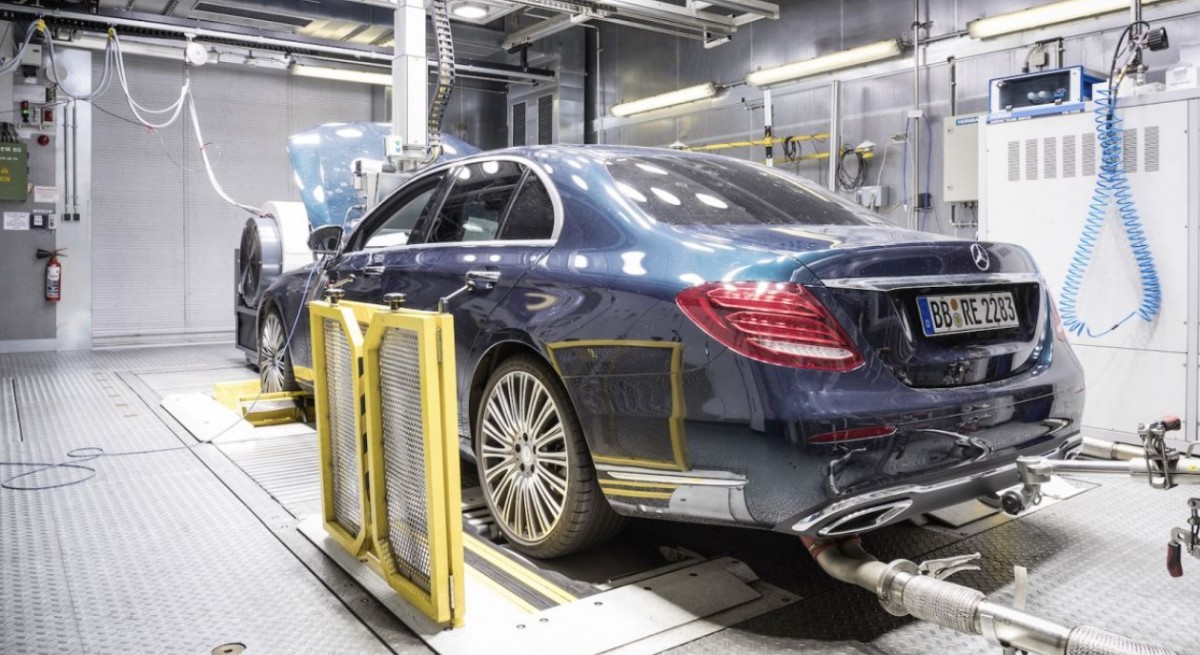 WLTP Range Testing Cycle
EPA Cycle
The EPA (Environmental Protection Agency) test cycle, utilized in the U.S., is conducted using a dynamometer rather than on real roads. How does this cycle operate?
The EPA cycle includes two estimates: the urban estimate (UDDS - Urban Dynamometer Driving Schedule) and the highway estimate (HWFET - Highway Fuel Economy Test).
Before the testing begins, the vehicle is fully charged and left overnight. The test consists of performing continuous UDDS and HWFET cycles until the battery is entirely depleted, with a mix of 55% HWFET and 45% UDDS.
Subsequently, the car is recharged using a precise meter to calculate the kWh drawn from the grid, accounting for the efficiency of the onboard charger. A correction factor, ranging from 0 to 1, is applied to the results to better simulate real-life conditions. This correction factor depends on the number of drive cycles tested.
For instance, if a vehicle achieves a range of 100 miles in the HWFET and has a correction factor of 0.8, the official range reported would be 80 miles. Generally, the EPA cycle is considered the most stringent among the current testing standards, although it does not consistently apply across all EV models.
For example, the Porsche Taycan has an EPA range that slightly exceeds 200 miles, while real-world tests suggest the car can travel at least 25% farther. Conversely, the Tesla Model S often falls short of its official EPA rating due to an adjustment factor based on a different interpretation of the SAE J1634 standard.
 EPA Low and High Speed Cycles
NEDC Cycle
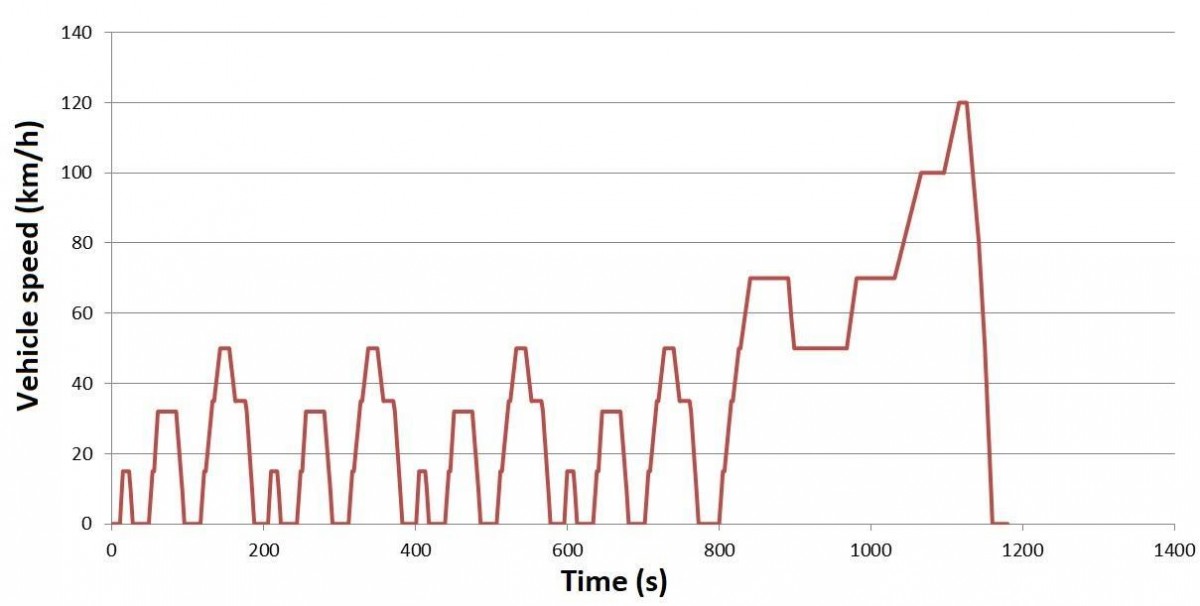
The NEDC (New European Driving Cycle) was utilized from the 1980s until September 2017. Similar to the EPA, the NEDC cycle is lab-based and includes two estimates: the urban component (ECE-R15 subcycle) and the highway component (EUDC subcycle).
The NEDC features a blend of 66% urban driving and 34% highway driving over a simulated distance of 11 km and a driving time of 20 minutes. Notably, climate systems and electric auxiliaries are not used in this cycle, and optional equipment does not influence the results.
With an average speed of 34 km/h and a maximum speed of 120 km/h, the consumption and range results from the NEDC are considered overly optimistic, leading to its replacement by the WLTP cycle.
 The NEDC Cycle
WLTP Cycle
The WLTP (Worldwide Harmonized Light Vehicles Test Procedure), implemented in Europe since September 2017, replaces the NEDC cycle.
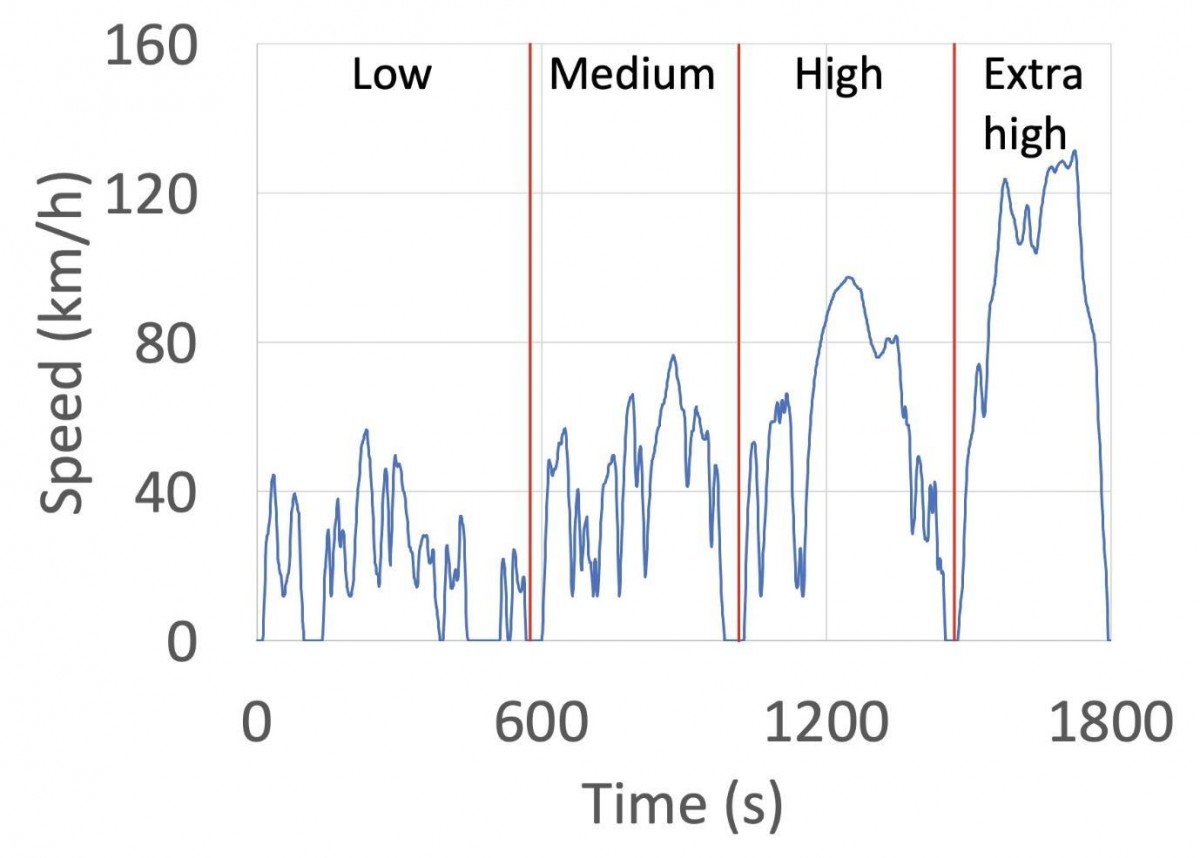
Similar to the NEDC and EPA, WLTP testing occurs in a lab environment. This cycle is divided into four segments characterized by varying average speeds: low, medium, high, and extra-high. The total test duration is half an hour, covering a distance of 23.25 km with a topology mix of 52% urban and 48% highway, averaging a speed of 46.5 km/h and reaching a maximum speed of 131 km/h.
Unlike the NEDC, the WLTP considers various vehicle equipment levels and tire/wheel combinations, which significantly affect consumption and range due to variations in aerodynamics and unsprung mass related to wheel and tire dimensions.
 The WLTP Cycle
Which Test Cycle is More Accurate?
The accuracy of these test cycles is not straightforward to determine, as multiple factors influence results. Individual driving habits and environmental conditions vary greatly, making it unrealistic to expect one test cycle to be universally accurate. Ideally, a test would align with real-world performance, allowing users to apply a personal coefficient to gauge how far a specific vehicle will travel under their typical driving conditions.
It is evident that the NEDC cycle is the least reliable, as its results show significant variability across different models, rendering it ineffective for vehicle comparison. This led to its rapid retirement.
In contrast, both WLTP and EPA cycles provide a closer representation of real-world driving, with the EPA cycle often being the less optimistic of the two. Ultimately, the WLTP cycle appears to deliver more consistent results across various models and manufacturers.
Additionally, other testing cycles exist worldwide, such as China's CLTC, closely related to the NEDC; the IDC cycle employed in India; and Japan's JC08 cycle, known for using low speeds to assess emissions. The table below summarizes range and power consumption results for the same vehicle (Volkswagen e-Golf) tested under the three major cycles.
| Model | Cycle | Range (km) | Power consumption (kWh/100km) |
|---|---|---|---|
| VW E-Golf | EPA | 190 | 17.5 |
| VW E-Golf | NEDC | 300 | 13.2 |
| VW E-Golf | WLTP | 231 | 15.8 |


