In the ever-evolving world of smartphones, display technology is at the forefront of creativity and innovation. A recent revelation by tech leaker Ice Universe has showcased a jaw-dropping display panel crafted by Chinese manufacturer Tianma, raising the bar for smartphone design. With bezels measuring only 0.35 mm, this new AMOLED panel could redefine how we perceive screen real estate on our devices.
Revolutionary AMOLED Technology with Minimal Bezels
The latest 6.32-inch AMOLED display not only boasts record-small bezels at the panel level but also maintains a stunning screen-to-body ratio of 98.5%. With bezels expanding to just 0.60 mm at the module level, this display represents a significant leap in smartphone aesthetics and functionality. Additionally, a remarkable 240Hz refresh rate ensures smooth scrolling and vibrant visuals, far surpassing the 120Hz refresh rate still prevalent in many current models, including the iPhone 17 lineup.
Who will be the first to utilize this groundbreaking display? Speculation suggests that Oppo is in line to adopt this technology first, leveraging a strategic partnership with Tianma and a collaborative laboratory established in September. Oppo's innovative streak continues with its previous launch, the Oppo Find X9, which featured Tianma's Tiangong screen.
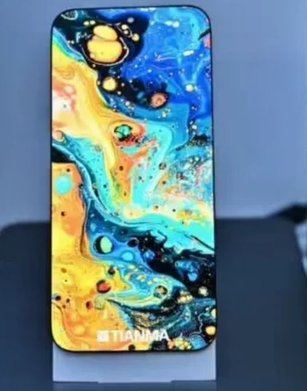
Image showing Tianma's revolutionary AMOLED display featuring astonishingly small 0.35 mm bezels | Image credit: Ice Universe
Tracing the History of Bezel Reduction
Historically, smartphone bezels were a secondary consideration until the "bezel wars" that emerged in 2017. The original iPhone had side bezels measuring around 4.0 to 4.5 mm, with starkly larger top and bottom bezels. Back then, the screen-to-body ratio was a mere 52.35%, a far cry from today's standards.
The pivotal year of 2017 saw several flagship phones boasting impressive screen-to-body ratios. The Essential Phone led the charge at 85%, followed by the Samsung Galaxy Note 8 and Galaxy S8, which achieved ratios in the 83-84% range. Apple's redesign of the iPhone X that year introduced Face ID and a totally new aesthetic, achieving an 82% screen-to-body ratio, thus setting a new industry standard.
Sadly, the Essential Phone never saw a successor, as its parent company, Essential Products, shut down before further development could commence. Under Andy Rubin, known as the father of Android, the company made a significant impact, but ultimately fell short of long-term success.
The Future of Bezel-Free Designs
While the frenzy over bezels may have simmered down, the race for minimalism continues. The iPhone 17 Pro features decreased bezels at approximately 1.44 mm, while Apple reportedly aims for the iPhone XX (iPhone 20) to sport a sleek, slab-like appearance. This would involve a revolutionary design that curves the screen at all corners, eliminating bezels entirely.
For Apple to achieve this ambitious goal, it would need to place Face ID components and the front camera under the display, potentially marking the end of the bezel wars. Until then, whichever smartphone comes to market with Tianma's innovative display will hold the title for the handset with the tiniest bezels, making waves in the smartphone landscape.
As we head toward 2026, we invite readers to share their thoughts: Would a smartphone with smaller bezels influence your purchasing decision? Feel free to comment below!