Several manufacturers have experimented with equipping their vehicles with solar panels. At first glance, this seems logical—while the car is parked, it can generate additional range for free, plus it's an environmentally friendly energy source. There's also the convenience of fewer visits to charging stations. But upon closer inspection, there are significant drawbacks. Let’s delve into the reasons.
Understanding Solar Panel Performance
This article will avoid excessive technical details, but it's essential to highlight key aspects regarding the practicality of solar panels on vehicles. The output of solar panels is typically indicated in the non-SI unit watt-peak (Wp), representing the power generated under optimal conditions, such as full sun exposure and ideal temperature.
However, even in bright sunlight, the actual output tends to be lower due to temperature impacts on performance. Each solar panel has a temperature coefficient, usually ranging from 0.2% to 0.5%, indicating the expected output loss for each degree above 25°C. In places like southern Europe, panels can exceed 65°C, resulting in a degradation of output by 8% to 20%.
Moreover, solar panels are highly sensitive to shading. The cells within a panel are typically connected in series, meaning that any shading—even affecting just one cell—can significantly drop the production of the entire panel. For instance, if just one cell in a 36-cell panel is shaded, the overall panel output can decrease by half.

The impact of shade is more severe with entire rows being covered, which can reduce the output to zero. Although adding more series connections could help, the reality is shading frequently occurs in larger sections. Additionally, if all solar panels are connected to the same inverter (a common practice to minimize costs), the underperformance of one panel can further diminish the total output.
These considerations are critical, which is why individuals installing rooftop solar systems invest considerable effort in planning installations to avoid shading. However, with solar panels on cars, this luxury is unattainable. Vehicles often park next to buildings or taller vehicles, meaning many installed solar panels will yield minimal electricity much of the time.
Now, let's explore the main issues surrounding the practicality of solar panels on cars.
Costs Are Not Justified
For instance, a solar roof option offered by Hyundai can cost upwards of €1,500 and sometimes exceed €2,500, depending on the market. The Hyundai model yields a nominal power of 204Wp, while the newest Prius offers only 60Wp—insufficient even for charging the battery, merely powering auxiliary systems when feasible.

Research by Global Solar Atlas has created a great map showing the expected annual yield of solar panels based on location. For example, in Gibraltar, 1Wp of installed solar panels, when optimally angled (30°), yields about 1,550Wh. Flat positioning, as seen with car panels, drops this to around 1,400Wh, while in London, it reduces to 820Wh. Note that these figures do not account for shading.
Under ideal conditions, the Hyundai solar roof could generate approximately 280kWh annually. However, in London, the figure falls to 164kWh—without factoring in additional energy required to cool the cabin, given that parking is most likely in direct sunlight rather than a shaded area.
Even at commercial charging rates of €0.50/KWh, it could take a decade or two to break even, disregarding various factors that would further reduce output, including inverter inefficiencies, battery charger dynamics, and the eventual degradation of solar panels. This reality likely explains why Hyundai has removed this option in most global markets.
For another example, the now-defunct Lightyear 0 was promoted as a solar vehicle. Although the exact output hasn't been disclosed, calculations based on shared data indicate an estimated additional range of 11,000 km in sunny regions, derived from the car's 625 km WLTP range and its 60kW battery. This projection assumes ideal conditions free of shading—though the expected yield amounts to just 1,056kW or around €528 in savings—significantly reduced to €265 in less sunny Glasgow.
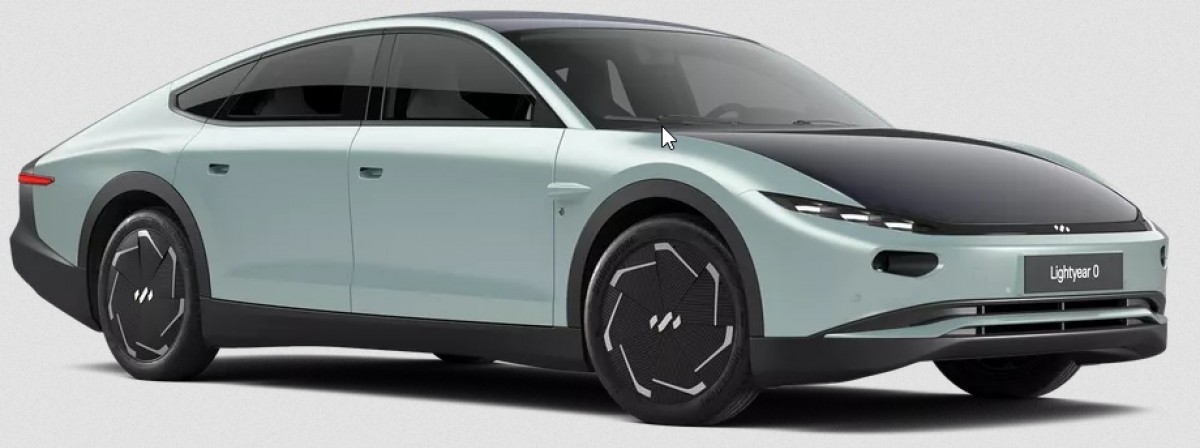
While Lightyear claims its upcoming model will be more affordable, the company has demonstrated that turning promises into tangible products is another challenge entirely. Unless there are significant advances in solar technology, expectations remain low for the next decade.
Environmental Benefits Are Debatable
While the potential for clean energy generation could seem to support environmental sustainability, the realities reveal that not everything is straightforward. Although adoption of solar energy is accelerating, a significant challenge lies in supply; current manufacturing capabilities cannot keep pace with demand.
In such a supply-limited environment, utilizing panels on vehicles, which will be idle most of the time, is not the most effective use of resources. Instead, it would be more beneficial to reserve production for solar farms designed for optimization, rather than for car installations.
Moreover, smaller installations tend to incur higher overhead costs, causing an increased carbon footprint per watt when scaling benefits of economy are not applicable.
Convenience Issues
Convenience is subjective; however, solar panels do not necessarily enhance it for drivers. Aesthetically, solar panels may detract from a vehicle's sleek design. Integral car features such as sunroofs and rooftop boxes are unfeasible with solar panels since these additions negate the panel's function.
When parking, owners will need to mindfully choose locations that maximize sunlight exposure, complicating everyday usage. Additionally, dust accumulation will hinder efficacy, requiring drivers to maintain cleanliness regularly. In snowy regions, keeping panels clear of snow is crucial for energy generation.
Winter conditions further exacerbate the shortcomings since panel output typically reduces to a third of summer performance. Therefore, during critical cold months, a vehicle like the Ioniq 5 could only achieve approximately 1.5 extra kilometers of range daily.
The process of repairs can also become cumbersome. Routine repainting is generally manageable through various service providers, but replacing brittle solar panels can complicate the maintenance process. Additionally, sourcing replacement panels could pose significant challenges due to their rarity.
Furthermore, specific models, like the Lightyear 2, omit rear windows, while the Sonos Sion has a drastically reduced rear window, although both are yet to enter the market.
Alternative Solutions
A more effective approach would be to invest in a small solar installation for your home, one that could provide significantly more green energy than a solar roof on a car. Alternatively, for those intent on integrating solar power into a vehicle, a home charging station upgrade could result in faster charging rates. Enhancing your vehicle’s efficiency, such as through the purchase of new tires or wheels, can also be a practical solution.
Depending on your location, you might also consider purchasing more renewable electricity. The savings from opting out of a car solar panel feature may allow you to invest in cleaner energy sources.
Ultimately, after advancements in solar technology and increased supply reaches demand, we may reconsider the idea of solar panels on vehicles—but that is likely decades away.