In the dynamic smartphone market, Apple has once again showcased its dominance. The first quarter of 2026 has proven to be a stellar period for Apple, as the iPhone 17 claims the title of the world’s best-selling smartphone. This achievement marks a new height for Apple, with the iPhone 17 Pro Max trailing significantly in comparisons. Analyses by independent market research firms highlight Apple's impressive sales figures and more importantly, the preferences of consumers, which underscore a shifting trend in the competitive landscape of mobile devices.
The iPhone 17 Takes Center Stage
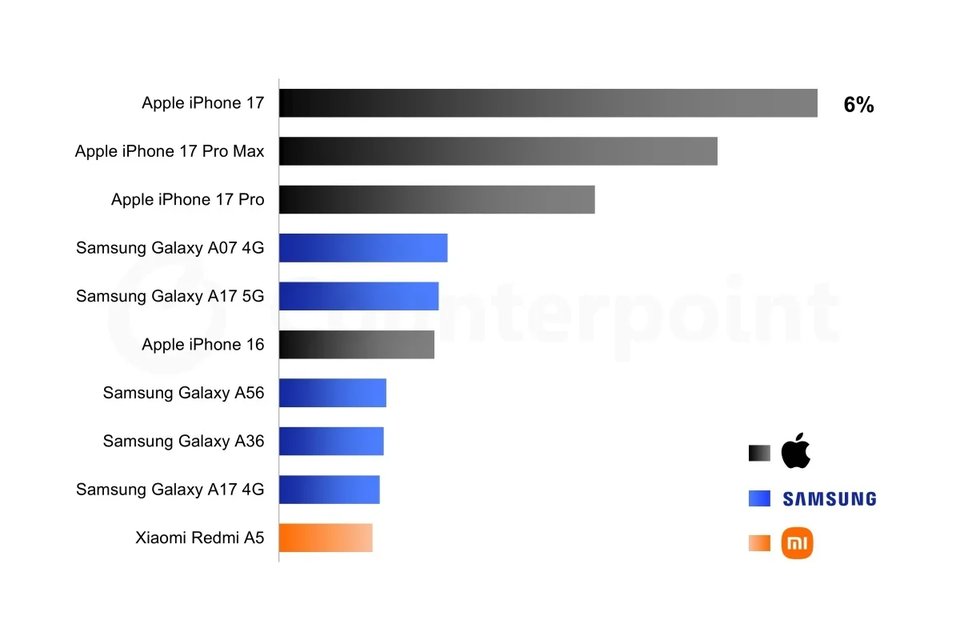
The iPhone 17 has surged ahead of the competition, accounting for a remarkable 6 percent of all global smartphone sales in the first three months of 2026. This figure is particularly striking as it surpasses the sales of the more advanced and higher-priced iPhone 17 Pro Max variant. The base model's unbeatable price point and enhanced features have significantly contributed to its popularity.
Apple's impressive sales performance is evidenced by this comprehensive research. | Image by Counterpoint Research
In sharp contrast to the previous quarter, where the iPhone 17 Pro Max held a notable 5 percent market share, the gap between the base model and the Pro Max has widened significantly. This stroke of fortune is indicative of the evolving consumer preferences towards more accessible models with robust features. Enhancements like a larger screen, better camera technology, and additional storage space have played a crucial role in the iPhone 17's ascendancy.
A Strong Quarter for Smartphone Competitors
While Apple enjoys its well-deserved success, it's important to note that other players, like Samsung, also had notable performances. The iPhone 16 maintained a strong presence alongside popular Samsung models, such as the Galaxy A07 4G and Galaxy A17 5G. This competition adds depth to the market, although Apple clearly leads.
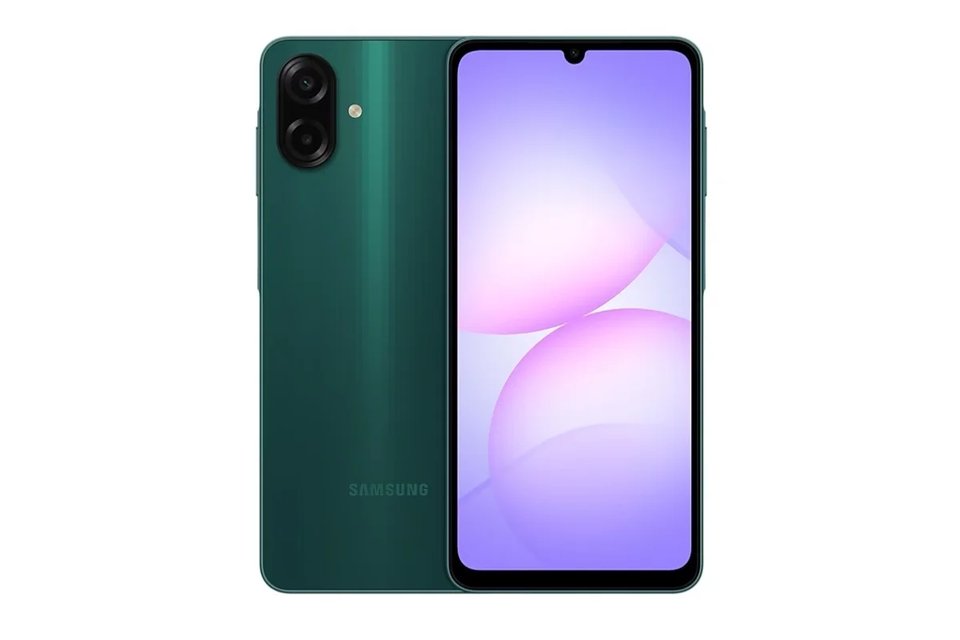
Samsung's Galaxy A series models continue to showcase their popularity. | Image by Samsung
Despite the impressive performance of the Galaxy A07, recent rankings indicate a decline for some other Samsung models. However, the success of newer Galaxy A series devices shows promise as they gain traction in the market.
Concerns for Apple Moving Forward
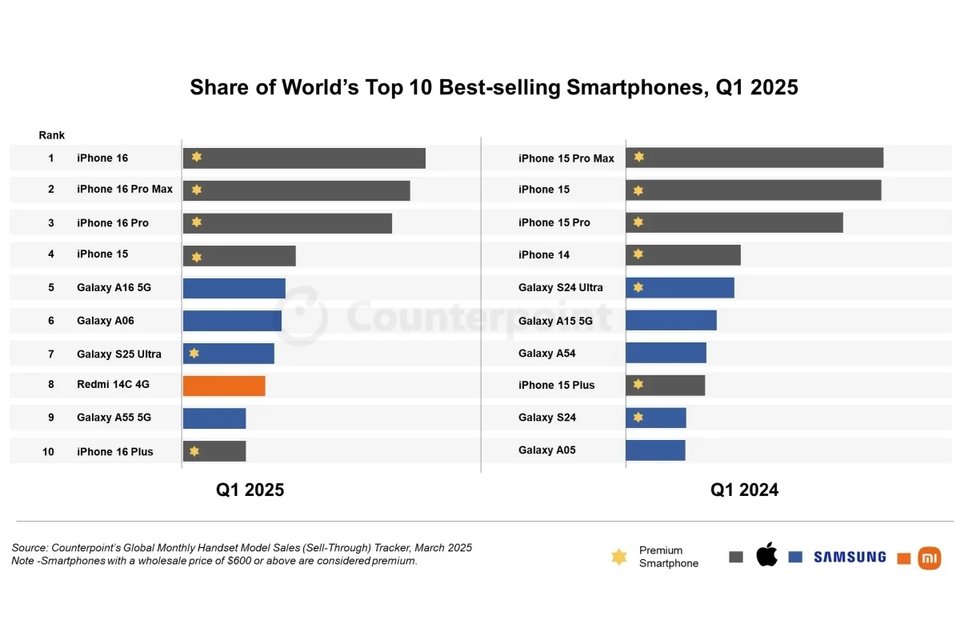
Although Apple's iPhone 17 has emerged victoriously, there are concerns worth considering. The drop in the iPhone 16's ranking from fourth to sixth place indicates shifting market dynamics. Moreover, the absence of the iPhone 16e from rankings raises questions about future model placements. The stark comparison to previous quarters provides insight into potential challenges ahead for Apple in maintaining its market momentum.
Apple must consider shifting market trends to maintain its lead. | Image by Counterpoint Research
The iPhone 16, once a formidable competitor, has been challenged by the evolving preferences of consumers. As Apple contemplates its upcoming releases, including discussions regarding the next generation of iPhone Air, it raises the fundamental question—does Apple need to adapt its strategy to maintain its lead in the smartphone industry?