In an evolving smartphone landscape, Samsung has managed to remain the leader, but Apple is steadily closing the gap with impressive sales figures in the second quarter of 2026. The latest report highlights the shifting dynamics in the market, showcasing standout performances from both tech giants amidst overall industry challenges.
Major Developments in the Smartphone Race
After a tumultuous start to the year involving fluctuating analyses of market leadership, the smartphone market for the April to June quarter has demonstrated a more stable outcome, with Samsung retaining its top position. However, the difference between Samsung and Apple has significantly narrowed, indicating that the race for supremacy may be changing as we move toward the end of 2026.
The Success of Galaxy S26 and iPhone 17 Series
Samsung's recent Galaxy S26 family launch, although later than last year's S25, did not adversely impact sales. Instead, it seems to have nuanced demand across the first half of the year, contributing to a modest 2 percent increase in Q2 shipments compared to the previous year. On the other hand, Apple's sales jumped an impressive 4 percent during the same period, largely attributed to the strong performance of the iPhone 17 series, marking one of Apple's best upgrade cycles to date.
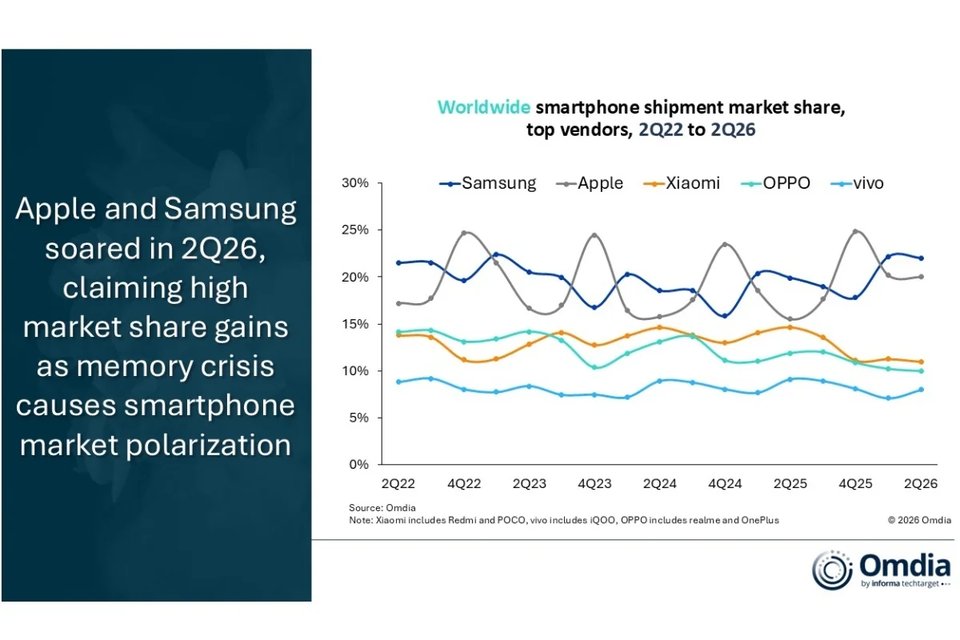
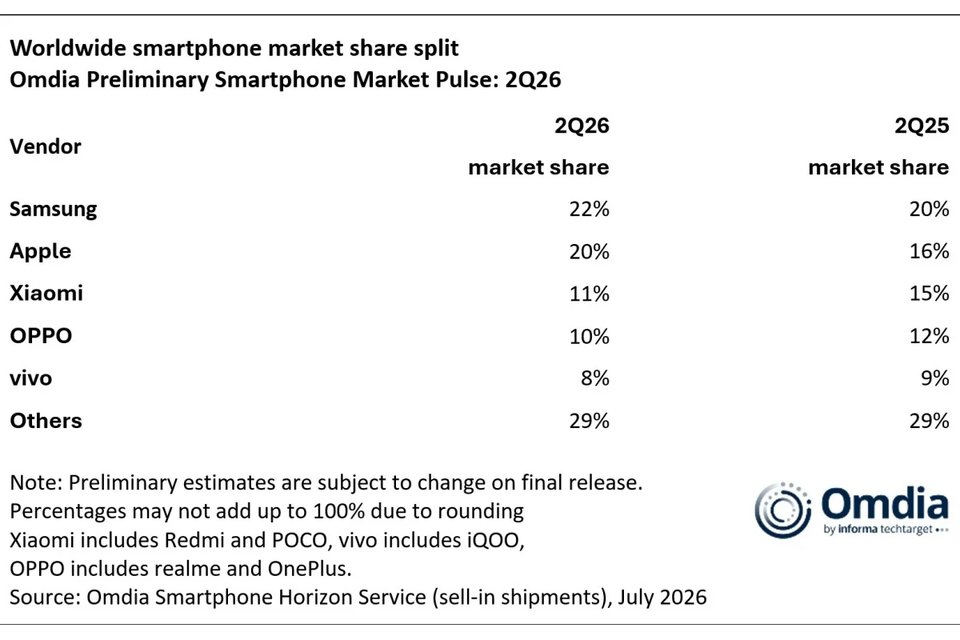
Apple's market share surged, climbing from 16 percent last year to an unprecedented 20 percent, marking a record high for a traditionally weaker quarter. Samsung's lead, now at 2 percent compared to 4 percent last year, may be easily challenged in the upcoming quarters, especially without a "vanilla" iPhone 18 expected this year.
Challenges for Xiaomi, Oppo, and Vivo
While Samsung and Apple successfully increased their respective sales, the same cannot be said for Xiaomi, Oppo, and Vivo, who collectively saw a decline in market share. Xiaomi, in particular, suffered a substantial drop, slipping from 15 percent to 11 percent. Simultaneously, Oppo and Vivo fell to 10 percent and 8 percent market shares. Rising prices in budget models played a role in these brands' struggles, allowing Samsung to capitalize with its Galaxy A offerings, which remain slightly more affordable.
Outlook for the Smartphone Market
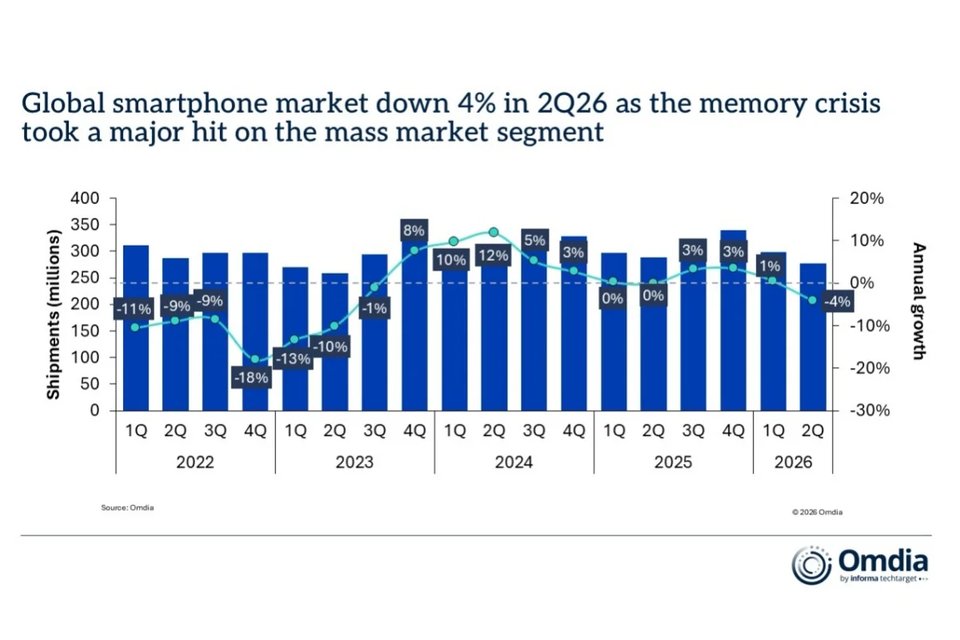
Despite the positive results from Apple and Samsung, the overall smartphone market saw a 4 percent decline in Q2 2026, with expectations of further downturns in the upcoming quarters. Rising production costs and cash-strapped consumers suggest a tough road ahead for manufacturers, with many projected to encounter lower shipment numbers moving into the second half of 2026.
The cost of key components has risen sharply, accounting for a significant portion of smartphone manufacturing expenses. Consequently, its unlikely that retail prices will revert to pre-2025 levels for the foreseeable future, compelling consumers to brace for higher price points, including potential increases for future models like the iPhone 18 Pro Max.


