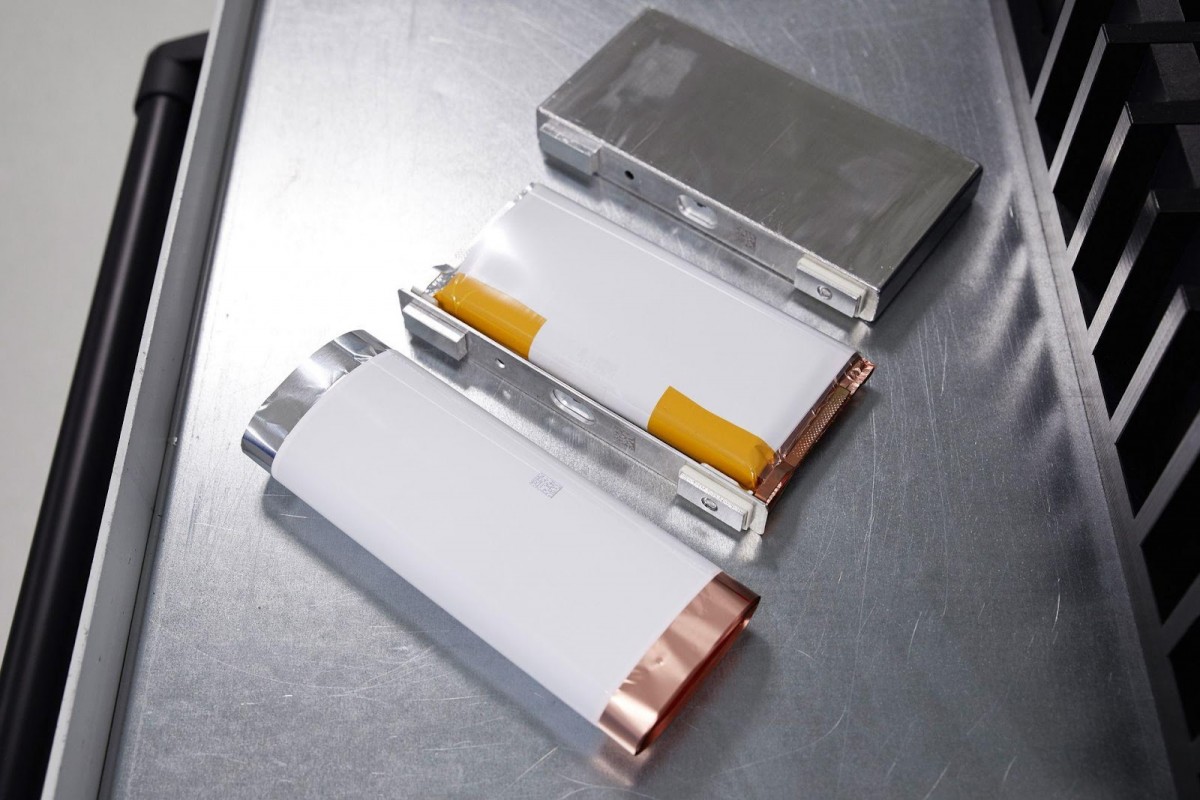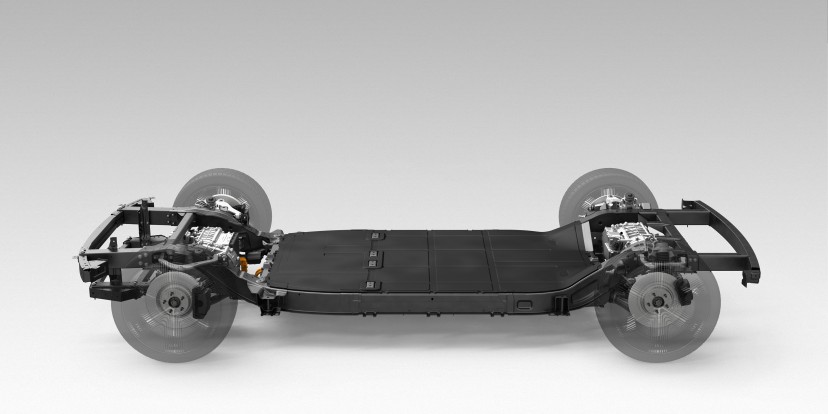
Batteries play a crucial role in electric vehicles (EVs), and their high costs often raise questions. What exactly comprises this cost? The team at Elements by Visual Capitalist has dissected the cost structure of an average EV battery, presenting their findings in a clear and informative infographic below.
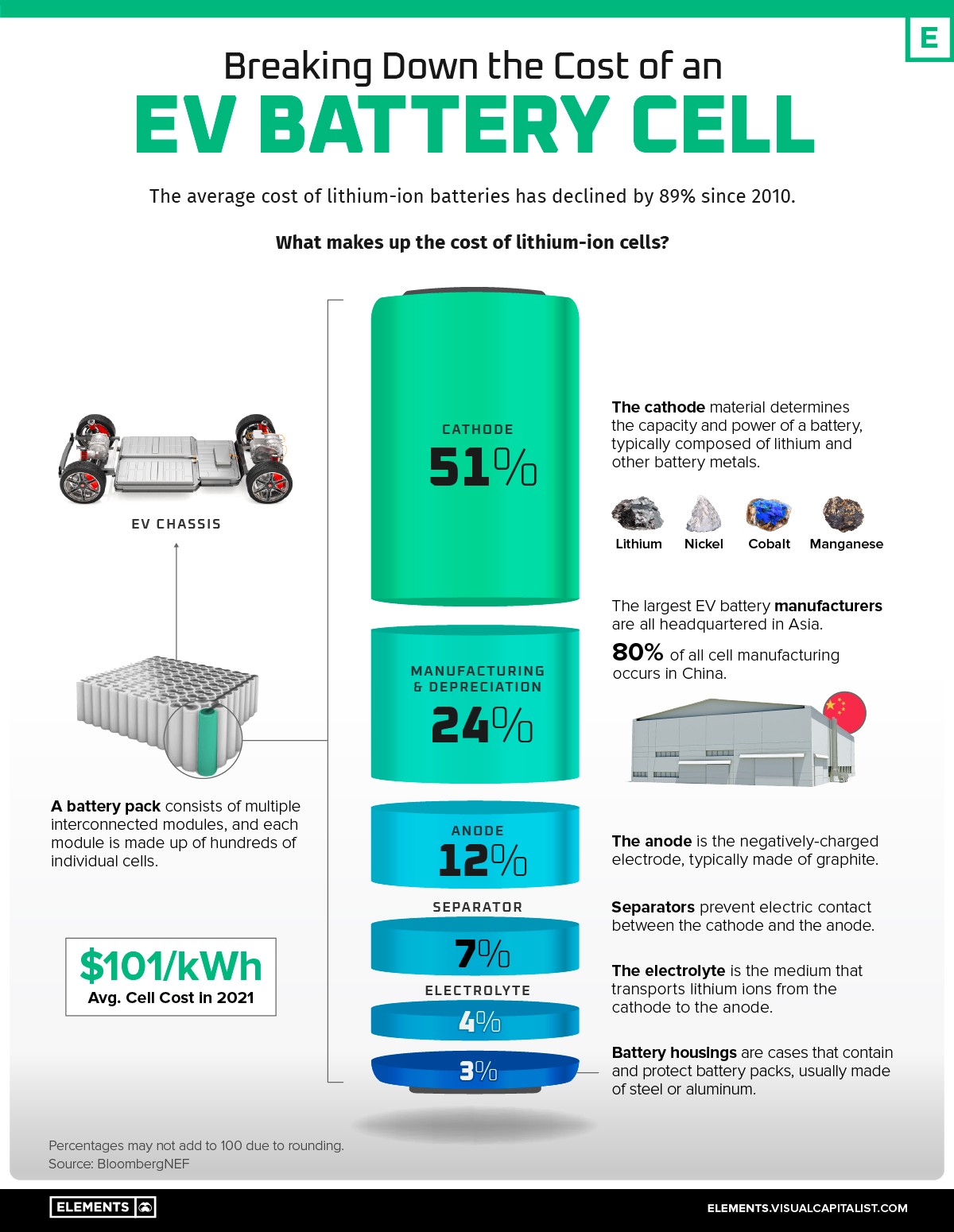
Last year, the average cost of battery cells was $101 per kWh. When considering the full battery package, the cost rose to $132 per kWh. To determine the battery cost for a particular EV, simply multiply the vehicle's total battery capacity in kWh by $132. This amount seems substantial, but it has drastically decreased from $1,200 per kWh in 2010!
According to the infographic, the most significant expense within the battery is the cathode. As the positively charged electrode, the cathode facilitates the flow of electrons and positively charged molecules during discharging, storing energy until recharged. Its crucial role in performance, range, and thermal safety justifies its high cost, which comprises approximately 40% of the total cell cost. The composition of cathodes varies depending on specific cell chemistries, with common materials including lithium iron phosphate, lithium nickel manganese cobalt, and lithium nickel cobalt aluminum oxide.
The remaining components account for 49% of a cell's cost, with manufacturing processes contributing to 24% of this total. The anode, another vital battery component, makes up 12% of the overall cost. Typically made from natural or synthetic graphite, the anode is more affordable than the materials utilized for the cathode.
Source