The landscape of internet service in the United States has evolved significantly, with wireless options challenging traditional wired connections. Recent developments in the telecommunications industry have highlighted a surprising shift, as Verizon has made notable gains in the 5G sector, surpassing T-Mobile in key areas. The increased competition among major players like AT&T, Verizon, and T-Mobile reflects a dynamic market striving for innovation and improved customer offerings.
Competitive Landscape
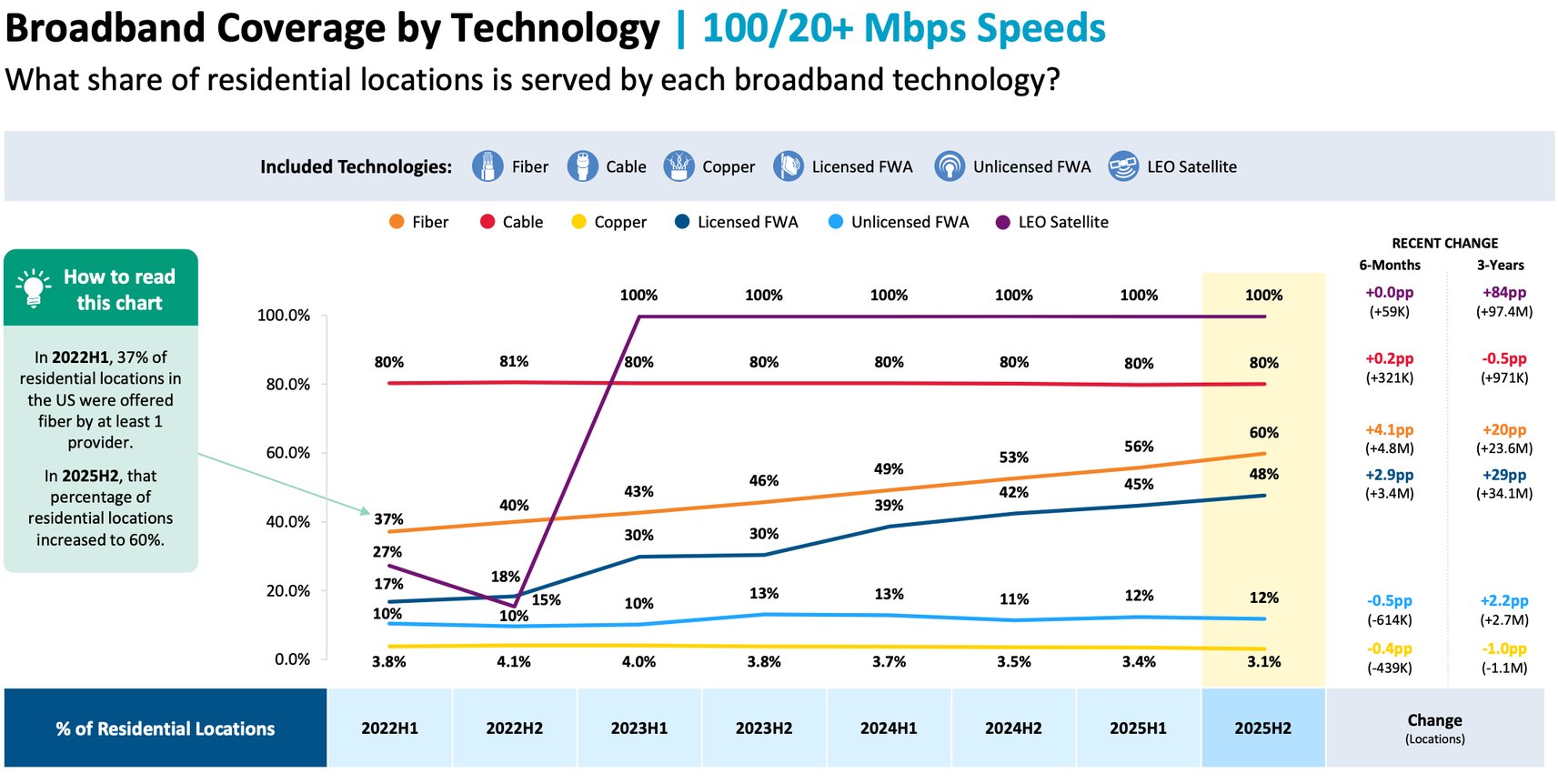
As competition heats up, AT&T leads with 37.4 million locations, while Verizon follows with 15.9 million. In contrast, T-Mobile lags behind with only 4.4 million locations, marking a significant gap in coverage.
Advancements in Fiber Networks
AT&T continues to excel as the premier fiber builder, closely pursued by Charter. The surge in construction activity from the top 25 fiber builders represents a shift towards faster internet solutions. Notably, cable companies now occupy six of the top spots in fiber construction. T-Mobile expanded its fiber reach primarily through acquisitions, rather than organic growth.
The Fixed Wireless Access (FWA) Transformation
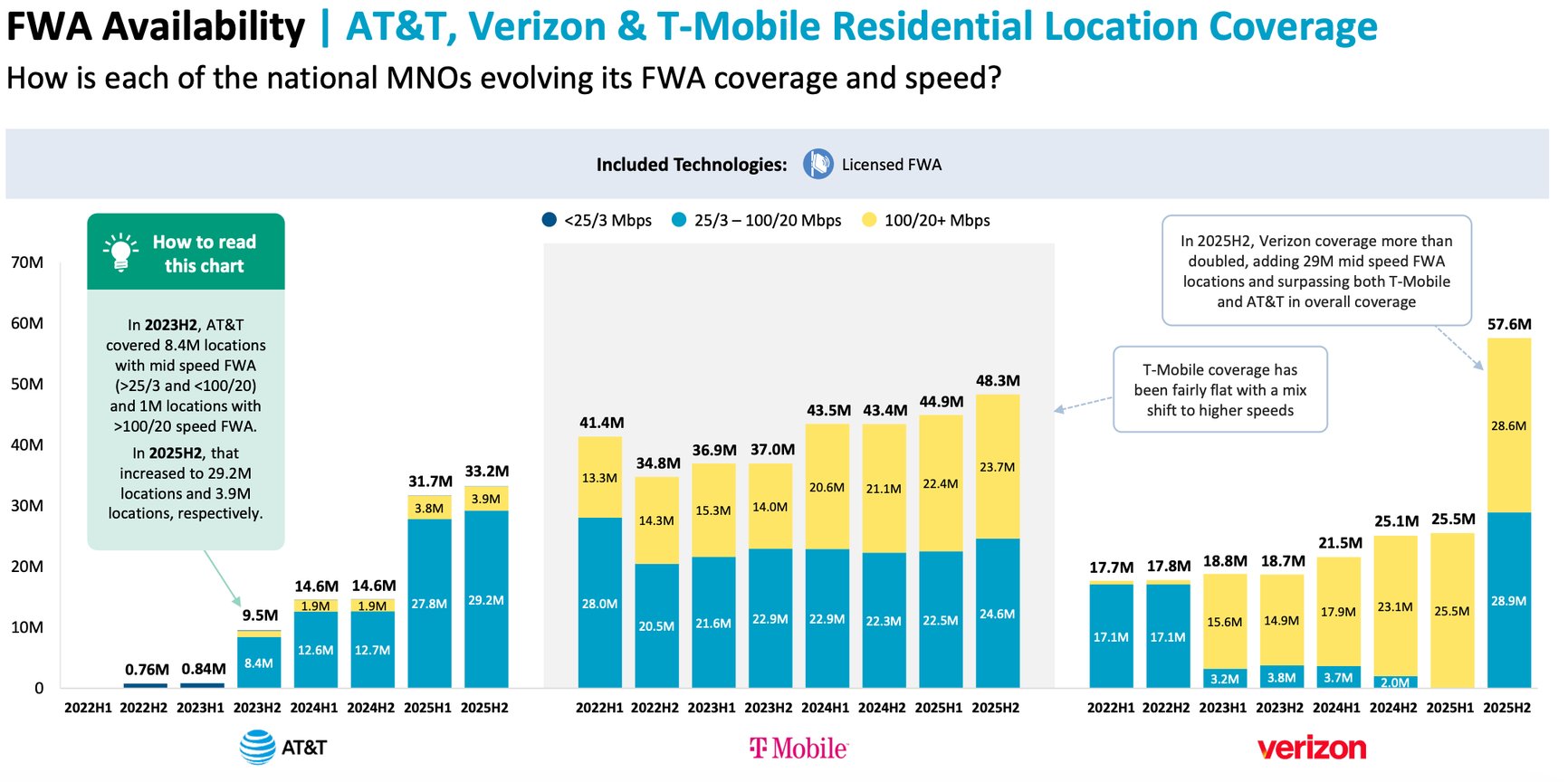
Verizon has emerged as the leader in Fixed Wireless Access (FWA) growth, doubling its coverage in the latter half of 2025, surpassing both AT&T and T-Mobile. Most of this expansion has focused on mid-speed locations. Meanwhile, T-Mobile has seen its coverage stagnate despite improvements in speed, leading to questions regarding their strategic choices amidst a growing emphasis on fiber.
T-Mobile's Stagnant Performance
Despite a competitive edge in speed, T-Mobile has not showcased robust growth. Its apparent freeze in rollout strategies raises concerns about its future trajectory in the competitive landscape.