T-Mobile's Troubling Decisions: Insider Selling and Customer Discontent
T-Mobile has recently made waves with significant policy changes that have left both investors and customers concerned. As the carrier, once celebrated as the 'Un-carrier,' shifts its device promotion strategies and adopts a digital-first approach, insiders are offloading their shares, raising questions about the company's direction and future. In this article, we delve into the implications of these moves and how they might impact T-Mobile's standing in a highly competitive market.
PhoneArena first reported rumors of T-Mobile's forthcoming changes to device promotion policies, which have now materialized into a significant update. The carrier announced that the maximum number of promotional devices available per account would be reduced from four to two. This means that families of four can no longer take advantage of promotions to secure a new handset for each member, limiting their options and potentially hindering T-Mobile's ability to attract new subscribers from rival carriers.
A Shift from the 'Un-carrier' Philosophy
With the new changes in device promotions, T-Mobile seems to be straying from its roots as the 'Un-carrier.' Previously, the company prided itself on eliminating customer pain points; however, recent policy modifications are raising eyebrows among both consumers and investors. Additionally, most discounted line promotions are now ineligible for device upgrades unless they fall under specific introductory offers.
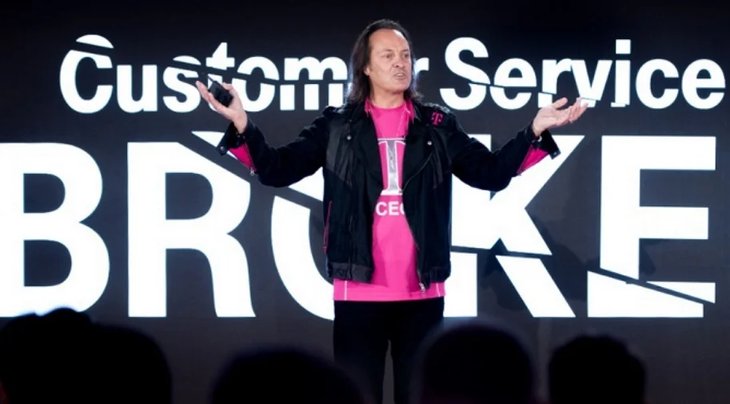
The nostalgic days of the 'Un-carrier,' led by former CEO John Legere. | Image by T-Mobile
T-Mobile investors reacted swiftly to these announcements, resulting in a notable decline in stock value. Following the official report, the stock hit an intra-day low of $198.69 before closing the trading session at $201.40. Additionally, T-Mobile insiders have been selling their shares ahead of the announcement, further exacerbating concerns about the company’s stability and direction.
Insider Selling Raises Red Flags
While some stock sales may be attributed to personal financial planning, the scale of insider selling is troubling. For instance, T-Mobile Director Srikant Datar sold 4,291 shares, netting nearly $946,000. In fact, in just 90 days leading up to mid-March, insiders offloaded a staggering 694,134 shares valued around $150.8 million. Noteworthy sales include Vice Chairman Mike Sievert's 80,000 shares for $17.2 million and former Sprint CEO Raul Marcelo Claure's sale of 550,000 shares, netting $119.6 million. This trend of insider selling outpacing purchases (11-0) cannot be ignored.
Questions Surrounding Company Strategy
Once a fierce competitor in the telecommunications landscape, T-Mobile appears to be making uncharacteristic decisions. The carrier recently announced that it would stop reporting its postpaid phone net adds, pivoting instead to a focus on net account adds amid shifts to multi-line accounts. While this might seem justifiable, the broader implications of their strategy—to transition into a digital Mobile Network Operator (MNO)—have raised significant skepticism. Store closures and a reduced sales force in favor of a more streamlined digital model have left many customers feeling alienated.
The strategy could yield short-term profit boosts by reducing operational costs, yet the mass selling of shares by insiders sends a conflicting signal to investors and customers alike. A company thriving on customer satisfaction should be cautious about alienating its base, and T-Mobile’s shifts appear fraught with risks that may lead to long-term repercussions.
Ultimately, while T-Mobile positions itself for a digital future, the discontent among its customer base and the apparent lack of confidence from its insiders suggests that the company is at a crossroads—one that could fundamentally reshape its future in a competitive industry.


