In a troubling turn of events for the gaming hardware market, Ayaneo has officially announced the discontinuation of its Pocket FIT console featuring the Snapdragon 8 Elite. The decision stems from ongoing semiconductor shortages that have driven up component prices, forcing manufacturers to reevaluate their production strategies.
According to a recent post on Indiegogo, Ayaneo stated, "Please also note that due to the recent increase in storage component prices, future production costs will rise significantly. As a result, after this upcoming restock, Pocket FIT 8Elite will very likely be the final production batch, and it will be available while supplies last, with no current plans for further restocking."
The Konkr Pocket FIT is an Android-powered handheld gaming console, boasting a 6” 1080p 144Hz LCD screen, an 8,000mAh battery, and options between the Snapdragon G3 Gen 3 and the Snapdragon 8 Elite chip. The Snapdragon 8 Elite model is the one being phased out, likely due to limited demand, leaving the gaming-oriented G3 variant still in production.
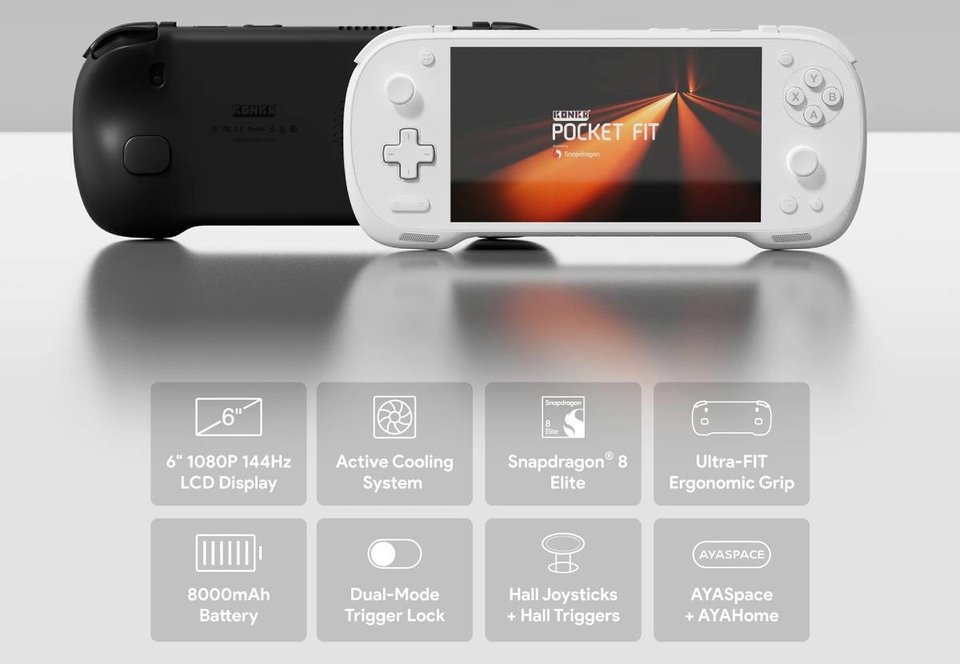 Ayaneo Konkr Pocket FIT 8Elite
Ayaneo is not alone in its struggle; the company’s Windows-based NEXT 2 console, equipped with high-end features such as the AMD Ryzen AI Max+ 395 (Strix Halo), has also faced challenges, leading to the suspension of sales. The high-performance device, priced at $2,000, has become untenable, reflecting broader issues within the tech industry.
An Indiegogo announcement echoed this sentiment: "However, after the Chinese New Year, when we communicated with our suppliers again to confirm the latest storage procurement prices, we found that storage prices had increased to several times higher than before the holiday. Under such circumstances, the overall cost of the product has become far higher than our current selling price."
With costs ballooning, Ayaneo determined that the current pricing model was no longer sustainable. The overall market is reflecting similar patterns of scarcity and cost increase—Valve’s Steam Deck faces stock shortages, while Intel and AMD have also raised CPU prices.
Source 1 | Source 2