The Norwegian media outlet Motor.no, in collaboration with the Norwegian Automobile Federation, conducted its annual winter range test. This test featured a range of vehicles, including several exotic Chinese cars available in the market. The outlet aims to evaluate the real-world performance of popular vehicles, as WLTP ranges often tend to be overly optimistic. The crucial question is how much these figures differ from actual driving mileage.
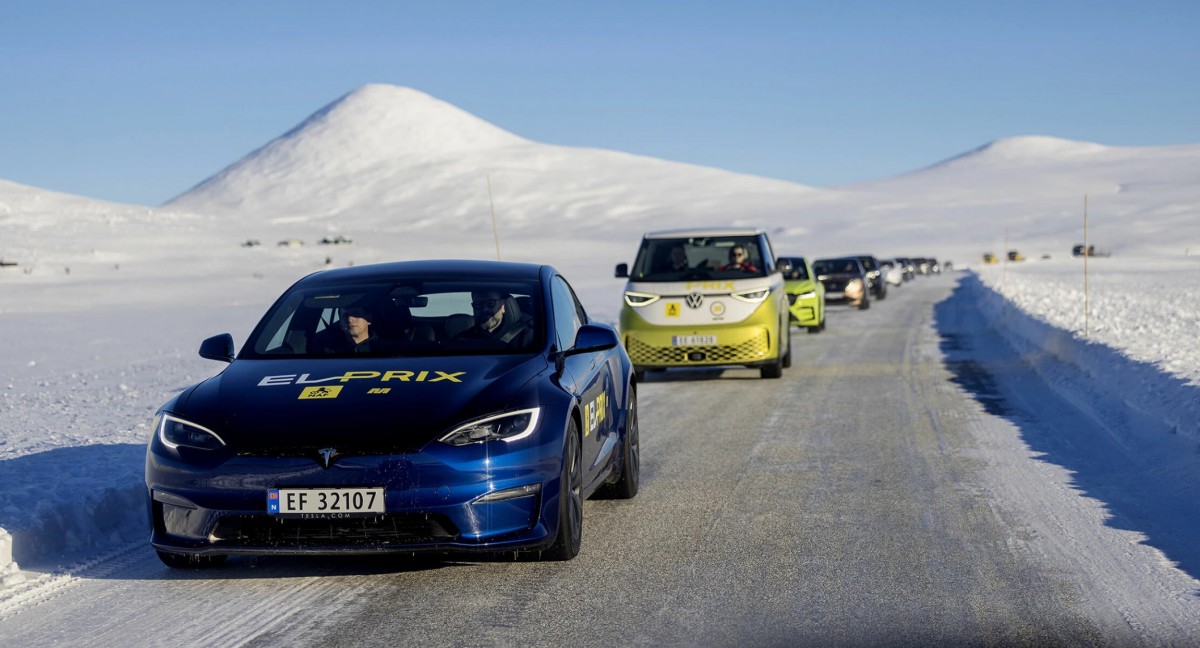
This year, the Long Range (LR) trim of the Tesla Model S surpassed the previous record of 530 km set by the Model 3 LR Dual Motor in 2021. In comparison, the Model 3 achieved an actual range of 521 km. Remarkably, the Model S faced a slight disadvantage, as it was unable to charge beyond 98%.
Given Norway's harsh winter conditions, assessing vehicle performance in this environment is vital. According to Motor.no, average testing temperatures ranged from -5°C to -10°C, with one location experiencing lows of -19°C. Below is the route that has become a standard for their winter testing each year.
From Oslo, around Rondane National Park and back
Typically, vehicles experience a reduction of approximately 20% to 30% in their WLTP range under such conditions, with a few exceptions. The Tesla Model S, with only a 16.40% deviation from its advertised range, is among the latter, alongside the Maxus Euniq6, which saw merely a 10.45% loss. The MG Marvel R and MG 5 also performed relatively well, recording deviations of 16% and 17%, respectively.
| Model | Advertised Range (WLTP) | Actual Range | Deviation from WLTP |
|---|---|---|---|
| Tesla Model S LR | 614km (382mi) | 530km (329mi) | -16.40% |
| Mercedes EQE 300 | 614km (382mi) | 409km (254mi) | -33.39% |
| BMW i7 xDrive60 | 595km (370mi) | 424km (263mi) | -28.74% |
| Nio ET7 100kWh | 580km (360mi) | 434km (270mi) | -25.17% |
| BMW i4 eDrive40 | 565km (351mi) | 434km (263mi) | -23.19% |
| Tesla Model X Plaid | 543km (337mi) | 444km (276mi) | -18.23% |
| Nissan Ariya 2WD | 533km (331mi) | 400km (249mi) | -24.95% |
| Volkswagen ID.5 Pro | 526km (327mi) | 378km (235mi) | -28.14% |
| BYD Han | 521km (324mi) | 406km (252mi) | -22.07% |
| Hongqi E-HS9 prototype (120 kWh) | 515km (320mi) | 389km (242mi) | -24.47% |
| Skoda Enyaq Coupe RS | 510km (317mi) | 338km (210mi) | -33.73% |
| Toyota bZ4X 2WD | 503km (313mi) | 323km (201mi) | -35.79% |
| Voyah Free | 501km (311mi) | 391km (243mi) | -21.96% |
| Hongqi E-HS9 99kWh | 465km (289mi) | 303km (188mi) | -34.84% |
| 460km (285mi) | 343km (213mi) | -25.43% | |
| Tesla Model Y SR+ RWD | 455km (283mi) | 337km (209mi) | -25.93% |
| Hyundai Ioniq 5 LR 4WD | 454km (282mi) | 345km (214mi) | -24.01% |
| Mercedes EQB 250 | 452km (281mi) | 334km (208mi) | -26.11% |
| MG ZS LR | 440km (273mi) | 352km (219mi) | -20.00% |
| JAC e-JS4 | 433km (269mi) | 323km (201mi) | -25.40% |
| BMW iX1 xDrive30 | 428km (266mi) | 337km (209mi) | -21.26% |
| Renault Megane E-Tech | 428km (266mi) | 318km (198mi) | -25.70% |
| 425km (264mi) | 338km (210mi) | -20.47% | |
| 424km (263mi) | 349km (217mi) | -17.69% | |
| BYD Atto 3 | 420km (261mi) | 311km (193mi) | -25.95% |
| Volkswagen ID. Buzz Pro | 408km (254mi) | 310km (193mi) | -24.02% |
| MG5 LR | 380km (236mi) | 313km (194mi) | -17.63% |
| MG Marvel R AWD | 370km (230mi) | 308km (191mi) | -16.76% |
| Maxus Euniq6 | 354km (220mi) | 317km (197mi) | -10.45% |
Conversely, the Mercedes EQE 300 struggled, experiencing a 33.39% decrease from its advertised range. However, it still managed to exceed 400 km of range. The Chinese Hongqi E-HS9 also saw a decline greater than 34%.
Notably, the Toyota bZ4X, in its two-wheel drive variant, recorded the highest range loss at 35.79%. The manufacturer withheld the four-wheel drive version due to its poor performance in previous range and consumption tests. Consequently, updates are planned before rerunning tests. The same applies to the Subaru Solterra, which shares its design with the bZ4X.
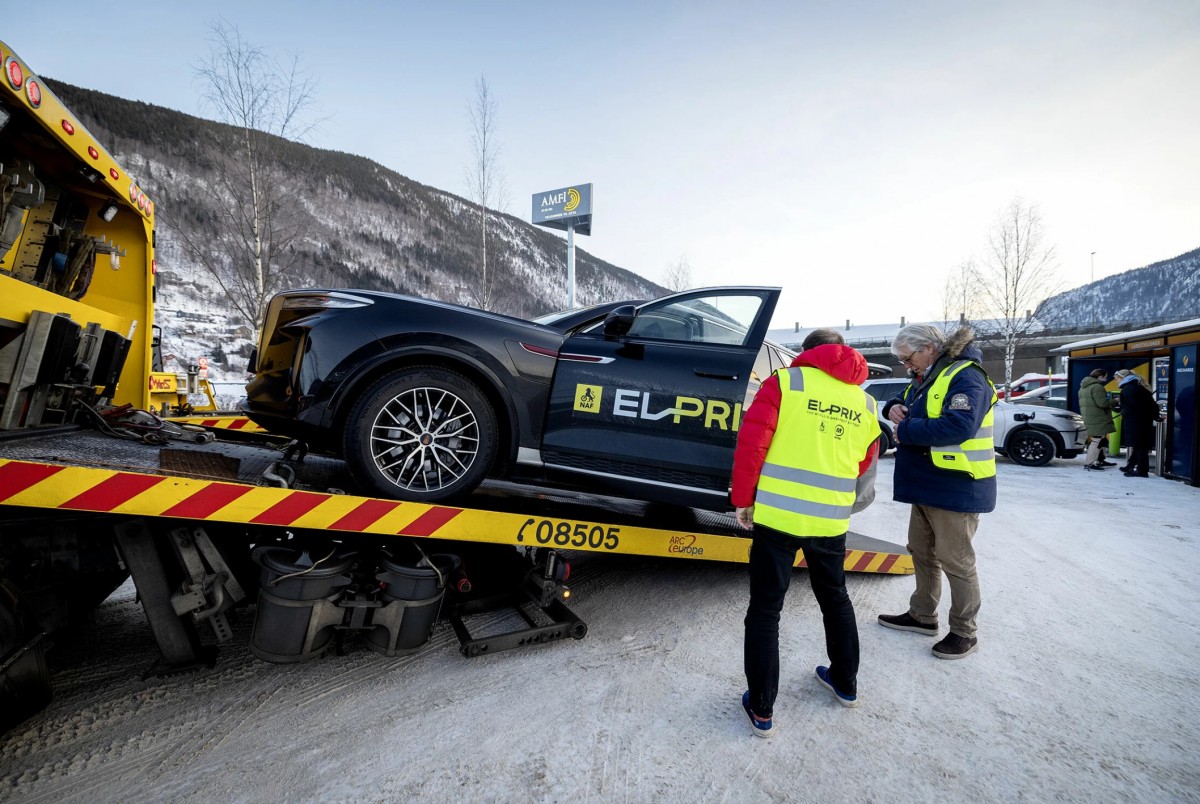
These findings are consistent with earlier reports from Chinese winter tests, where the bZ4X also failed to meet expectations.
The list of tested vehicles includes 12 Chinese brands, some of which are poised for release in Europe, such as JAC e-JS4, Voyah Free, BYD Atto, BYD Han, and Nio ET7.
Source