A long-time AT&T customer found himself facing a staggering $19,700 bill after a mix-up regarding international roaming services. Planning to minimize his costs while traveling abroad, he mistakenly believed that removing the International Day Pass (IDP) would halt all international charges. The unfortunate outcome left him scrambling for solutions, while AT&T stood its ground on its pricing policies.
Customer Mistakenly Cancels Key Service Before Traveling
The story began when the AT&T subscriber removed the $12 per day IDP from his account right before traveling outside the United States, intending to rely on local SIM cards instead. However, after just one day abroad, he discovered that keeping his AT&T eSIM activated resulted in shockingly high charges—costing him over $900 every eight minutes or $6,750 an hour.
With two lines involved, one line racked up $18,600 in charges within a single day due to nearly three hours of service. The other line added nearly $1,000 before the service was suspended. The customer realized his significant error: he assumed that cancelling the IDP removed AT&T's international roaming services, including talk, text, and data. In hindsight, he agreed with comments on Reddit who advised against dropping the IDP.
AT&T Remains Firm in Stance Despite Customer Loyalty
Upon receiving the outrageous bill, the customer contacted AT&T's customer service and management, requesting temporary reinstatement of the IDP for the two days when charges escalated. Unfortunately, AT&T showed no inclination to accommodate his request.
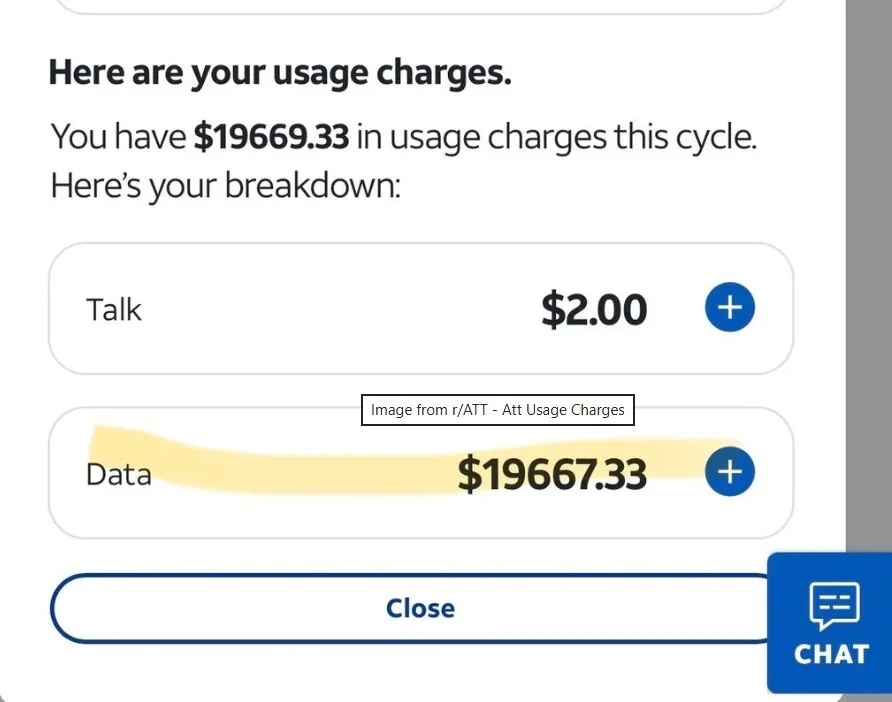
The customer suggested that AT&T implement options to allow users to opt-out of international roaming services when the IDP is cancelled. He also proposed that the carrier automatically add the IDP if a customer's charges exceed the daily cost, or at least notify them when charges surpass $12 per day, offering an opportunity to purchase the IDP.
Escalating the Matter: Filing a Complaint with the FCC
Without the IDP, AT&T charges a whopping $2,000 per gigabyte for international data. The customer's situation underscores the lack of empathy from AT&T towards loyal patrons. After being with the company for seven years and managing over ten lines on his account, he warns that such indifference could lead him to switch to another service provider without hesitation.
For those facing similar issues, filing a complaint with the FCC can sometimes yield results. The informal complaint process allows consumers to submit their grievances, which may prompt action from the carrier.
To file a complaint with the FCC, you can visit ConsumerComplaints.fcc.gov, call 1-888-CALL-FCC (1-888-225-5322), or send mail to: Federal Communications Commission, 45 L Street NE, Washington, DC 20554.
What to Include in an FCC Complaint
- Clearly state your desired outcome.
- Provide your account number and name on the account.
- Describe the steps you've taken to resolve the issue with your carrier.
- Upload relevant documents such as bills and chat transcripts with customer service.