Introduction
With the official end of Windows 10 support on October 14th, many users have transitioned to Windows 11. One notable change that quickly caught the attention of longtime Windows fans is the missing ability to reposition the taskbar—something Windows 10 users could easily do. In this article, we dive into the reasons behind Microsoft’s decision to drop this feature in Windows 11 and explore how recent taskbar updates hint at the company's evolving priorities.
The Taskbar Relocation Feature Wasn't a Development Priority
During a 2022 AMA session held by Microsoft on YouTube, Tali Roth, the then Windows product manager, explained why Windows 11 doesn’t support moving the taskbar to different screen locations. Unlike previous versions, the Windows 11 taskbar was redesigned from the ground up. Instead of carrying forward every feature from Windows 10, the development team focused on incorporating those used most frequently by users, based on data analysis.
Features like drag-and-drop support were planned for later releases, but many taskbar capabilities from Windows 10—including the ability to relocate it—were classified as low-demand and subsequently excluded from the initial Windows 11 experience. Roth also pointed out that engineering resources required to implement such features were significant, and given their perceived limited usage, they were not prioritized.
This explanation, however, seems contradictory when you consider that the option to move the taskbar is one of the highest-voted requests on the Microsoft Feedback Hub. Additionally, users on platforms like Reddit frequently voice frustration over the omission, raising questions about the accuracy and representativeness of the data Microsoft relied on.
Recent Taskbar Updates Reveal Diverging Priorities
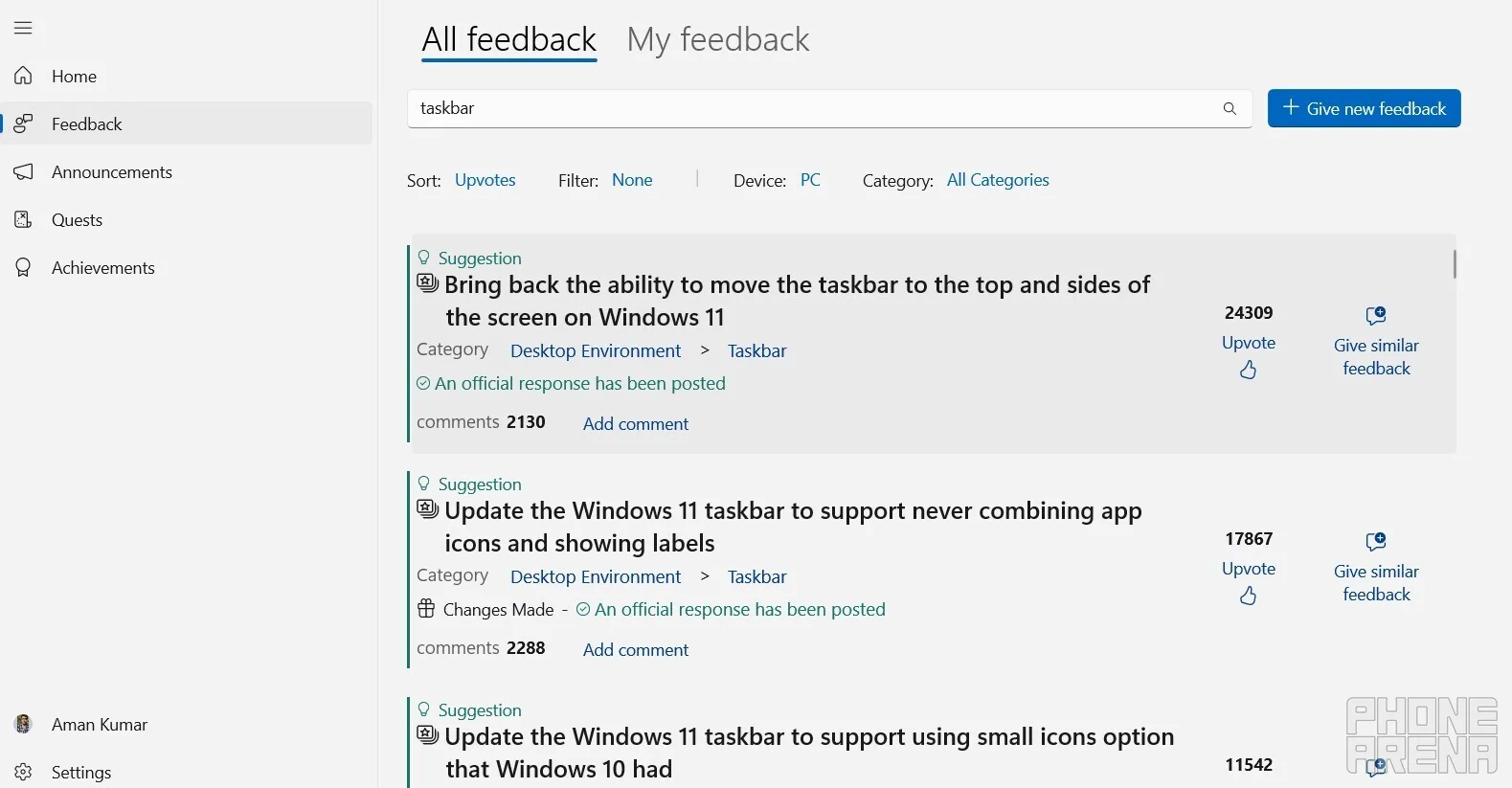
Screenshot of user feedback on the Microsoft Feedback Hub. | Image by PhoneArena
While the taskbar relocation feature was dropped due to “low demand,” Microsoft has been actively integrating new, AI-centered features. Preview builds released to Windows Dev and Beta channel users recently introduced the Ask Copilot bar on the taskbar, replacing the long-standing legacy Windows Search function. Moreover, Microsoft plans to add AI agents directly to the taskbar, enabling them to perform background tasks such as researching topics on your behalf. These features, although futuristic and potentially useful, were not specifically requested by the majority of Windows users.
User Sentiment on Windows 10 Features Missing in Windows 11
Restoring the Flexibility of the Old Taskbar
Windows 11 certainly introduces numerous new features and enhancements, but for users who valued the freedom to reposition their taskbar, Windows 10 remains preferable. Fortunately, third-party solutions like StartAllBack and Start11 offer ways to restore this functionality. Personally, I use StartAllBack not only to move the taskbar but also to customize its appearance, icon sizes, margins, and much more.
However, it would be ideal if Microsoft reinstated this feature natively. With over 24,000 upvotes in the Feedback Hub requesting taskbar relocation, there’s clearly significant demand. Now, the onus is on Microsoft to listen carefully and consider reintegrating this popular functionality into Windows 11.


