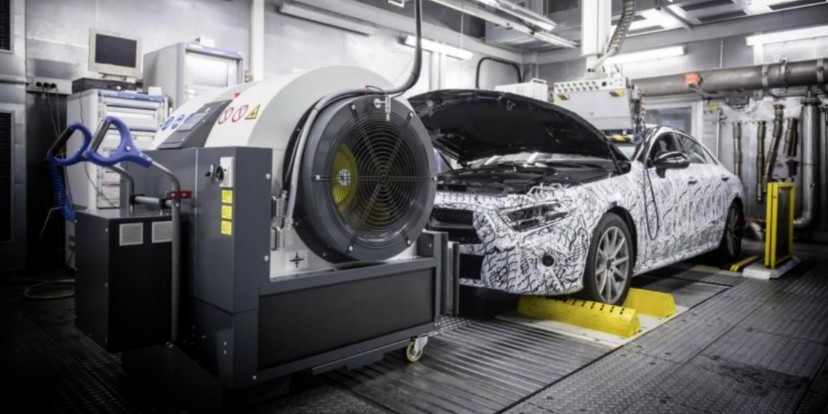
Estimating the range of an electric vehicle (EV) accurately remains challenging due to the numerous variables that impact energy consumption. While traditional internal combustion engine (ICE) vehicle owners have long accepted that official fuel economy figures can be imprecise, recent advancements in testing cycles aim to deliver more realistic results. But which test cycle provides the most trustworthy data? The answer varies depending on several factors. Here, we review the most prevalent test cycles and their intended applications.
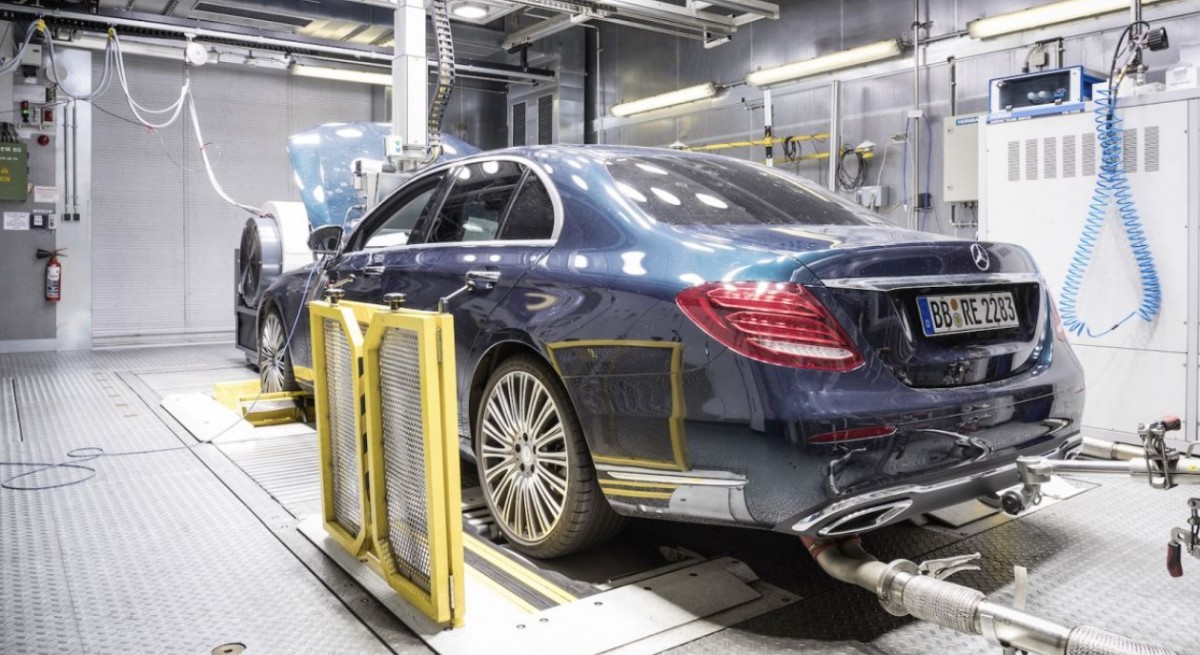 WLTP range testing cycle
EPA Cycle
The EPA (Environmental Protection Agency) test cycle, used predominantly in the United States, is based on dynamometer testing rather than real-world driving. This means vehicles are tested on a stationary roller drum simulating driving conditions. The cycle consists of two primary components: the UDDS (Urban Dynamometer Driving Schedule) representing city driving, and the HWFET (Highway Fuel Economy Test) simulating highway conditions.
Before testing, the vehicle is fully charged and allowed to rest overnight. Testing involves repeated UDDS and HWFET cycles—approximately 45% urban and 55% highway driving—until the battery is completely depleted. The vehicle is then recharged using a precise meter to measure electricity consumption, which incorporates on-board charger efficiency.
Since testing is conducted in a controlled environment, a correction factor between 0 and 1 is applied to approximate real-world conditions based on the number of drive cycles completed. For example, if a vehicle achieves 100 miles on the HWFET cycle with a correction factor of 0.8, the official EPA range would be 80 miles.
The EPA cycle is generally regarded as one of the most rigorous currently in use, though its consistency varies among models. For instance, the Porsche Taycan’s official EPA range is slightly underestimated compared to real-world tests, while the Tesla Model S often does not meet its official EPA figures due to Tesla's unique interpretation of the SAE J1634 standard.
 EPA low and high speed cycles
NEDC Cycle
The NEDC (New European Driving Cycle) was the standard in Europe from the 1980s until it was phased out in September 2017. Like the EPA test, it is a laboratory-based cycle combining two phases: ECE-R15 representing urban driving and EUDC for highway driving. The testing consists of 66% urban and 34% highway driving, covering a distance of 11 km over 20 minutes.
However, the NEDC cycle excludes factors such as climate control usage and electric auxiliary loads, and does not account for optional equipment. Its average speed is only 34 km/h, with a maximum velocity of 120 km/h, resulting in consumption and range estimates that are generally considered overly optimistic and not reflective of real driving conditions. Consequently, it has been replaced by the WLTP cycle.
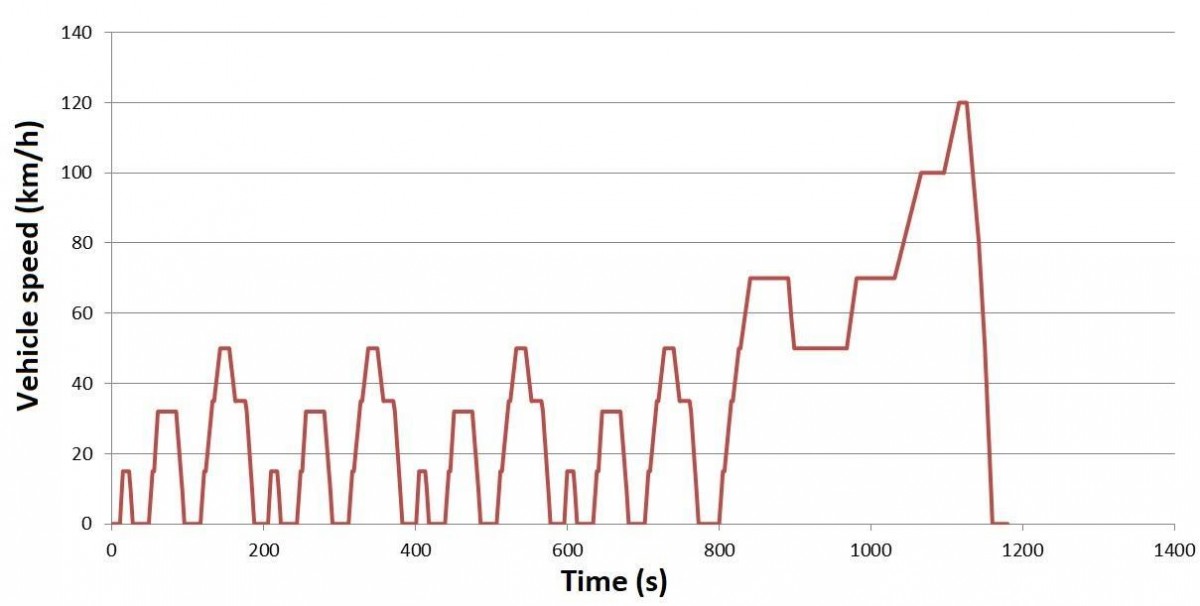 The NEDC cycle
WLTP Cycle
The WLTP (Worldwide Harmonized Light Vehicle Test Procedure) has been in use across Europe since September 2017, replacing the NEDC standard. Like its predecessors, WLTP testing occurs in a laboratory setting but is more comprehensive.
WLTP divides the test into four speed segments: low, medium, high, and extra-high, spanning a total of 30 minutes and covering 23.25 km. The cycle simulates 52% urban and 48% highway driving, with an average speed of 46.5 km/h and a maximum speed of 131 km/h.
Unlike the NEDC, WLTP accounts for varying vehicle equipment levels and the impact of tire and wheel combinations, which influence aerodynamics and unsprung mass, affecting both consumption and range.
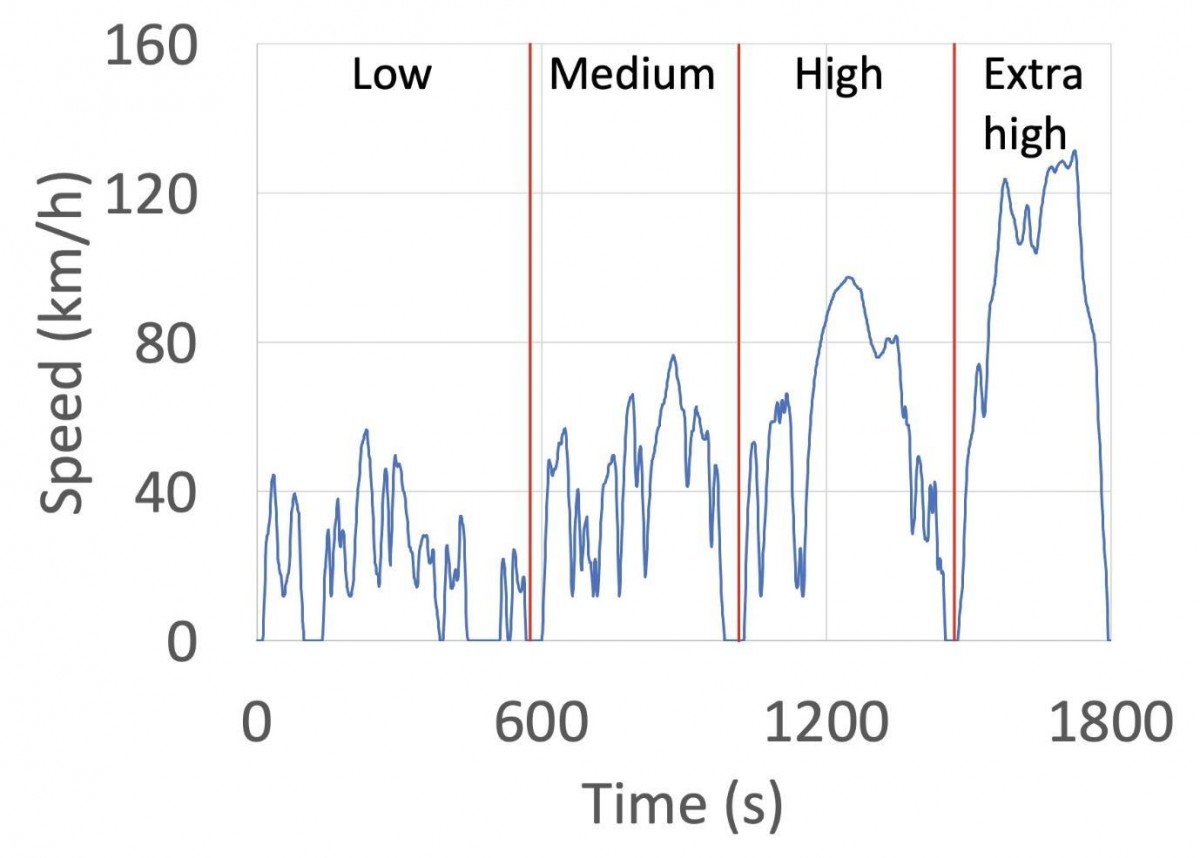 The WLTP cycle
Which Test Cycle Is Most Accurate?
Determining the most accurate test cycle depends on various factors, including individual driving habits and conditions. No single test can perfectly predict every driver's real-world experience. The NEDC is widely regarded as the least reliable due to its optimistic estimates and lack of consistency across vehicles, which led to its retirement.
The WLTP and EPA cycles offer results closer to actual driving conditions, with EPA generally providing more conservative figures. However, WLTP is often seen as more consistent across different models and manufacturers.
It is also worth noting the existence of other testing cycles globally, such as China’s CLTC, similar to NEDC, India’s IDC cycle, and Japan’s JC08 cycle, which emphasizes very low-speed testing to gauge emissions.
The following table compares results for the VW e-Golf tested under the three main cycles:
| Model | Cycle | Range (km) | Power Consumption (kWh/100 km) |
|---|---|---|---|
| VW e-Golf | EPA | 190 | 17.5 |
| VW e-Golf | NEDC | 300 | 13.2 |
| VW e-Golf | WLTP | 231 | 15.8 |


