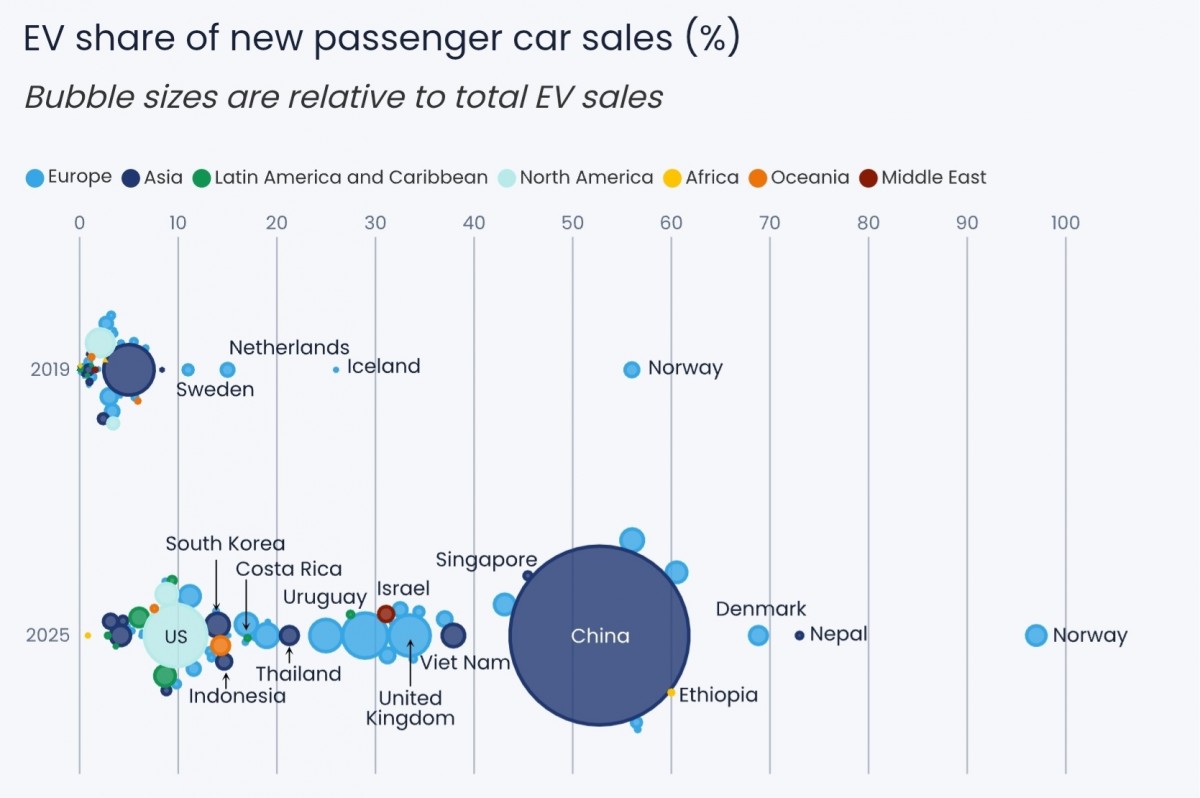
For decades, the United States and Europe dominated automotive trends. However, recent data reveals a significant shift: electric vehicle (EV) adoption is rapidly accelerating in emerging markets across Southeast Asia and Latin America, no longer confined to wealthy nations. In 2019, only four countries had electric cars accounting for more than 10% of new car sales; by 2025, that number has surged to 39, with a third located outside Europe.
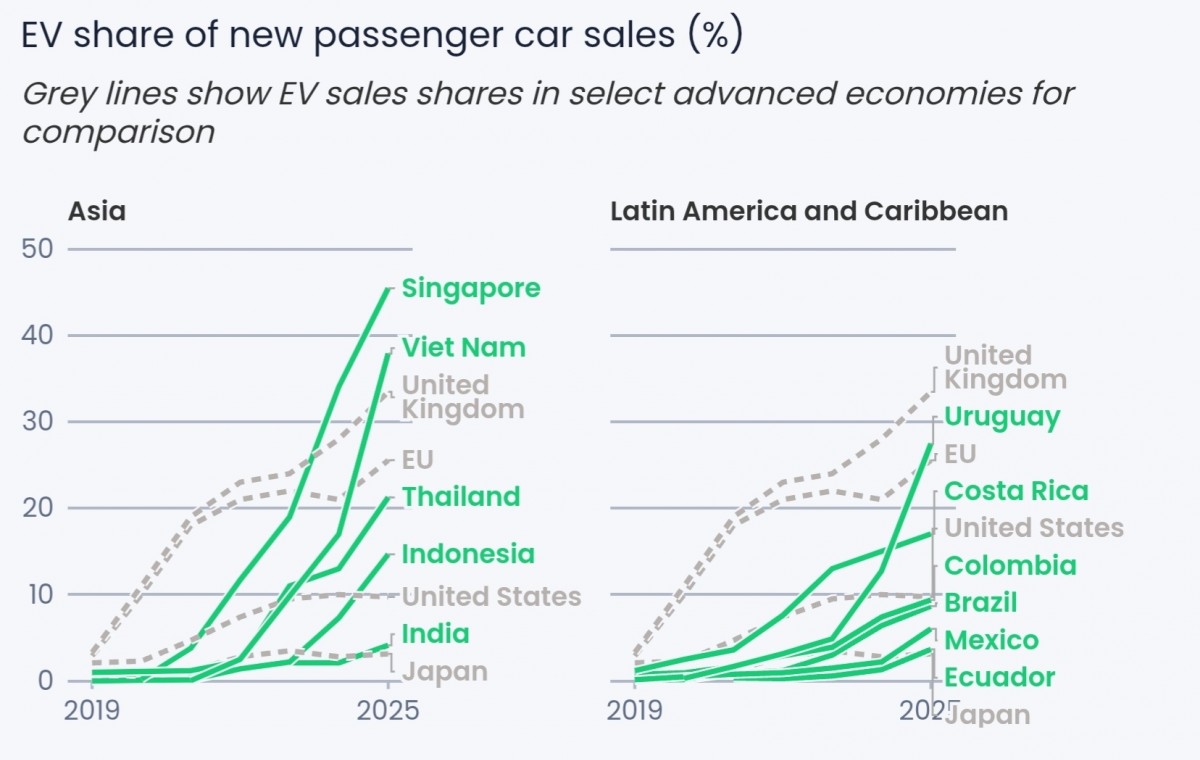
China continues to lead the global EV market, with over 50% of new car sales electric this year for the first time. The real surprise comes from its neighbors: Vietnam's EV share nearly doubled to almost 40% in 2025, surpassing the European Union average of 26% and closely approaching the UK’s 33%. Thailand has also reached a milestone with electric vehicles making up 20% of new car sales.
 Source: Ember Energy
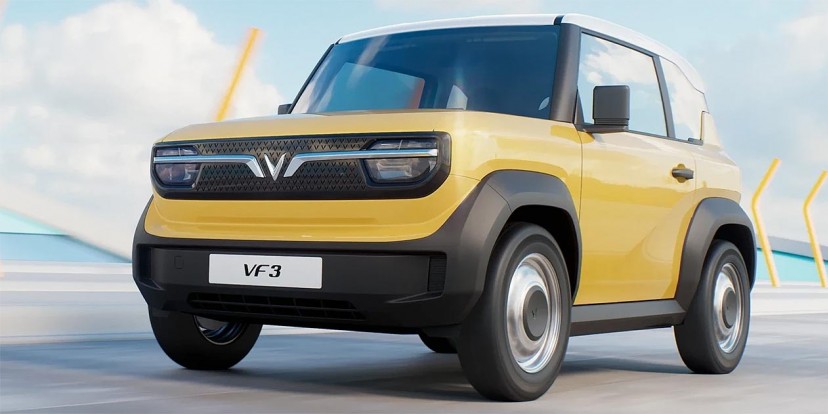
In Vietnam, the VinFast VF 3 is now the country’s best-selling car. This compact mini-SUV, designed for urban use, measures 3.19 m in length, 1.68 m in width, and 1.62 m in height. Despite its size, it accommodates four passengers and offers a ground clearance of 191 mm. Powered by an 18.64 kWh battery, it travels up to 210 km on a single charge and can charge from 10% to 70% in just 36 minutes. The vehicle is expected to start around €17,000 in many markets.
Other countries are embracing EVs to reduce costs and improve air quality. Ethiopia has recently banned gas-powered vehicle imports, leveraging abundant hydropower to support EVs, which now account for 60% of new car sales. Nepal exceeds this with 76% EV sales, aiming to reduce reliance on expensive oil imports. Indonesia is also advancing quickly, reaching a 15% EV sales share in 2025—more than double the United States’ 7.3%. The Indonesian government incentivizes local production by offering tax breaks to companies like CATL and BYD for building batteries and vehicles.
 Source: Ember Energy
Latin America is increasingly participating in the EV transition. Uruguay has achieved a 27% EV market share, while Costa Rica stands at 17%. Brazil and Mexico are now selling electric vehicles in greater proportions than Japan. In Brazil, driving an EV cuts fossil fuel use by 90%, thanks to clean electricity sources. Popular models like the BYD Dolphin Mini—marketed elsewhere as the Seagull or Surf—facilitate this shift. The Brazilian version costs about R$115,800 (approximately €19,600), includes a 38 kWh battery, and offers a range of around 280 km. These prices make EVs more accessible to average consumers.
While countries like the United States have recently reduced tax incentives, global EV adoption continues to accelerate. From January to October 2025, one in four cars sold worldwide was electric. This transition is also creating millions of jobs; in Vietnam alone, the EV industry could generate 6.5 million jobs by 2050. The era of the gasoline engine is waning, with new leaders in EV adoption emerging from unexpected regions.
Source


